Showing posts with label Robert William Elliston. Show all posts

Friday, April 5, 2024

Austen and Byron

I recently finished reading Christine Kenyon Jones's excellent book Jane Austen & Lord Byron: Regency Relations. It's a must-read for anyone interested in theatre of the Regency period in Britain.

Austen, of course, is known as a novelist rather than a playwright, though some very funny plays are included in her juvenilia. Her work makes frequent allusions to the theatre, particularly Mansfield Park, in which the young people try to put on a production of the play Lovers' Vows.

Byron took part in private theatricals much like those described in Austen's novel. In 1806, he played the role of Roderick Penruddock in a production of Richard Cumberland's The Wheel of Fortune. This was in Southwell, Nottinghamshire, where for many years Byron lived with his mother in Burgage Manor.

Kenyon Jones quotes an amusing letter from Mary Ann Bristoe describing the poet's antics. "Lord Byron requested to rehearse with me alone, for what reason I never knew," Bristoe wrote. "I had cause to rejoice at his having made this request, as it prepared me for what I might expect on the stage."

Byron went on to author numerous plays, including Manfred, Marino Faliero, and Sardanapaulus, the last of which is scheduled to have a staged reading in New York this fall. Both Byron and Austen admired some of the same actors, including Robert William Elliston.

Pick up a copy of the book if you can. I recommend it!

Tuesday, August 2, 2022

Byron's Plays... and Mine

Today I chaired a panel on "New Approaches to Lord Byron" for the BARS/NASSR 2022 "New Romanticisms" conference, and tomorrow I'll be attending my own play My Fellow Americans at the Secret Theatre in Queens.

Byron was a tremendous dramatist, penning such plays as Manfred, Marino Faliero, and The Deformed Transformed. The first panelist we had was Arif Camoglu, who spoke on Byron and the Ottoman gaze. He showed a rather trivializing account of Byron published within the Ottoman Empire that reproduced the famous portrait of Byron in Albanian dress. Oddly, there was no comment given in the publication about the famous writer wearing dress that was normally worn in the Ottoman Empire, not in Britain!

After Arif, I spoke on shaping a new Marino Faliero at Drury Lane. Byron published the play in 1821, not intending to have it performed (at least not any time soon). However, Robert William Elliston, the lessee of Drury Lane at the time, wanted to perform it anyway, so he sent a cut copy of the text to the Examiner of Plays to get it approved by the censor. Unfortunately, in order to get the play passed the censor, quite a bit had to be excised, including some of the most stirring passages. I got a chance to see the cut copy of the script at the Huntington Library, though images of it are now available online.

Our third panelist was Lesley Thulin, who spoke on deformity in Byron's unfinished drama The Deformed Transformed. Lesley is writing a dissertation on disability and political economy in Romantic literature. She noted that Byron, who had a clubbed foot, could in some ways relate the the play's disabled protagonist, but in general, she tried to steer clear from biographical readings of the drama, since the aristocratic Byron was economically insulated from many of the effects of a disabled body that the title character had to endure. Though Byron left the play unfinished at his death, Mary Shelley later wrote a short story called "Transformation" that re-envisions Byron's story and supplies it with an ending.

The conference continues until August 5th, the rest of it held in person at Edge Hill University outside of Liverpool. I couldn't get back over to the United Kingdom to attend in person, though, in part because tomorrow is the fourth performance of My Fellow Americans, which is being produced as a part of the Secret Theatre's One Act Festival. If you haven't seen it yet, please come! Make sure you get tickets to Program D.

Rachael Langton directed the play, which stars Rebecca Ana Peña as the President of the United States. I hope you can make it!

Friday, January 21, 2022

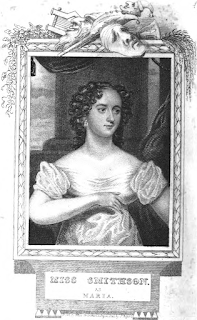
Harriet Smithson

In 1833, composer Hector Berlioz married Harriet Smithson, but she had enjoyed a distinctive career on her own as an actress long before she became Madame Berlioz.

According to her entry in Oxberry's Dramatic Biography, Smithson was born on March 18th, 1800 in County Clare, Ireland, of English parentage. Her father, William Smithson, traced his ancestry back to Gloucestershire, but worked managing theatres in the Waterford and Kilkenny circuit.

At first, young Harriet's parents had great ambitions for her, and they actively kept her away from the stage, but after hard times fell upon the family, the young girl seemed their only hope. She made her stage debut in Dublin as Albina Mandeville in Frederick Reynolds's play The Will, and subsequently began to perform across Ireland.

In 1817, Smithson was introduced to Robert William Elliston, who was then manager of the Birmingham Theatre Royal. It was while performing in Birmingham that she caught the attention of the management of the Theatre Royal at Drury Lane in London. She made her debut at that theatre on January 20, 1818 as Letitia Hardy in Hannah Cowley's comedy The Belle's Stratagem.

Since her brother was manager of an English theatre in Boulogne, Smithson performed both there and in Calais. She made her Paris debut in 1827, performing the role of Lydia Languish in Richard Brinsley Sheridan's The Rivals. Charles Kemble's company, touring in France, then took her on to play Ophelia in Hamlet, and she made quite a stir with her mad scene. Kemble was apparently impressed, as he subsequently cast her opposite himself as they played the leading roles in Romeo and Juliet.

Berlioz saw Smithson perform as Ophelia in 1827 and promptly became obsessed with her. She was reportedly the inspiration for his Symphonie Fantastique, as well as other works of his. He also wrote her numerous love letters, which she failed to answer. Berlioz was three years younger than her, and not yet particularly well known. He also could just barely speak English. The young composer entreated her to meet with him. She declined.

Smithson returned to London, this time performing at the rival Theatre Royal at Covent Garden rather than Drury Lane. Unfortunately, the reviews were harsh. She toured a bit, joined the company of the smaller Haymarket Theatre, then eventually went back to Paris to set up her own troupe in 1830. She performed in English at the Théâtre-Italien, but the next year she broke her leg and had to put her whole career on hold.

Then, in 1832, there was a performance of Lélio, Berlioz's sequel to Symphonie Fantastique. She had missed Symphonie Fantastique's premiere in 1830, but this time she thought she'd give that mad Frenchman's music a try. That's when she figured out that this crazy twenty-something kid who'd been stalking her was a musical genius. She agreed to meet with him, and the next year they were married.

Sadly, their marriage was not the happiest. They never really got along with each other's families and friends. Plus, her career had already peaked, and his was just beginning. She became jealous of his success, not to mention of the mistress he picked up at the Paris Opera. Still, her performances were both inspired and inspiring, and for that, she should be remembered.

Thursday, December 30, 2021

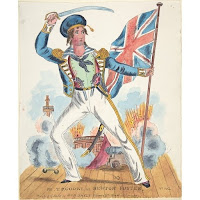
T. P. Cooke

In a recent post, I wrote about Margaret Somerville Bunn, one of the performers highlighted in The Biography of the British Stage in 1824. Today, I want to discuss an even more famous actor featured in that book: Thomas Potter Cooke.

A regular fixture in English melodramas of the early 19th century, Cooke was a former sailor who also excelled at playing sailors on the stage. According to his entry in The Biography of the British Stage, young Cooke attended a nautical spectacle when he was only around 10 years old and became fascinated by the sea. In 1796, he became a member of the Royal Navy and sailed on the H.M.S. Raven to Gibraltar, Toulon, and the Mediterranean.

It was on board the Raven that Cooke experienced an infamous shipwreck. Sailors spent two days and nights clinging to the remains of the ship. Though many of his fellow mariners died, Cooke managed to reach shore. After a long fever, it was deemed he was not fit to return to service, and he left the navy. So enthusiastic was he for the sea, however, that after he recovered, he set sail again, this time on board the H.M.S. Prince of Wales. He continued to serve on that vessel until the Treaty of Amiens temporarily ended hostilities in 1802.

Though the agreement at Amiens ended up being only a brief intermission rather than the end of the Napoleonic wars, Cooke this time gave up the sea, and in 1804 he made his debut as an actor at the Royalty Theatre in Whitechapel. Cooke then accepted a position at Astley's Amphitheatre "upon liberal terms" according to The Biography of the British Stage. Two years later, he moved to the Lyceum Theatre, but ultimately he left London for Dublin, appearing at an amphitheatre on Peter Street. He returned to England in 1809, and Robert William Elliston got him to help run the Surrey Theatre.

Minor and provincial theatres were all well and fine, but in the early 19th century, serious actors were supposed to perform at one of the two patent theatres at Covent Garden or Drury Lane. Beginning in 1816, Cooke did appear in a series of melodramas at Drury Lane, as well as at Covent Garden, the Royal Opera House, and the Royal Coburg. Cooke had the honor of originating some of the most famous Gothic roles of all time, appearing as the title role in The Vampyre, based on the novel by John Polidori, as well as the creature in Presumption, the first stage adaptation of Mary Shelley's novel Frankenstein.

It was for his appearances in nautical melodramas that Cooke was most famous, though. He appeared as a sailor in Edward Fitzball's The Pilot, Douglas Jerrold's Black-Eyed Susan, and John Thomas Haines's My Poll and My Partner Joe, among other plays. No doubt his experience as an actual sailor aided him in providing verisimilitude.

Monday, December 27, 2021

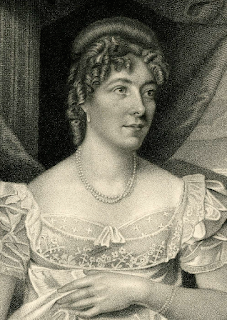
Margaret Somerville Bunn

The actress Margaret Somerville made her debut at the Theatre Royal, Drury Lane playing the female lead in Charles Robert Maturin's play Bertram opposite none other than Edmund Kean.

At the time, she was only 16 years old, at least if we can rely on The Biography of the British Stage, published by Sherwood, Jones, & Co. in 1824. That source gives Somerville's birth as being in Lanark, Scotland, on October 26, 1799.

Young Margaret, at the age of 10, began performing in private theatricals, taking on the role of Marcia in Joseph Addison's Cato in a performance of juveniles. Apparently, she grew into an impressive actress, and in 1815 Douglas Kinnaird, a member of the sub-committee running Drury Lane, managed to get her into rehearsal at the theatre in the starring role of Belvidera in Thomas Otway's Venice Preserved.

Alas, poor Margaret Somerville was dismissed from those rehearsals, being informed she was simply not up to the role. Undeterred, she appealed to John Kemble, then manager of the rival patent theatre at Covent Garden, but he declined to help her. She then returned to Kinnaird and performed some passages from Venice Preserved in an attempt to win a second chance. It so happened that Lord Byron, who was also on the sub-committee, was present, and he and Kinnaird both agreed that the young woman should make her debut immediately.

Bertram opened on May 9, 1816, with Somerville in the role of Imogine. The show was a success, and the actress was offered a three-year contract on "very advantageous terms" according to The Biography of the British Stage. In 1817, she obtained permission to perform in Bath for a engagement of ten weeks, lasting into the new year. It was there that she played the role of Bianca in H.H. Milman's tragedy Fazio. In 1818, she left Drury Lane and defected to Covent Garden, where she played Bianca again. That role had already been made famous in London by Eliza O'Neill, who subsequently appeared with Somerville in Jane Shore by Nicholas Rowe.

Somerville was frustrated with a lack of choice parts for her in London, though, and she left Covent Garden to tour the provinces. It was while performing in Birmingham that she met Alfred Bunn, whom she married in 1819. Bunn became part of the inner circle of Robert William Elliston who then took over Drury Lane, allowing Margaret, now Mrs. Bunn, to appear in London as Bianca again, as well as Hermione in William Shakespeare's The Winter's Tale and Cornelia in Sheridan Knowles's Caius Gracchus.

Perhaps Margaret Bunn's most famous role, however, was Queen Elizabeth in an adaptation of the Walter Scott novel Kenilworth. According to The Biography of the British Stage, she was applauded "to the very echo" in the role.

According to a local newspaper in south-central Minnesota, the Bunns' second daughter Helen immigrated to the United States, and Margaret, then widowed, joined her. She died in 1882 and is buried in Blue Earth, MN.

Saturday, January 26, 2019

Edmund Kean's Shylock

On this day in 1814, Edmund Kean appeared as Shylock on the stage of the Theatre Royal, Drury Lane.

It would launch Kean's career, but it was not the first time he had appeared on a London stage. Writing 72 years later in the October issue of The Theatre, Percy Fitzgerald recalled Kean's "most extraordinary career." According to Fitzgerald, Kean "had been literally reared on the stage" and had "performed the young Arthur to Mrs. Siddon's Constance" in William Shakespeare's King John.

Childhood appearances with Sarah Siddons were not the actor's only experience in London prior to his Drury Lane triumph. Fitzgerald recounts an appearance at the Theatre Royal, Haymarket on 30 July 1806, when Kean appeared as "Clown" in the farce Fortune's Frolic. Playing the role of Dolly in that production was "Mrs. Gibbs" whom I take to be Maria Gibbs, née Logan, who made her London debut at the Haymarket in 1783.

After his appearance as "Clown" Kean returned to touring the provinces, and it was in Dorchester that he was rediscovered. Robert William Elliston invited him back to London to act in one of the "minor theatres." Fitzgerald writes that a certain "Dr. Drury" recommended Drury Lane hire Kean instead, and one "Mr. Arnold" came out to see the actor for himself. On 14 November 1813, Kean acted in The Mountaineers with "few people in the pit and gallery and three persons in the boxes." In spite of the small house, Kean determined to play his best, and his efforts were rewarded. He was given the opportunity to appear at Drury Lane, a pleasure mixed with sorrow, as his son Howard was very ill at the time.

Soon after Kean received news he would have a London engagement, Howard died. "His grief was such that he did not care for the brilliant opening," Fitzgerald writes. Kean had to stay longer in Dorchester than he anticipated in order to attend to the business of his son's death. When he arrived in London, he appeared "defiant, suspicious, jealously independent, very poor, almost to squalor" and the committee at Drury Lane saw him as a "listless, shabby postulant." They apparently rebuked Arnold and tried to use Kean's bargain with Elliston as an excuse to void their own agreement with him. Kean engaged in "desperate exertion" to free himself from his engagement to perform at a minor theatre, and according to Fitzgerald, "it was said Elliston was rather glad to be free."

After a "single rehearsal, it was pronounced that it would be a certain failure," Fitzgerald writes. The day of his performance was "wet and miserable" and Kean that night "arrived soaked through" at his shared dressing room. His fellow performers noticed something curious about the way Kean dressed himself for Shylock: "he was putting on a black wig instead of the traditional red one." In the eighteenth century, Shylock had generally been played as a clown. (After all, Shakespeare's The Merchant of Venice is in fact a comedy.) The actor Charles Macklin had pushed back against that tradition, but the red wig had remained. What was wrong with this guy? Didn't he even know which costume he was supposed to wear? The stage manager at the performance gave Kean up as "hopeless," Fitzgerald says.

The cast of The Merchant of Venice that night boasted some of the actors who had premiered S.T. Coleridge's drama Remorse the previous year. Alexander Rae, who had played Ordonio in Coleridge's tragedy, appeared as Bassanio, and Sarah Smith, who originated the role of Teresa in Remorse, came on in the choice role of Portia. Smith was once considered the most promising actress in Britain, but by 1814 she had turned out to be a disappointment. Thus, Kean had few fellow actors in the cast who could compete with his performance. After the first act, people began to realize that Kean's Shylock was "a great success." He went home afterward and reportedly said of his son Charles Kean, "Charley, my boy, you shall go to Eton!"

The younger Kean did in fact go to school at Eton, but later fell so far in life he had to resort to acting, just like his father. That, however, is another story.

Thursday, December 29, 2016

Elliston as Manager

I recently finished Christopher Murray's biography of the actor and theatre manager Robert William Elliston. It's amazing the number of things Elliston managed to accomplish, including in 1815, lighting the exterior, saloon, and part of the auditorium of the Olympic Theatre with gas lighting.

Frederick Albert Windsor had patented gas lighting in 1804, when it was first used to light the facade of the Lyceum Theatre. It was not until 1817 that gas lights were first used to illuminate a London stage. (The previous year, the Chestnut Street Theatre in Philadelphia had used gas lighting.)

So Elliston's illumination of the Olympic was a dubious first. He had greatly expanded a technology already in use, but not brought it to its full capability. The same could be said about many aspects of Elliston's management. He dragged the London theatre forward (sometimes kicking and screaming), but only so far.

Throughout his life, Elliston managed a number of theatres, both in and outside of London. Murray devotes one chapter to Elliston's management of the Birmingham Theatre Royal, where he attracted such luminary performers as Eliza O'Neill. According to Murray, hundreds of people had to be turned away from the theatre when O'Neill appeared, and many "settled for a glimpse of the adored actress coming or going at the Royal Hotel."

Later, when Elliston was managing the Theatre Royal at Drury Lane in London, he fared considerably poorer with dramatists than he did with actors. He tried to get Walter Scott and Thomas Moore to write plays for him, but both declined. Of course, he received unsolicited scripts from John Keats, Percy Shelley, and Leigh Hunt, and rejected them all. Alas, the tyranny of the slush pile is nothing new! Without a friend on the inside, even the best writers of the nineteenth century couldn't get their work taken seriously.

Elliston was managing Drury Lane when King George III died at the beginning of 1820. The sad event closed the theatres out of respect for the nation's mourning, but it also opened up a new possibility. Since the king had gone mad, no one had dared perform King Lear (for obvious reasons). Elliston rushed a production of Lear to the stage after the theatres were allowed to reopen in February. Though he for the most part followed the adaptation by Nahum Tate with its absurd happy ending, he did restore some of Shakespeare's text to the heath scene and to Lear's recognition of Cordelia.

The following year, Elliston gained notoriety for staging Lord Byron's play Marino Faliero without the author's permission. Again, Elliston rushed the piece into production, securing a copy of the play while it was still going to press and not even completing casting until a week before the show opened. Elliston had secured permission to perform the play from the Lord Chamberlain's office, so he legally had a right to do it whether Byron wanted him to or not. Alas, the controversy was not enough to sell tickets, and the play was ultimately deemed a financial and critical failure.

Later at Drury Lane, Elliston staged the first English-language version of Goethe's Faust. After a collapse in health (and finances) Elliston lost his lease on Drury Lane, but he did not give up on theatrical management. In 1827, he took over a theatre in Surrey, where he staged melodramas by popular writers like Edward Fitzball, William Thomas Moncrieff, and Douglas Jerrold. Elliston also staged the only play by Walter Scott to be performed in the writer's lifetime, The House of Aspen. As was the case with Marino Faliero, the production was without the author's permission.

Elliston is perhaps best known as an actor, a fine Romeo and the original Alvar in Samuel Taylor Coleridge's Remorse. However, Murray makes a good case that Elliston's greatest achievements were not as a performer, but as a manager.

Saturday, November 19, 2016

Robert Elliston

An anonymous memoir of the actor Robert William Elliston published in 1825 declared that to do the man justice, "we should devote a volume to his impudence, another to his eloquence.” Certainly, the checkered career of the actor and manager has provoked a variety of responses.

Born in 1772, Elliston was a product of the late-Georgian era. His uncle, who taught at Cambridge, groomed the young man for the church, but that was not to be. He dropped out of St. Paul's school, in spite of early academic success, and went to Bath to pursue a career on the stage. After receiving some advice from John Kemble, Elliston made a successful appearance as Romeo in Bath, and soon thereafter became one of the leading actors in that city.

Elliston made his first appearance at the Haymarket Theatre in London on June 24, 1796, later excelling there in the role of Edward Mortimer in The Iron Chest. The play had failed the previous winter when performed at Drury Lane, but with Elliston, it was a success. Unfortunately, the success seems to have swelled his ego, but in spite of personal conflicts with a number of London actors, he was appointed acting manager at the Haymarket in 1803. Elliston took on a variety of roles, from Hamlet to Harlequin, and in the words of his anonymous biographer, he became "a dabbler in every thing, a master of nothing.”

In 1809, Elliston took over the management of a theatre in Surrey for three years. It was here that he came into conflict with Vincent De Camp, with whom he would later share the stage in Samuel Taylor Coleridge's Remorse. Elliston apparently insulted De Camp while the two were on stage in a farce called How to Die for Love. As soon as they got off stage, De Camp quarreled with him and "made the manager bite the dust.” Elliston challenged De Camp to a duel, but apparently neither were injured, as "the affair ended--not in fire--but smoke.”

Later, while managing Drury Lane, Elliston produced Lord Byron's play Marino Faliero against the professed wishes of the author. The play was not a success, but that might have been due in part to the haphazard cutting to which Elliston subjected the script. As his biographer later put it, "He had it hacked, to suit his theatre; and thus, after having seized the piece like a robber, he carved it like a butcher."

Elliston occasionally tried his hand as a playwright, most noticeably with The Venetian Outlaw, an adaptation of a French drama that had in turn been pirated from the German. Though considered "the best light comedian of his day" he had more difficulty with tragedy. As the 1825 memoir puts it, "he was superlative in comedy, good in melodrame, endurable in tragedy, excellent in farce, and even at one time bearable in opera."

By the close of his career, Elliston seems to have alienated most everyone. His biographer declared: "We believe, in the whole range of the drama, there is no one who speaks well of Mr. Elliston." A sad end for a once great actor.

Tuesday, August 16, 2016

The Tragic Mr. Rae

In my last blog post, I wrote about the mysterious Mrs. Gibbs. Today, I'll be covering an actor about whom considerably more is known: Alexander Rae.

Rae is probably best known for playing Ordonio in Remorse, a tragedy by Samuel Taylor Coleridge. According to his memoir in the 1826 Dramatic Biography, Rae "had the good-fortune to receive a classical education.” His training in recitations of classical texts prepared him for a lifetime on the stage.

Born sometime in May of 1782 (no exact date is given), Rae lost his father at a young age and worked for a while in the office of an army agent. Passing up a chance to go to India, Rae appeared as Hamlet in 1810 at a theatre in Huntington. He later acted in Hamlet at both Bath and Bristol and was favorably received.

Still, Rae was praised for "the elegance of his style, rather than his capabilities as an actor.” He attracted the notice of George Coleman the Younger at the Haymarket Theatre, where he subsequently appeared as Sir Edward Mortimer in Coleman's The Iron Chest. At the close of the Haymarket's season, he proceeded to Liverpool, where he took on the management of a local theatre.

On the circuit, Rae played with both Sarah Siddons and John Philip Kemble. After the Theatre Royal at Drury Lane reopened in 1812 following a disastrous fire, Rae took to the stage there, appearing both in Hamlet and Coleridge's Remorse. The Dramatic Biography calls Rae's Ordonio "a first-rate effort" adding that he "was a picture of horror we shall never forget.” Rae did not entirely capture the tragic spotlight, however, but had to share it with Robert William Elliston, who played Alvar in the play.

Elliston, as it turned out, probably had more of an aptitude for comedy, but at that point in his career he still frequently played tragic roles. It seemed that Elliston would be Rae's rival for the tragic leads, but that was not to be. The next year, Edmund Kean made his Drury Lane debut as Shylock, and the theatrical world would never be the same. Rae acted with Kean in Richard III, but the two reportedly did not get along, and Rae turned to comedic roles. The one part in which he successfully competed with Kean was as De Zelos in Charles Robert Maturin's tragedy Manuel.

Rae eventually rose to become stage manager of Drury Lane, but his tenure did not go well. He was said to have been overly lavish in his expenditures, and his attempts at reviving some classic comedies failed with the public. Leaving Drury Lane, Rae went to the Royalty Theatre. Money troubles followed him though, and soon even greater difficulties. Rae was married, but a certain woman who had fallen in love with him threatened to commit suicide if he would not abandon his wife and move in with her. He obliged her, much to his wife's dismay.

While living with his new mistress, the Dramatic Biography tells us, Rae developed a painful "stone" which caused him physical as well as mental distress. His wronged wife came to his bedside, and the remorseful Rae died under the surgeon's knife. After Rae's death, his fellow actors staged a benefit performance of The Rivals at Drury Lane for his widow and family.

One of Rae's daughters followed him into the theatre, but I have been unable to trace the rest of his family. The general feeling is that Rae's case was one of missed opportunity. As the Dramatic Biography lamented: "He studied little, was frequently imperfect, and may therefore be said to have never given himself a fair chance in the field."

Saturday, August 6, 2016

Back From Cambridge

I'm back from the U.K. now, and the Society for Theatre Research conference in Cambridge was amazing.

Our final day was jam packed. In the morning, I went to the session on James Winston and the Regency Theatre. Winston was a bit of a jack-of-all-trades in early 19th-century theatre, and is today probably best known for writing The Theatrical Tourist about the provincial theatres in Britain.

Vicky Simon began by giving a great presentation about the proscenium doors at Drury Lane Theatre. After the theatre burned down in 1809, it was rebuilt, and bronze tripods were placed where the proscenium doors had once been. The tripods were criticized, though, and ultimately nixed. During the 1814 remodeling of the theatre, the doors were put back in the proscenium arch.

When Robert William Elliston leased the theatre, he appointed Winston to manage Drury Lane. Winston got Samuel Beazley to remodel the interior of the theatre, contracting it, and removing the proscenium doors. The doors, which had been in and out of fashion for so many years, were now gone for good. But how could people come forward to give curtain speeches? Well, it was Beazley who apparently first designed a way to open up a small part of the front curtain to let people through.

David Wilmore then spoke about the circuits of provincial theatres in the north of England. He mentioned that the town of Richmond in Yorkshire has one of the few remaining Regency-era theatre buildings. (Now I have to visit!) He also showed an interesting map demonstrating how the theatre circuits in Yorkshire tended to follow the turnpikes.

Iain Mackintosh gave a great presentation on the Margravine of Anspach, who built her own private theatre into an old riding school. Born Elizabeth Berkeley, and later Lady Craven, the Margravine had quite a scandalous life. King George III refused to receive her at court, but the Prince of Wales came to her parties and amateur theatricals.

Later that morning, I went to a great session called "Music, Melodrama, and the Survival of the Fittest." I mainly wanted to hear Eva Urban's paper on remorse tragedy, examining both Richard Brinsley Sheridan's Pizarro and Samuel Taylor Coleridge's Remorse. She tied the two plays back to Adam Smith's theory of moral sentiments.

Amy Garnai then gave a great talk on Thomas Holcroft and Joanna Baillie. Holcroft's second melodrama, The Lady of the Rock, premiered at Drury Lane in 1805. Based on a Scottish legend, the piece featured music by Holcroft's daughter Fanny. Though Holcroft's revisions softened the piece, it was still politically radical. The same could not be said of Baillie's treatment of the same story in her rather conservative play The Family Legend.

Christina Fuhrmann gave the last paper in the session, on Carl von Weber's opera Oberon, which had a libretto by James Planche. Though many theatre historians consider the opera to have been a failure, Fuhrmann noted that the opera extended to 32 performances in its first season, and was only disappointing when compared to Weber's runaway hit Der Freischutz.

All in all, it was a great conference, and Downing College was a perfect setting. I look forward to seeing some folks again... perhaps at the next STR conference!


Friday, December 19, 2014

The Greatest Romeo Upon Holborn Hill

As the author William Archer points out, Robert William Elliston acquired the lease on the Royal Circus Theatre the day before the Theatre Royal at Drury Lane burned down on February 24, 1809. It was a massive stroke of good luck. He was able to provide the public with entertainments during the long hiatus while Drury Lane was being rebuilt.

Plus, Elliston never stopped acting. At the Haymarket Theatre (which was licensed to perform "legitimate" spoken drama during the summer months while Drury Lane and Covent Garden were closed) Ellistion played Pierre in Venice Preserv'd and Lothario in The Fair Penitent. Then, when Drury Lane finally did reopen on October 10, 1812, Elliston gave a special address written by Lord Byron. The following year, he originated the role of Alvar in Samuel Taylor Coleridge's tragedy Remorse.

Elliston's star continued to rise, and in 1819 he took over the lease of Drury Lane. Elliston staged an elaborate spectacle for the coronation of the new king, who of course attended performances at Drury Lane frequently. According to one anecdote, the king once slipped into his box early in order to avoid a rain storm and fell asleep. Elliston, seeing someone in the king's seat, was about to reprimand the man when he realized that it was the king himself. Unsure of what to do, he went and got a violin and played "God Save the King" in order to wake the monarch so the house could be prepared.

However, Elliston was best remembered for playing lovers. John Hamilton Reynolds praised him in a laudatory poem as "The greatest Romeo upon Holborn Hill." In one of his critical essays, Leigh Hunt described the actor this way:

When Elliston makes love, he appears literally  to live in the object before him; he shows a most original earnestness in his approach and in his devices to his mistress, he enters into all her ideas, he accompanies her speech with affectionate gestures of assent or anticipation, he dwells upon her face while she is talking to another; in short, he is his fair one's shadow....

Later, in his own autobiography, Hunt raved:

Indeed, he was the most genuine lover that I ever saw on stage. No man approached a woman as he did--with so flattering a mixture of reverence and passion--such closeness without insolence, and such a trembling energy in his words.

Sadly, in 1826 Elliston collapsed on stage while playing Falstaff. The proprietors of Drury Lane took advantage of the situation to cancel his lease, allegedly due to back rent, but probably because they thought the actor-manager was past his prime. He probably was. He died five years later, having appeared on stage just two weeks before his demise.