Showing posts with label Ira Aldridge. Show all posts

Tuesday, April 28, 2026

Revolutionary Drama

Tonight, I'm having a private reading of my play Combustion with American Renaissance Theater Company.

The play tells the story of Marie-Anne and Antoine Lavoisier, who revolutionized chemistry around the same time a political revolution was happening in France.

Megan Greener will be reading the part of Marie-Anne, who figured out the mechanics of how to perform experiments that changed the way we think about matter. Frank Hankey will be playing her husband, Antoine, who was more focused on theory than the actual experiments.

A third character in the play, being read by Eric Percival, is the ghost of Jean-Paul Marat, a key figure in the French Revolution who sparred with the Lavoisiers and ended up getting assassinated in his own bathtub. (This later became the subject of a famous painting by Jacques-Louis David.)

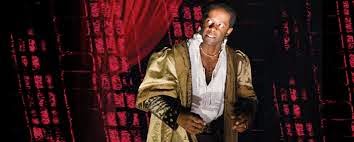
The French Revolution has always inspired great drama. In fact, re-enactments of the storming of the Bastille were staged soon after that event took place. Throughout the revolution, playwrights like Olympe de Gouges wrote about current events for the stage. The Bastille and the Terror later had important roles in the play The Black Doctor which became a star vehicle for Ira Aldridge.

Perhaps the most memorable depiction of the French Revolution is in A Tale of Two Cities, Charles Dickens's novel which was first adapted for the stage in 1860 by Tom Taylor. The events of the revolution keep resurfacing though, such as in the 21st-century playwright David Adjmi's Marie Antoinette, which I recently saw at Marymount Manhattan College.

My own play adds to this tradition, but also brings focus to the unique partnership of two scientists who tried to change the world, but got caught up in the world changing without them. I hope to be able to share this piece with the public soon in a full production.

Wednesday, January 8, 2025

The Battle of Life

I was browsing some playbills in the online collection of the British Library, when I came across an interesting poster advertising a stage adaptation of the Charles Dickens novella The Battle of Life and the melodrama The Black Doctor, a play later made famous by Ira Aldridge.


It's been the season for Dickens, who followed up A Christmas Carol in 1843 with a new Christmas book, The Chimes, the following year. After The Chimes was likewise a bestseller, Dickens wrote The Cricket on the Hearth to be sold at Christmastime in 1845 and The Battle of Life in 1846.

A Christmas Carol is divided not into chapters but five staves, like the staves of a poem or song. The Chimes is broken up into four quarters, like the quarters of an hour, and The Cricket on the Hearth has three chirps. Perhaps Dickens had grown weary of this humorous conceit, as The Battle of Life is simply divided into three parts.

Those three parts do correspond well to the three acts of a play, which might have made the piece ripe for adaptation to the stage. The playbill from the Theatre Royal in Bath announces the closing of both shows on January 7, 1847, which means the adaptation must have been written soon after Dickens had published the book the previous month.

Dickens purposely set The Battle of Life about a hundred years in the past. As with Robert Browning's play A Blot in the 'Scutcheon, which Dickens had championed, the 18th-century setting was necessary to portray certain values that had already become obsolete by the Victorian era. Rather than being set in the city, like many of Dickens's novels, the story takes place in the countryside, in a town near a famous battle site.

After setting up the action, the story moves forward three years. It is this second part that takes place around Christmastime, and in fact the main event of the narrative occurs during a Christmas ball, when the beautiful Marion mysteriously disappears. She does not return until the third part, which occurs another six years later. Though The Battle of Life is by no means Dickens's most famous work, I can see why it would be tempting to adapt it for the stage, since the three parts correspond so well to the three-act structure preferred in many plays of the period.

The Black Doctor, however, was originally divided into seven acts when it was written in French by Auguste Anicét-Bourgeois and Philippe François Pinel Dumanoir under the title Le Docteur Noir. It was later turned into a four-act play translated by John Vilon Bridgeman and further adapted by Thomas Hailes Lacy. It is this version that seems to have been advertised on the playbill, rather than the adaptation by Thomas Archer that Aldridge later appeared in and made famous.

I would have liked to have seen that evening of plays produced in Bath! Having just read The Battle of Life and having a long-standing interest in The Black Doctor, I would be intrigued to see how the company handled both works.

Friday, March 31, 2023

Romantic Dramas at NASSR

Today, I presented my paper on Olympe de Gouges and Ira Aldridge online as a part of the annual conference of the North American Society for the Study of Romanticism, better known as NASSR.

I was a part of a panel on Theaters of Violence and Justice moderated by Sophie Thomas. The panel was led off by Marjean D. Purinton of Texas Tech University who spoke on "Justice on Trial in Romantic Period Drama and Novels."

Purinton is incredibly knowledgable about British Romantic drama, which is also the subject of a recent book of mine. She began by discussing one of my favorite playwrights of the period, Joanna Baillie, but instead of talking about one of her more well-known dramas, she delved into The Stripling, a prose tragedy based on a real-life case in Scotland.

In most of the plays Purinton discussed, legal trials are suggested but not directly portrayed on stage. In The Iron Chest, for instance, George Colman the Younger's adaptation of the novel Caleb Williams by William Godwin, a trial is central to the plot, but occurs offstage, as the accused title character comes to have less and less faith in a legal system that seems to just protect the rich and powerful.

Next, Purinton discussed The Cenci, a drama by Percy Shelley which I have written about frequently. She argued that the play really criticizes the justice system in Britain during the Regency, not the courts of Renaissance Rome that are nominally depicted in the tragedy. In addition she discussed James Boaden's The Secret Tribunal and a play by Elizabeth Inchbald, though I didn't catch the title of that one.

Young-ok An from the University of St. Thomas rounded out the panel, discussing Percy Shelley's The Cenci and Mary Shelley's novel Valperga. Thanks to everyone who showed up to listen to us!

Sunday, March 26, 2023

NASSR Conference This Week!

This week, the North American Society for the Study of Romanticism is holding its annual conference in Huntsville, Texas. I'll be attending, but online rather than in person.

Last year, NASSR held a joint conference with the British Association for Romantic Studies, which was also held in a hybrid format. I presented a paper virtually on George Gordon Byron's play Marino Faliero, and even chaired a panel on Byron.

This year, the theme of the NASSR conference is Romanticism and Justice. The conference opens on Thursday, and though I'll have to teach during the morning sessions, I plan on attending a virtual coffee hour with Julia Wright from Dalhousie University. Then, the Keats-Shelley Association of America is sponsoring a virtual seminar called Percy Shelley for Our Times.

My panel will be on Friday morning. I'll be discussing imprisonment in the plays The Convent by Olympe de Gouges and The Black Doctor Ira Aldridge. I'll be joined by Marjean D. Purinton discussing dramas that put justice on trial, Shavera Seneviratne discussing T.W. Moncrieff's The Cataract of the Ganges, and Young-ok An discussing women on trial in the work of Percy and Mary Shelley.

Sophie Thomas of Toronto Metropolitan University is currently scheduled to be chairing my panel. I'm looking forward to it!

Friday, March 3, 2023

Reviewing Eugene O'Neill

I recently joined the Eugene O'Neill Society, and yesterday my first issue of The Eugene O'Neill Review arrived in the mail.

The journal includes my own review of a production Irish Repertory Theatre did last year of O'Neill's A Touch of the Poet, starring Robert Cuccioli and Belle Aykroyd.

It's an honor to have my review included. This issue has some fascinating stuff, including an article about an unperformed adaptation of The Hairy Ape by Shirley Graham originally written for the Federal Theatre Project, and another article on the influence Maxim Gorky's The Lower Depths had on O'Neill.

Many thanks to the journal's editor, Alexander Pettit, for putting together such a lovely publication, and to Bess Rowen for asking me to review Irish Rep's production for the issue. I hope to have more work published in the journal in the future.

Right now, though, my attention is on earlier dramatists, as I am giving a paper at the end of the month on Olympe de Gouges and Ira Aldridge for a conference by the North American Society for the Study of Romanticism.

I don't know if O'Neill was familiar with the work of de Gouges and Aldridge, but I imagine he would have liked their plays!

Thursday, January 12, 2023

Romanticism and Justice

At the end of March, I'll be attending a conference on "Romanticism and Justice" held by the North American Society for the Study of Romanticism, and delivering a paper on two plays I regularly teach in theatre history courses, The Convent and The Black Doctor.

My paper, which I'll be delivering virtually on March 31st, will be titled "Ancien Régime Imprisonment in the Plays of Olympe de Gouges and Ira Aldridge." I'll be a part of a panel chaired by Sophie Thomas from Toronto Metropolitan University, and including Marjean D. Purinton of Texas Tech, Shavera Seneviratne from the University of Minnesota, and Young-ok An of the University of St. Thomas.

The Convent, or The Forced Vows was one of de Gouges's most popular plays. It premiered in 1790, just as the French Revolution was getting started, and tells the story of a woman imprisoned against her will by an aristocratic relative who tries to force her to take vows as a nun. The play examines the injustices of the old monarchal regime just as it was being transformed. I should note that de Gouges herself wanted to reform the monarchy, not abolish it, and because she wasn't radical enough for some, she was later executed during the Reign of Terror.

Ira Aldridge, by contrast, wasn't even born until after the French Revolution, but he had become fascinated by a French melodrama called Le Docteur Noir that had been circulating in Britain where he was touring as a leading actor. An African-American man from New York, Aldridge was looking for new roles he could play without having to cover himself up in whiteface, which he frequently did when portraying white characters. The Black Doctor fit the bill.

Over the course of the play, the titular doctor runs afoul of powerful aristocrats and gets imprisoned in the Bastille. The play then re-enacts the storming of the Bastille, and shows him being liberated, but only after years of isolation have affected the doctor's sanity, a plot element that would later appear in the novel A Tale of Two Cities by Charles Dickens. Just as with A Tale of Two Cities, The Black Doctor moves beyond the giddy triumph of the masses overthrowing the Bastille and examines how the Terror attacked even family members of those who were heroes of the Revolution.

The two plays have a lot in common, so I should have more than enough to talk about in March. If you're interested in attending the conference, either in person or virtually like me, check out NASSR's conference website.

Friday, February 25, 2022

The Revenge

Amy B. Huang has an interesting article in the recent issue of Theatre Survey about Edward Young's 1721 play The Revenge.

The play follows Zanga, a Moorish prince who plots revenge against a Spanish general, Don Antonio, who captured him and murdered his father.

Young's play is reminiscent of Othello, only this time the Moor is in the place of Iago, spreading lies to provoke discord. Rather than merely kill Don Antonio, Zanga convinces him that his love Leonora has been unfaithful to him.

Zanga was traditionally played by a white actor, but in the 19th century, the African-American star Ira Aldridge performed the role. Huang includes excerpts from a review of his performance by playwright and critic Douglas Jerrold.

According to Jerrold, Aldridge was "gifted with an intelligence of perception, dignity of action and force of expression that not only do honor to his particular race, but to humanity." Though Jerrold was not a fan of the play, he thought Aldridge "made as much of Zanga as it is possible to do."

Below is a picture of Aldridge in the role. He must have been amazing to see on stage!

Monday, August 3, 2020

The Black Doctor

Ira Aldridge is one of those remarkable people we've known about for a long time, but who has been in recent years increasingly getting the attention he deserves.

Aldridge was born in 1807 in New York, though he later claimed to be from Africa, probably in a bid to appeal to European audiences who wanted to view him as a more "exotic" foreigner than just another American ex-patriot.

His father sold straw for a living, but also was a lay preacher. Later scholars have speculated that young Ira might have gotten his first vocal training from his father, who not only had to have a strong voice to preach, but who also hawked his straw from a cart he took around New York City, which meant he must have needed a strong voice to attract customers.

Aldridge's real theatrical training came from the African Grove Theatre, though. William Alexander Brown founded the theatre in 1821 to perform amateur productions of plays by Shakespeare and others, including Brown himself, whose play King Shotaway was sadly lost. The actors were of African ancestry, including William Hewlett, the star of the company, who was particularly famous for playing Richard III.

At the African Grove Theatre, Aldridge played such parts as the Inca warrior Rolla in Richard Brinsley Sheridan's Pizarro, but the company did not last long. The year the African Grove Theatre began offering their performances in downtown Manhattan, the Park Theatre was rebuilt in the same neighborhood.

The Park Theatre offered professional performances by white actors for a predominately white audience, though African Americans like Aldridge did watch shows from the upper balcony. When white audience members saw how good the productions at the African Grove were, though, they started patronizing the amateur company, and this was too much for the managers of the Park Theatre to take. They began to harass Brown's company, and the African Grove Theatre was eventually burned down, likely at the instigation of the management of the Park Theatre.

Aldridge probably saw that if he was going to have any success as an actor, it wasn't going to be in his home country. He emigrated to Britain, and had some success playing roles including Othello. That's when the most famous portrayer of Othello on the British stage, Edmund Kean, collapsed during a performance playing opposite his son Charles and died a couple months later. The theatre needed a new Othello, and Aldridge was chosen for the part.

What happened next is recounted in Lolita Chakrabarti's wonderful play Red Velvet. Reviews of Aldridge's Othello were mixed, and some were openly hostile and explicitly racist. Aldridge ended up leaving London, instead touring provincial theatres in Britain as well as larger venues on the European continent. There, he won great renown not just in Othello, but also Richard III, The Merchant of Venice, and King Lear, as well as dramas by Matthew G. Lewis, Charles Robert Maturin, and others.

In 1846, the hack dramatist Auguste Anicét-Bourgeois wrote a play called Le Docteur Noir. Anicét-Bourgeois seems to have written the play together with Philippe François Pinel Dumanoir, a melodramatist who would go on to adapt Uncle Tom's Cabin for the Théâtre de l'Ambigu-Comique in Paris. Le Docteur Noir might not have been great literature, but it did provide moments for great acting, and it appeared on the London stage in a translation by John Vilon Bridgeman and further adapted by Thomas Hailes Lacy.

In Bath, Bristol, and Dublin, Aldridge began performing another adaptation of the play by Thomas Archer. Aldridge's adaptation of The Black Doctor gives particular emphasis to race and class, according to theatre scholar Keith Byerman, who did a thorough analysis of different texts.

The play begins on the Isle of Bourbon, now known as Réunion, in the Indian Ocean near Madagascar. In the first scene, we hear of Pauline de la Reynerie, a French noblewoman whose life was saved by Fabian, the titular black doctor played by Aldridge. Pauline's mother was on a ship that is assumed to be wrecked, but it was her mother's wish that Pauline marry the Chevalier St. Luce. Meanwhile, Fabian has mysteriously disappeared, though some say "he has been observed wandering on the cliffs, but always avoiding anyone who appeared to seek him."

Scene Two takes place in Fabian's hut, where Pauline tracks him down and gives him a purse full of gold to distribute to the poor since he has refused payment for his services. She also tells him that a mysterious man has been sighted near her house, and we understand that the stranger is Fabian himself, who is in love with her. Pauline's mixed-race foster sister Lia is in love with a white clerk, and when Pauline says she will help her to marry the man in spite of racial prejudice, Fabian begins to have hope for his own prospects.

The brief third scene concerns some minor characters, and prepares the audience for the thrilling climax of the act, illustrated on the first page of the published play. Fabian, hearing that Pauline has been betrothed to St. Luce, takes her to a grotto down by the sea, hoping the ocean will kill them both when the tide comes in and floods the grotto.

Wait... the doctor who saved her is now going to murder her? Well, it isn't much different from Othello killing Desdemona, is it? Unlike Othello, though, Fabian takes pity on his victim. Pauline, thinking she will die, confesses, "I have long, long loved you!" Hearing this, Fabian carries her to a rock where they are saved by a passing ship.

Act Two takes place at the house of Pauline's family in Paris. It turns out that her mother the Marchioness is not dead after all. Fabian and Pauline have been secretly married, but he is officially employed by her family as a servant, and the Marchioness clearly thinks very little of him. Instead, she wants Pauline to marry St. Luce so she can become a lady of honor to the Queen. (This is presumably Marie Antoinette, as the next act takes place at the outset of the French Revolution.) Pauline, distraught, tries to take poison rather than abandon her husband, but Fabian grabs the poison from her and flees from the room, promising the Marchioness he will restore her daughter to her since that is the only way to save his beloved Pauline.

The dramatic curtain at the end of the second act is exceeded in drama by a third act that takes place in the Bastille on the historic day of its storming in 1789. Both St. Luce and Fabian have been imprisoned in different cells in the Bastille. St. Luce is portrayed as a stuck-up fop, enraged that he can't get luxuries while in prison. Fabian, on the other hand, has been living in misery and trying to communicate with his friend Andre to get news of what is happening outside the prison. Revolutionaries storm the Bastille, freeing the prisoners, but it is too late for Fabian. Thinking Pauline is dead, he falls into an insanity, and the act ends with the cannons of the revolution sounding.

In the fourth and final act, we are transported forward to the year 1793, during the Reign of Terror. Pauline is considered an enemy of the people, since it was her family who was responsible for crimes against Fabian, the good black doctor who is now revered. Andre has been taking care of Fabian, who is still insane. When the mad doctor sees Pauline, it looks like she will be saved from the mob, but then Fabian sees St. Luce beside her, as well as a portrait of the Marchioness. Still thinking the Marchioness is alive and will kill Pauline if they are together, Fabian denies being her husband. A man in the mob fires a gun at Pauline, but Fabian throws himself in front of her, taking the bullet. With his dying strength, Fabian produces the proof of their marriage, saving Pauline at the cost of his own life.

If the play sounds melodramatic, well, it is in fact a melodrama, even including a musical chord at the moment Pauline sees her husband in the final act. Aldridge might not have been a great playwright, but he was a great actor, and the play he adapted no doubt provided a suitable vehicle to display his own talents.

Tuesday, December 30, 2014

Best Plays of 2014

It's that time of year again, and I'm compiling a list of the best new shows I saw in New York in 2014.

Last year the big hits included Saint Joan, Unlock'd, Tamar of the River, and Dialogues des Carmelites.

This year, the same rules apply. This list is only shows that opened in New York City in 2014. (Sorry, Matilda!) However, given my recent post on the top 12 plays of the late 18th century, I'm increasing my picks to a round dozen. Here they are in reverse order:

12. El Año en que nací  This documentary theater piece played at La Mama in January as part of the Under the Radar Festival. Performed in Spanish, with English supertitles, it featured young people imagining what life had been like in Chile for their parents around the years when they had been born. Playwright and director Lola Arias beautifully wove together narratives by each of the cast members, creating a haunting portrait of Chile under Pinochet.

11. Billy & Ray  This production at the Vineyard Theatre could hardly have been more different from the avant-garde style of Lola Arias, yet it also attempted to recreate true events. In this case, the action surrounded the writing of the screenplay for Double Indemnity, one of the most influential noir films of all time. Billy Wilder and Raymond Chandler, both brilliant writers in very different ways, collaborated to pen the screenplay, and the experience knocked poor Chandler off the wagon. Comic playwright Mike Bencivenga turned that story into a delightful, frequently farcical play that provided a platform for actors Vincent Kartheiser (Wilder) and Larry Pine (Chandler) to show their stuff. The result was an evening of pure magic.

10. Tamburlaine the Great  Christopher Marlowe might have been basing his megalomaniacal hero-villain on a real person, but facts in this play scarcely matter, and Theatre for a New Audience's production directed by Michael Boyd deftly set the production in a timeless era with geographical differences only hinted at from time to time. War, bloodshed, and pointless slaughter remain constant, no matter where or when they might occur. It's still playing until January 4, so get your tickets here.

9. pool (no water)  Mark Ravenhill's play received an excellent production at the Barrow Street Theatre in November, thanks to the One Year Lease Theater Company. Director Ianthe Demos broke up the famous in-your-face playwright's block text into five voices, performed by a superb cast of actors. The ingenious set consisted of only a handful of long, white benches, which the cast rearranged in astonishing ways. The story, which follows a group of artists invited out to visit the California home of one of their former associates, might not seem terribly moving (in part because the characters themselves are such terrible people), but innovative staging and exceptional acting made this piece a pleasure to watch, even as increasingly horrible things began to happen.

8. Lady Day at Emerson's Bar & Grill  This play by Lanie Robertson is sensational even without a star like Audra McDonald. However, with McDonald giving the performance of a lifetime, how could you not love it? James Noone provided a set design that transformed the Circle in the Square into a jazz club for legends fallen upon hard times. Instead of just a single piano player accompanying Billie Holiday, the audience was treated to a three-piece band that created a haunting and memorable sound. If you missed it, fortunately there's a cast album available.

7. Tristan & Yseult  Esteemed British company Kneehigh brought this fresh take on an old legend to St. Ann's Warehouse. Though the production contained less dance than I anticipated, I was not disappointed. Writers Anna Maria Murphy and Carl Grose kept a contemporary feel for the piece, with occasional nods to the medieval source material and the famous opera by Wagner. Most moving for me me was the portrayal of Whitehands, played by Kristy Woodward, who commented on the action with the aid of the Lovespotters, a chorus of crooners who observe love at arm's length but never engage in passion themselves. The audience, however, has no choice but to engage emotionally, whether flying with elated lovers or burning with despair in this production so skillfully directed by Emma Rice.

6. Red Velvet  Kudos to St. Ann's Warehouse for making the list twice with a second British import. Tricycle Theatre brought the 19th-century Shakespearean actor Ira Aldridge to life in this wonderful new play by Lolita Chakrabarti. Adrian Lester, known for his own Shakespearean acting, played Aldridge with both easy grace and simmering anger. As a bonus for theatre history nerds, both Charles Kean and Ellen Tree made appearances in the play.

5. Machinal  In January, Roundabout officially opened this stunning revival of Sophie Treadwell's classic play. I saw it in previews and was quite moved by Rebecca Hall's magnificent performance as a doomed murderess. Treadwell's expressionist drama gives the audience nine scenes of descent into an increasingly mechanized life. This production also featured transitional scenes, as Es Devlin's set rotated to reveal new rooms, like fresh cages for urban rats. Director Lyndsey Turner skillfully helmed the play, steering us toward the inevitable conclusion, where the true horror of the machine, literal as well as metaphorical, becomes apparent. This was the kind of production that makes me regret not getting a chance to see more of Roundabout's plays.

4. That Poor Dream  The Assembly's modern-day adaptation of Great Expectations had me on two fronts, adapting a work by my favorite novelist and setting it aboard a familiar Metro North train headed from Grand Central to Connecticut. Though the piece skillfully uses much of the dialogue by Dickens, it branches out to explore how the issues in the novel apply to the United States in the 21st century. I'm writing in the present tense now because while That Poor Dream closed in October, it is reopening in January for six performances at The Tank. It's playing only from the 9th through the 11th, so get our tickets here.

3. King Lear  The Public Theater doesn't always do Shakespeare to my liking, but they nailed it this year with this magnificent outdoor production starring John Lithgow. Though excessively long (combining Shakespeare's two texts of Lear to create an extended version lasting well over three hours), this production gave a moving portrayal of a once-great man slipping into madness and struggling to regain his senses (and his dignity) again. Chuckwudi Iwuji, who also played Bajazeth in Tamburlaine, was a memorable Edgar, feigning madness with compelling vigor. His father Gloucester, played by Clarke Peters, was also quite effective. Though the set (designed by John Lee Beatty) might not have been as creative as the one for That Poor Dream, it worked incredibly well in Central Park's Delacorte, especially with lighting designed by Jeff Croiter and projections by Tal Yarden. Thankfully, director Daniel Sullivan brought it all together this time.

2. All the Way  Amazingly, I never blogged about this show, but perhaps I just wanted to keep the memory of it pure in my mind. The last time playwright Robert Schenkkan had a play on Broadway was The Kentucky Cycle in 1993. I saw that play as a freshman in college, and it left quite an impression on me. Now, more than two decades later, Schenkkan was back again with another play exploring America's history. This one focused on L.B.J.'s efforts to get the Civil Rights Act passed and then win re-election so the Republicans wouldn't smash it all to pieces. Bryan Cranston played President Johnson impeccably, virtually disappearing into his character. The rest of the cast was exceptional as well

1. Macbeth  Hands down, this was the theatrical event of the year. Kenneth Branagh starred in and co-directed this production at the Park Avenue Armory. Doctor Who's Alex Kingston played Lady Macbeth, and Jimmy Yuill (Captain Jamy from Branagh's Henry V) was Banquo. Though originally performed in a deconsecrated church, this production re-imagined itself for its new home in the Armory. It used the historic building for great effect, and when the doors opened into the massive drill hall, it was impossible not to be in awe of the Scottish heath that had been built inside the building. Open flames, clanging broadswords, and blood, blood, blood abounded. Even better, however, was watching Branagh illuminate Shakespeare's words in ways only he can do. The "Tomorrow and tomorrow and tomorrow" speech seemed fresh and new, as if we were hearing it for the first time, even though many of us had been forced to memorize it in high school. Thank you, Mr. Branagh! And please come back to New York soon!

Honorable mentions include Red-Eye to Havre de Grace, Row After Row, and Hellman v. McCarthy. Here's to an even better theatre year in 2015!

Wednesday, April 16, 2014

Red Velvet

Last night I saw Tricycle Theatre's wonderful production of Red Velvet at St. Ann's Warehouse. This new play by Lolita Chakrabarti tells the story of the great nineteenth-century actor Ira Aldridge. It's definitely worth seeing, especially for the performance of Adrian Lester, who plays Aldridge.

The play begins in Poland, where Aldridge died, and where his grave is still honored and revered. A  female Polish journalist sneaks backstage and proceeds to try to get an interview, but the aging and cantankerous Aldridge will have none of it. Why, she wonders, did Aldridge, one of the greatest Shakespearean actors alive, play Covent Gardens only twice? He doesn't want to tell her, but the play flashes back to 1833, showing the audience just what Aldridge has against London.

Chakrabarti takes some liberties with history, but always to heighten dramatic effect. What is true is that Aldridge--an African-American actor who could not get recognized in his home country and had been touring the provinces in Great Britain--was asked to take over the role of Othello at Covent Garden following the collapse of the great Edmund Kean. Poor Kean had been playing Othello when he collapsed on stage, calling for his son Charles, who was playing Iago at the time.

In the play, Charles Kean refuses to go on as Iago opposite Aldridge due to the American actor's race. In reality, he probably didn't play Iago due to the shock of his father's terrifying collapse less the two weeks previously. In fact, Charles Kean had already played Iago to Aldridge's Othello in Belfast in 1829. The play gets around this by claiming Kean was engaged for the performance, but had to cancel due to illness.

It might not be fair to tar poor Charles Kean as a racist, but in Chakrabarti's hands, he makes a wonderful antagonist, especially as his fiancé, Ellen Tree, is performing the part of Desdemona opposite Aldridge. Kean becomes intensely jealous (hints of Othello). Tree, though hesitant at first, comes to appreciate the passionate and more naturalistic acting style of Aldridge, and the play gives us a wonderful glimpse into some of the acting debates of the 1830s.

For whatever reason, Aldridge only performed the role of Othello twice at Covent Garden, and a few days later the theatre went dark for less than a week. The play builds off of these facts to weave a brilliant back-stage drama in which Aldridge descends into his own personal tragedy. Even if Chakrabarti has to conjure up some of the details, however, it is certain than Aldridge left London with a bitter taste in his mouth and preferred acting on the Continent in the future, where his performances were much better received.

Some historical information I picked up at the performance quoted one of my own heroes, Eliza O'Neill, greatly complimenting Aldridge. "During my professional and private life," the retired actress wrote, "I never saw so correct a portraiture of Othello amidst the principal luminaries of my age."

Aldridge was one of the greatest Shakespearean actors of the Victorian era, and it's wonderful to see that he now has a play of his own!

Wednesday, April 9, 2014

Giving a Hand to Titus

Titus Andronicus is the first and bloodiest of Shakespeare's tragedies.  It piles horror upon horror in a way that is scarcely believable for modern audiences.  In Act III, scene i, Aaron cuts off Titus's hand on stage.  This futile attempt to save the lives of Titus's sons turns out to be merely a ploy of Aaron's. Titus exits the stage bearing--in his remaining hand--the severed head of one of his sons.  His own severed hand is carried off by his daughter Lavinia.  She, however, must carry it between her teeth--because after she was raped, both of her hands were cut off and her tongue was cut out of her mouth.  Such a grim catalog of horrors might seem impossible to take for some audiences.

All indications, however, seem to affirm that Titus Andronicus was an immensely popular play in Shakespeare's day.  The critic Julia Briggs, in discussing Titus Andronicus and similar gory revenge tragedies, postulated that the modern reader's failure to understand these works "reflects more on our own limited sympathies and tastes than on any innate failure in them."  Of course, Shakespeare's audience today, like in his own time, need not rely on text alone.  Over the last century, Titus Andronicus received more productions than perhaps during any other period since Shakespeare's day. These productions were often extremely successful and aided audiences in expanding their "sympathies and tastes" to better understand and appreciate a very difficult but very powerful play.

Before the twentieth century, productions of Titus Andronicus were scarce and generally poor.  One version, rewritten for the noted African-American actor Ira Aldridge, even warped the play so much as to make Aaron, the villain, into the hero.  A 1923 production of the play at the Old Vic, though generating more than a little derisive laughter, proved that the play could still be done as written.  The time was becoming ripe for a revolution in how audiences see Titus Andronicus.

That revolution came in 1955 with Peter Brook's production of the play starring Laurence Olivier and Vivien Leigh.  In his book The Empty Space, Brook described his production as "a ritual of bloodshed."  Brook's stylized staging used such theatrical devices as red streamers for blood.  These unrealistic choices did not take away from the audience's bond with the characters, even in the most gruesome scenes.  As one critic noted, "the enormous physical agony of the severed hand was almost unbearable."  The response of both audiences and critics was overwhelming.  Brook was hailed as a "genius," the production as "pure theatre," and Olivier's Titus as "one of the finest performances of his career."

Brook's surprisingly successful production immediately received several imitators.  These interpretations, like Brook's, were all inherently theatrical.  One production at The Old Vic was staged as a play within a play, as wandering Elizabethan actors performed Titus Andronicus in the courtyard of an inn reproduced on stage.  Brook had begun a trend away from Realism, and toward the stylized and theatrical.  The Old Vic production continued this trend by placing the play in its original context, but the play could also succeed in very different contexts.

Producer Joseph Papp had already tried staging Titus Andronicus--with limited success--when in 1967 his groundbreaking production opened at the outdoor Delacorte Theatre in Central Park.  Directed by Gerald Freeman, this Titus drew upon the theatrical traditions of ancient Greece and feudal Japan, employing music, elaborate costumes and masks, and a chanting chorus.  In the infamous first scene of Act III, the heads of Titus's sons were represented by empty masks.  Despite the lack of gore, the audience gasped at the sight of them.  The production drew rave reviews.  By placing the work in a new context, it succeeded in getting past stomach-churning gore and in helping the audience to see the pure psychological horror of the play.

The seventies saw several more productions in the theatrical tradition of Peter Brook. A 1971 production in Glasgow used black paint to signify missing hands.  The 1974 production at the Oregon Shakespeare Festival used an off-stage chanting chorus and had scarves signify blood.  This production, directed by Laird Williamson, also included some more naturalistic touches.  When Lavinia was raped and mutilated, for instance, she shed realistic blood, unlike Brook's ravished innocent.  The 1978 production at the Globe Playhouse of Los Angeles also managed to avoid sensationalism, and be "horrific but not grotesque" according to one reviewer.  In the same year, the New Jersey Shakespeare Festival produced a ritualistic Titus Andronicus in which the entire cast remained on stage for most of the play.

Not all productions, however, followed the lead of Brook.  The 1972 production at the Champlain Shakespeare Festival in Vermont had nothing symbolic about its violence. Played with grim cruelty, and attempting to make the characters as realistic and human as possible, the play was a hit with some while it alienated others. Audience members called the play "appropriate for viewing by a board of pathologists" and "X-rated" among other things. Some patrons reportedly fainted at the performances, and when the severed heads were brought in during Act III scene i, people left the theater. While undoubtedly a moving and unforgettable performance, it failed to create the more intellectual understanding of the play that more stylized productions tended to encourage.

This bloody trend was continued in the next decade by such productions as Vincent Dowling's in Cleveland in 1980.  Like the Vermont production nine years earlier, Dowling's realistic gore caused some people to become ill and others to faint.  There was little applause from the shocked mid-western audience.  An unimaginative production by the Royal Shakespeare Company the following year failed to impress the audience with even shock and horror.

A more successful production, staged by a Canadian cast and directed by Brian Bedford, was "devoid of blood while gripped with inner tension" according to one reviewer.  The 1981 American Players Theatre production used a similar approach, hiding violent acts from view.  Lavinia, for instance, had her back to the audience the whole while as she held her father's hand in her mouth.  While drawing praise for showing restraint, these productions simply toned down the violence, as opposed to converting it into a different, more theatrical and ritualized form.  They never made a break into a different style that might allow the audience to become more connected to the text, and perhaps come to a greater understanding of Shakespeare's intentions.

The Royal Shakespeare Company staged the play again in 1987, this time with great restraint. Shakespeare calls for Titus's hand to be cut off while he is still on stage, but the production hid the horrific moment from view.  Likewise, severed body parts were carried in bags, not seen.  William Freimuth, on the other hand presented the play in the same year at the opposite extreme.  His production at the Source Theatre in Washington, D.C. took the excessive violence of the play to its logical--or illogical--extreme.  Titus Andronicus was reinterpreted as a parody of revenge tragedy.  In Act III, scene i, for instance, Titus had the heads of his sons delivered to him by a paperboy on a bicycle. The absurdity of such a production shows the difficulty, if not impossibility, of presenting a Titus Andronicus in the spirit of Shakespeare while still using the stage conventions of modern Realism.

Not all productions of the eighties, however, left behind the symbolic theatrical trend.  In 1989, the Stratford Festival in Ontario presented cut versions of Titus Andronicus and The Comedy of Errors as two one-acts. Heavily influenced by Japanese Kabuki theater, the production had a marked Asian style. Such elements as a lavishly staged puppet show clearly placed the play in the world of the theatrical. Reviewer Wallace Sterling remarked, however, that while the puppetry "might have worked in a fuller, broader version of this play," it ended up appearing as "an unnecessary appendage."

Paul Barry's 1989 production at the New Jersey Shakespeare Festival combined the theatricality of Brook with the restraint that had saved the Royal Shakespeare Company's production in 1987.  Barry concentrated on the theater of rituals, as funerals, weddings, and coronations were highlighted, and choral chanting filled the stage.  Barry avoided the excesses of both stage blood and symbolic scarves and ribbons.  Instead, hands were simply bandaged, and Lavinia's mouth was left open to represent her severed tongue. This restraint from both extremes of the realism spectrum was mirrored by James Bazewicz's sparse but effective set design.

A similarly minimalist set was used in Julie Taymor's production at Playhouse at St. Clement's in 1995. Acknowledging her debt to Peter Brook, Taymor had the ravished Lavinia appear with a line drawn across her mouth to represent her severed tongue, and had branches sprout from the stubs on her arms. Not all aspects of the production, however, were this stylized.  With a grisly naturalism, blood continued to seep through the rag that bound Titus's stump where his hand used to be.  The production drew from two very different traditions, but it did so successfully.  Many of these elements also made it into Taymor's 1999 film version Titus.

In 2011, I saw the Public Theater do a splendid production of Titus Andronicus with Jay O. Saunders in the title role. The production featured literal buckets of blood being poured onto the stage. But is it time for a new production? New York Shakespeare Exchange thinks so! The company recently announced they will do the play in early 2015. I saw that company do King John back in 2011 and was rather impressed. It will be interesting to see what approach they take to this fascinating play.