Showing posts with label Roman drama. Show all posts

Thursday, July 30, 2026

Supposes

The Italian Renaissance writer Ludovico Ariosto is most famous for his verse epic Orlando Furioso. However, he also wrote plays, including the highly influential comedy I Suppositi, notable for a 1566 English translation by George Gascoygne called Supposes.

Ariosto's first comedy, La Cassaria (The Coffer), premiered in 1508 at the court of Cardinal Ippolito in Ferrara. It was a hit, and the next year Ariosto premiered I Suppositi at the palace of the duke. Both plays were originally in prose, though Ariosto later wrote verse versions of them.

Both plays are also examples of commedia erudita, the learned comedy of scholars, which differed from commedia dell'arte, which was produced by professionals. Commedia erudita looked to classical Roman drama for inspiration. I Suppositi borrows in part from Terence's comedy The Eunuch and even more from Plautus's play The Captives.

In the first act, we learn that the young scholar Erostrata has switched places with his servant Dulippo. (Gascoygne spells the names Erostrato and Dulypo.) This is similar to the way Philocrates switches places with his slave Tyndarus in The Captives, but in Ariosto's play the motive is different. The false Dulippo (really Erostrata) uses his servant disguise to sleep with the beautiful Polinesta (Polynesta in Gascoygne's spelling).

Polinesta's father Damon, who is similar to the parsimonious Pantalone in commedia dell'arte, wants to marry her off without having to pay a dowery. That's why he favors a match with the old doctor of law Cleandro (Cleander as Gascoygne has it). Cleandro is like the Dottore figure in commedia dell'arte, and similarly has some long, rambling monologues. In the first act, he says (in Gascoygne's translation):

It becometh not a man to praise him selfe; but, indeede, I may say, and say truely, that my knowledge hath stoode me in better steade at a pinche than coulde all the goodes in the worlde. I came out of Otranto when the Turkes wonne it, and first I came to Padua, after hither, where by reading, counseling, and pleading, within twentie years I have gathered and gayned as good as ten thousande ducats.

That incident in Otranto, which the Ottoman Turks seized in 1480, putting much of the population to the sword and enslaving the rest, will become important later. First, however, we get a plot where the false Erostrata convinces a gentleman traveling from Sienna to pretend to be his father. Things get complicated when the real Erostrata's father arrives from Sicily. If this sounds a lot like the subplot in William Shakespeare's The Taming of the Shrew, now you know where the Bard picked up some of his ideas.

Of course, Ariosto was borrowing from others as well. The parasite character in I Suppositi, Pasifilo (or Pasyphilo according to Gascoygne), is based of Ergasilus from The Captives. Like Ergasilus, Pasifilo is always on the lookout for a free meal. When told he should supervise what is prepared for supper, he replies:

By the masse, if you should have studied this sevennight you could not have appointed me an office to please me better! You shall see what dishes I will devise.

Ariosto's borrowings from The Captives goes far beyond just the parasite character.  We learn that Cleandro's son was sold as a slave to Erostrata's father, just as Hegio's son was stolen and sold as a slave in Plautus's play. In the end, Erostrato married Polinesta (without Damon having to pay a dowery) and Cleandro is content having recovered a son and heir. All ends happily.

Ariosto went on to compose other comedies, including Il Negromante (The Necromancer) and La Lena (Lena). He left another play, I Studenti (The Students) unfinished at his death, though it was completed by his brother Gabriele. It is I Suppositi, however, that has had the most influence of his comedies, at least in the English-speaking world.

Saturday, August 30, 2025

Byron's Dramas

Today is the birthday of novelist Mary Shelley, but I want to write about the plays of one of her associates, George Gordon Byron, who remained a close friend and colleague of hers until his death in 1824.

While Byron is today known mainly as a poet, the latest issue of The Byron Journal has a couple of articles addressing his dramas Cain and Manfred. Both plays are verse dramas that Byron protested (perhaps too much, methinks) were not intended for the stage, but then they got performed over and over again anyway.

In "Byron in Space" Anthony Howe of Birmingham City University takes a look at cosmology in Cain as well as Byron's mock-epic poem Don Juan. While earlier poets like John Milton could invoke the Ptolemaic universe at least somewhat seriously, that was not the case for Byron in the 19th century. Act II of Cain shows Lucifer taking the title character to "The Abyss of Space" and asking him to point out the Earth. Cain responds:

                                                        As we move
    Like sunbeams onward, it grows small and smaller,
    And as it waxes little, and then less,
    Gathers a halo round it, like the light
    Which shone the roundest of the stars, when I
    Beheld them from the skirts of Paradise...

Howe notes how Cain becomes lost in the vastness of space. He seems to suffer from the pain of the Copernican revolution, no longer able to count on the Earth being a fixed point. Interestingly, though, the cosmos he sees still has elements of the Ptolemaic model of the universe, including not just "ether" also a heaven that is a "blue wilderness" postulated by earlier astronomers who thought the sky only grew dark when the Earth's shadow passed over it.

Flora Lisica of Northeastern University London speculates in "Byron's Manfred and Tragedy in the 'Mental Theatre'" that the tragedies of Byron achieve their greatest intimacy when read. Curiously, she does not include Heaven and Earth with the tragic plays Byron had published. (The play is a sort of sequel to his earlier drama Cain.) However, she does remind readers of the advice--traced back to Roman drama--that Byron gives in his poem Hints from Horace:

    Yet many deeds preserved in history's page
    Are better told than acted on the stage;
    The ear sustains what shocks the timid eye,
    And horror thus subsides to sympathy...

Later in the article, Lisica quotes from one of Byron's letters he wrote after seeing Barbarina Wilmot's tragedy Ina, which failed at Drury Lane, probably due to the half-hearted acting of Edmund Kean. Byron lamented Kean's poor performance, and the fact that the epilogue recited by Sarah Bartley could hardly be heard. Alas, the play bombed, in spite of fine performances by Alexander Rae as the villainous monk Baldred and Julia Glover as Princess Edelfleda.

Perhaps it was the fear of failing with a play like Ina that made Byron turn inward when writing Manfred, creating a deeply introspective work. In any case, I enjoyed reading both articles and look forward to the next issue of The Byron Journal when it arrives.

Saturday, May 28, 2022

Roman Theatre

If you've ever wanted to see a theatre where the ancient Romans put on plays, Spain is actually a pretty good place to go.

I've been in Cáceres‎ for the Shaw Conference, and today a few of us took a brief trip to Mérida, which has some very well preserved Roman ruins.

Mérida was founded by the Romans as Emérita Augusta, since it was meant to be a home for some of the greatest veteran soldiers of the Roman army.

In order to keep the veterans entertained, in 15 B.C.E. a son-in-law of the Emperor Augustus built a theatre there. It held about 5,000 spectators, and was decorated with an elaborate scenae frons, filled with statues.

The original statues are now housed in a nearby museum, but you can see copies of the statues in their original locations. Right in the center is a statue of the Empress Livia in the guise of the goddess Ceres. To the side is a Muse, though some people think she might represent another goddess, Proserpina.

And the stage still gets used today! The annual Festival of Classical Theatre is held there in June and July, presenting works in that amazing venue. This year, they will be presenting William Shakespeare's Julio César, Menander's El misántropo, and Miles Gloriosus by Plautus, among other plays. The festival will also be presenting dramas at an indoor venue, including work by Miguel de Cervantes.

I wish I could see some of the plays there this summer. Perhaps I'll be able to return sometime in the future. I sure would like to see the theatre being used the way it was meant to be!

Sunday, January 2, 2022

Kleist's Amphitryon

The Roman playwright Plautus turned the story of Hercules's conception by Jupiter into a comedy, but the mingling of gods and heroes in a comedic form must have seemed odd to contemporary audiences, since the play's prologue refers to the drama as a "tragicomedy"--the first known use of that term.

Since that time, numerous other dramatists have adapted Plautus's play, perhaps most famously Moliere, but Moliere's version was taken even further by the German Romantic writer Heinrich von Kleist. In his Amphitryon, Kleist kept Moliere's introduction of a wife for the servant character Sosa. (She is named Cleanthis in Moliere's text and Charis in Kleist's version.) However, Kleist also added a philosophic complexity lacking in both Plautus and Moliere.

According to myth, the god Jupiter took on the form of the Theban general Amphitryon while he was on a military campaign. Jupiter then slept with Amphitryon's wife Alcmena, conceiving on that night the great hero Hercules. Yes, there are consent issues here, but this is resolved in Plautus's version of the story by the fact that Jupiter is--you know--a god. In the court of Louis XIV, belief in pagan deities couldn't excuse Jupiter's deceptive sexual practices, which meant that some critics interpreted Moliere's play as a satire on the king's numerous affairs.

Instead of drawing attention to the dubious sexual practices of the powerful, Kleist focused on issues of identity that are raised by the story. When Jupiter appears with Alcmena in the first act, he tells her that he is an Olympian who descended to earth as a "sacrifice to love." But when he tries to tell her the truth, she doesn't understand him. Rather, she trusts her eyes, which tell her he is her husband. Jupiter asks her to cherish him as her true beloved, and not merely as her legal spouse. Alcmena responds that he is both, but the god presses on, saying to her:

     Alcmena dearest, what I feel for you
     Outsoars, you see, as far as to the sun,
     What any husband owes you. Disaccustom
     Yourself, beloved, to your spouse,
     Make a distinction between me and him.

Though she doesn't quite understand what the god means, Alcmena does agree to cherish the night she has just spent with him above what Jupiter calls the "humdrum days of further married life." When he leaves, Alcmena declares that he must be drunk, but then so is she. Presumably, her drunkenness is not from alcohol, but the intoxication of having loved a deity.

The play's second act goes into further detail about the nature of love between mortals and gods. After a tense confrontation between Alcmena and the real Amphitryon--who has been out in the field of battle, and has no memory of the sweet encounter she believes to have been with him--poor Alcmena is about at her wit's end. Jupiter returns, once again in the disguise of her husband, and attempts to comfort her. Though Alcmena has been loving Jupiter in the guise of Amphitryon, the god contends that in her religious devotions, she has always loved Amphitryon in the guise of Jupiter. He asks her:

     Who is it that you pray to at his altar?
     Is it to him up there above the clouds?
     Can your engrossed mind ever comprehend him?
     Or can your feelings, in their wonted nest
     There spread their pinions in such flight? And is
     It not Amphitryon, your beloved, always,
     Before whom you bow to the dust?

Alcmena protests that she cannot pray to "white marble walls" but must envision someone's features when she prays to Jupiter. The god accepts that she must have someone to picture when worshiping a deity, but gets her to promise that she will only envision the man who took her on the previous night. In a further promise, Alcmena swears to stay beside him and cling to him as a god, even if Amphitryon should appear before her.

This is precisely what happens in the third act. The general returns again, and meets Alcmena in the company of Jupiter. Since both Amphitryon and Jupiter appear identical, the assembled citizens ask Alcmena to declare which one is her true husband. She chooses Jupiter, who has been standing beside her. This sends the general into a fit, but when Jupiter reveals himself, he proclaims a divine blessing, saying:

     Let your black woe and care be now dispelled,
     And open up your heart to triumph.
     What you, in me, did to yourself, will not
     Harm you before my everlasting nature.
     If you find your reward amid my fault,
     Then I hail you in friendly words, and leave you.
     Your fame shall henceforth find, as my world finds,
     Its boundaries and limits in the stars.

The awe Alcmena feels before such infinite majesty goes beyond words. The last line she has (which is also the last line of the play) is simply: "Ach!" Kleist's reverence for Jupiter is not found in his pagan source, which gives the last line to Amphitryon. Instead of crying out with inexpressible emotion, the general in Plautus's play simply asks the audience for applause.

What we get in Kleist's version is not paganism as it was, but rather paganism filtered through German Romanticism. While Plautus saw the myth of Amphitryon as an opportunity to get laughs, Kleist viewed it as a window into the sublime.

Saturday, September 19, 2020

Amphitryon

We generally think of the Greeks and Romans as dividing their plays into clear examples of comedies and tragedies, but Plautus's play Amphitryon turns that idea on its head.

In the prologue, we have Mercury, messenger of the gods and patron of thieves and tricksters, tell us the performance will be a tragedy, but then he quickly walks back that declaration:

What? Frowning because I said it's tragedy!
I'm a god. I'll change it for you:
Transform this selfsame play from tragedy to comedy and never blot a line.

Later, Mercury says that instead the play will be a tragicomedy, since you don't have kings and gods in all-out comedy. Thus, the genre of tragicomedy was born, blending together the conventions of two different genres. Later authors who wanted to mix genres could point back to Amphitryon as a model for their own experiments.

In the first act, the conquering general Amphitryon has returned from a war against the Teleboians on behalf of the king of Thebes, Creon. He's brought back with him his faithful servant Sosia, but little do they know the god Jupiter has just spent the night with Amphitryon's wife Alcmena. Jupiter has disguised himself as Amphitryon, and Alcmena is ignorant of the deception. What is more, Mercury has disguised himself as Sosia, who gets beaten up by his own doppelganger.

When the real Amphitryon shows up, Sosia doesn't know how to explain what has happened. Things get even more confused when the general sees his wife for the first time in months, but she assures him that they just parted. Sosia compares Alcmena to the same type of ecstatic women who appear in Euripides's play The Bacchae:

These raving maenads when they're raving--
You mustn't cross them... 
Or you'll make the crazy things still crazier 
And get yourself torn in two. 

Alcmena isn't about to tear anyone in two, yet she has been possessed by a god... though in a different way from the maenads who worshipped Bacchus. She shuts herself up in her house, and when Amphitryon tries to get inside, Mercury as Sosia mocks him and dumps water on his head. This scene provided the model for the first scene of Act III in Shakespeare's The Comedy of Errors, though most of that play is inspired by another Plautus work, Menaechmi.

Amphitryon gets resolved when Jupiter miraculously reveals to the general and his household what has been going on the whole time. Alcmena gives birth to two sons, one biologically Amphitryon's, while the other is the child of Jupiter and destined to become the great hero Hercules. The general doesn't mind being cuckolded as long as it was by a god, and he accepts his situation, sending away the prophet Tiresias, who had been called in to sort out the matter.

So many of the characters--Creon, Tiresias, Hercules--appear in other ancient tragedies we have, and apparently the tragic dramatist Sophocles even wrote a play about Amphitryon, though it is now lost. Overall, though, Plautus's Amphitryon presents the action in a decidedly comic manner.

Tuesday, August 11, 2020

If at first you don't succeed...

Publius Terentius Afer, better known as Terence, just couldn't catch a break. He was born in Carthage in northern Africa, but ended up becoming a slave to a Roman senator.

He had good looks and was intelligent, though, so he received an education and eventually started writing plays. One of his plays, The Eunuch, was staged twice on the same day, and won what the Roman author Suetonius called the highest fee ever awarded for a single comedy.

Terence's play The Mother-in-Law was not quite so lucky. It was first performed at the Megalensian Games in 165 B.C.E., but was a failure. According to a prologue read at its second performance five years later, "an unusual disaster and calamity interrupted it, so that it could not be witnessed throughout." What was the calamity? Apparently, the audience "carried away with admiration, devoted their attention to some rope-dancing."

As if that weren't enough, the second performance was cut short as well. A prologue for another performance later that same year stated, "a rumor spread that gladiators were about to be exhibited." The audience flocked to see the gladiators, and the play was withdrawn. The third time really was a charm, though, and the third attempt to mount the play proved to be successful. (By the way, the money Terence earned from his plays even allowed him to eventually obtain his own freedom.)

So what is The Mother-in-Law about? If you're expecting a story about a shrewish old woman, that's what Terence wanted you to think, though he in fact took the play in a very different direction. At the beginning of the piece, we hear that a young man named Pamphilus, in spite of being enamored of the courtesan Bacchis, has been forced to marry the daughter of his neighbor. At first, he refused to sleep with his new bride, but eventually he warmed to her, but then had to travel abroad due to the death of a relative.

During Pamphilus's absence, a quarrel allegedly broke out between the new bride and her mother-in-law, Sostrata. "All mothers-in-law hate their daughters-in-law," Sostrata's husband complains. "Is it not a disgrace for an old woman to pick a quarrel with a girl?" Sostrata proclaims her innocence, and longs for the return of her son. When he does return, he goes all emo, complaining that he is the most wretched man in the world. His wife, it seems, has gone back to live with her parents, and now is ill. Her "illness" turns out to be pregnancy, and she gives birth to a child.

But whose child? Remember, Pamphilus initially refused to have sex with his wife. While the families want to rejoice at the birth of a child, Pamphilus does the math, as does the young woman's own mother, Myrrhina. "For it is said that it was two months after the marriage before she had commerce with you," Myrrhina says to Pamphilus. "And then, this is but the seventh month since she came to you." There's some ambiguity in the text, but if the couple has been legally married for nine months, but only started sleeping together seven months ago, the birth wouldn't look suspicious... except to those in the know.

The young bride confides in Myrrhina that shortly before her marriage, she was raped, but she has no idea who fathered the child. "When my daughter was ravished, it was so dark that his person could not be distinguished," Myrrhina relates in a monologue. To add insult to injury, on leaving her, the attacker took a ring from the girl! The families prepare for the young couple separating, but the fathers of the newlyweds, oblivious to what is happening, blame the whole matter on Bacchis, the courtesan Pamphilus previously loved. If only they could get Bacchis to promise to leave her former client alone....

At the end of the play, it is Bacchis who unravels the mystery. When she comes in wearing a ring Pamphilus gave to her, Myrrhina recognizes it as the very ring stolen by the attacker. Bacchis remembers how about ten months ago (though perhaps it was closer to nine) Pamphilus came running to her house "out of breath, without a companion, and surcharged with wine." So I guess we're going with the drunk defense? Apparently, because he confessed to ravishing "some female, he knew not whom, in the street."

What makes the play repulsive to a modern audience is that this is presented as a happy ending. Pamphilus acknowledges the child as his own and takes back his wife. Of course, she now has to live the rest of her life with her rapist. Bacchis proclaims, "I am overjoyed that this happiness has befallen him through my agency; although other courtesans would not have similar feelings." Um... I think most anybody would not have similar feelings.

But hey, writing this sort of thing won Terence his freedom, so at least he achieved a happy ending for himself, right? Well, according to Suetonius, shortly after The Mother-in-Law had its long-delayed success, Terence left for a trip at sea and never returned. Most ancient authorities report he died in a shipwreck.

Like I said, some playwrights just never catch a break.


Monday, February 24, 2020

Spain in May

It's official. My paper on Sarah Bernhardt's influence on George Bernard Shaw has been accepted for the International Shaw Society's conference in Cáceres, Spain.

The conference (which has the theme of "Shaw in Europe") will be held at the University of Extremadura from May 27th through 29th. The ISS also extended to me a generous travel grant, which will be making the trip much more affordable.

Cáceres is a walled medieval city that has been declared a UNESCO World Heritage Site. It's also just north of Mérida, which has some excellently preserved Roman ruins, including a Roman Theatre I am keen to see.

I've attended past Shaw conferences in New York and Niagara-on-the-Lake. This will be my first time traveling to Spain, though. I'm looking forward to it!

Thursday, October 17, 2019

Stooping to Conquer

In a famous essay in 1772, the author Oliver Goldsmith tried to make a comparison between laughing and sentimental comedy.

Borrowing the definition from Aristotle, Goldsmith called comedy "a picture of the frailties of the lower part of mankind, to distinguish it from tragedy, which is an exhibition of the misfortunes of the great."

The problem was, in Goldsmith's view, British comedy had taken to detail the calamities of people in the middle classes rather than poking fun at their foibles, as had been done by comic writers of the Restoration, such as Colley Cibber and John Vanbrugh.

He also claimed to have history on his side. Though the Roman playwright Terence sometimes had his comedies approach the quality of tragedy, Goldsmith observed that Terence always stopped short of rendering his characters truly pathetic. In Goldsmith's opinion, the only advantage of sentimental comedy was its novelty.

More importantly, he warned of what we might be losing in giving up the genre of laughing comedy for a comedy of sentiment:

It is true that amusement is a great object of the theater, and it will be allowed that these sentimental pieces do often amuse us; but the question is, whether the true comedy would not amuse us more? The question is, whether a character supported throughout a piece, with its ridicule still attending, would not give us more delight than this species of bastard tragedy, which only is applauded because it is new?

Goldsmith tested this hypothesis with his own play, She Stoops to Conquer, which opened the following year at the Theatre Royal, Covent Garden. George Coleman the Elder was manager of Covent Garden at the time, and he did not particularly care for the piece. Neither did David Garrick, who had turned down the play for Drury Lane.

On the advice of Samuel Johnson, though, Coleman put the play into rehearsal with the actress Mary Bulkley in the leading role of Kate Hardcastle. It ended up a success, and the theatre even chose to use it for their season closer later that year.

At the end of his essay, Goldsmith had written:

It is not easy to recover an art when once lost; and it will be but a just punishment, that when, by our being too fastidious, we have banished humor from the stage, we should ourselves be deprived of the art of laughing.

Fortunately for us, no such calamity occurred, and She Stoops to Conquer continues to delight audiences to this very day.

Saturday, November 12, 2016

Notes on Italian Renaissance Drama

In the past, I've written about commedia erudita and commedia dell'arte, but not all drama during the Italian Renaissance fell neatly into these two categories.

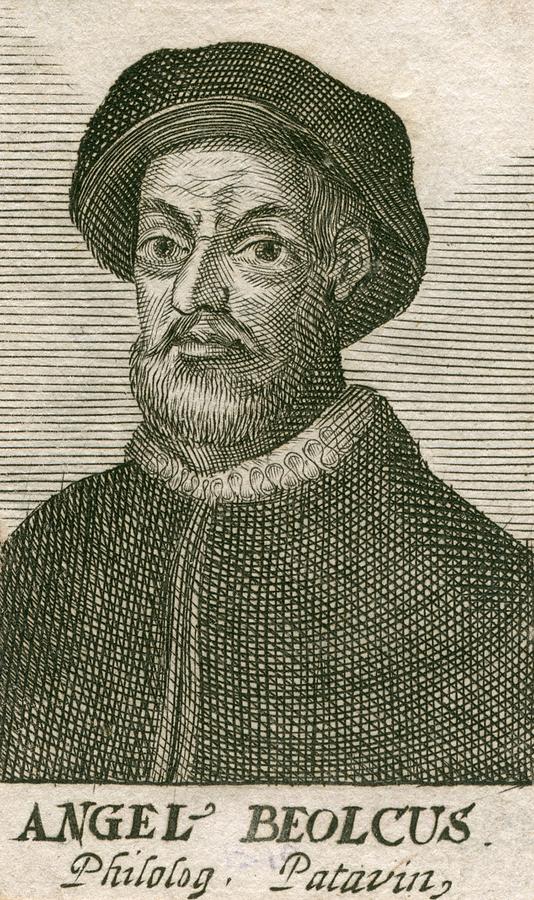
Take, for instance, the actor and playwright Angelo Beolco, better known as Il Ruzzante. He wrote outrageous comedies related to commedia dell'arte, but like the commedia erudita plays, his were written down rather than improvised.

Ruzzante traveled around the area near Padua, and wrote in the dialect of that region. Around 1521, he published his first play, La Pastoral, a comedy about shepherds in love. Unlike Torquato Tasso's refined drama Aminta, Ruzzante's play was filled with coarse vulgarities. While Tasso's play ends harmoniously, La Pastoral resolves the plot by having the protagonist's father poisoned by an incompetent physician.

Ruzzante's plays typically feature a character named Ruzzante, whom he himself would play. One of his best known pieces is called The Parliament of Ruzzante, sometimes known as Ruzzante Returns from the Wars. In it, Ruzzante comes home from years of battle to rail against the evils of soldiers and warfare. The playwright himself seems to have been popular with the rural nobles who opposed the city of Venice in the Cambraic Wars in the early 16th century. Perhaps for this reason, his plays tended not to be staged in Venice later in his career, in spite of their dialect becoming closer to the one spoken in Venice.

Another playwright of the 16th century who is difficult to categorize is Leone Ebreo de' Sommi. A member of a prominent Jewish family in Mantua, de' Sommi wrote about 15 plays. Though most of them are in Italian, one, A Comedy of Betrothal, is the earliest surviving play of its kind in Hebrew. He is even better known, however, for writing a treatise on theatre production called Four Dialogues on Scenic Representation. Besides discussing acting practices, the work also delves into costumes, scenic design, and how to achieve lighting effects with specially colored glass.

While staging serious commedia erudite plays, the Italian Renaissance delighted in producing elaborate spectacles in between the main play's five acts. Such a spectacle, which could become more popular than the play itself, was generally called an intermedio. A drawing by the artists Buontalenti and Andrea Boscoli shows a famous intermedio performed in 1589 at a play honoring a wedding involving the powerful de Medici family. The beautiful stage picture represents the harmony of the spheres, but also shows an allegorical figure of Necessity and the three Fates. Buontalenti, though from the artisan class and not a noble, was given a remarkable deal of control over organizing events for the wedding, and his designs were so praised they were recorded in engravings so they could be shared and remembered long after the event was over and the costumes and sets dispersed.

The intermedio of the 16th century influenced a new art form that told narratives but focused on music and spectacle. This new form, which came to be called opera, grew out of the Renaissance's desire to revive the musical nature of Greek drama. Jacopo Peri's 1597 composition Dafne is now lost, but descriptions of it lead most theatre historians to consider it the first opera. Some of Peri's later works, such as Euridice, do survive, but the first opera to make it into the standard repertoire is L'Orfeo by the composer Claudio Monteverdi. The poet Alessandro Striggio wrote the opera's text, known as the libretto, but opera came to regard composers as the real artists, and the libretto as secondary to the music. First performed in Mantua in 1607, L'Orfeo tells the story of the Greek poet and musician Orpheus who allegedly went down to the underworld to try to bring his deceased wife back into the world of the living. The story has proven to be remarkably enduring, recently being reborn in the Anais Mitchell musical Hadestown.

Innovations in Design

The architect Baldassare Peruzzi created a new standard of excellence in set design when he helped stage Cardinal Bibbiena's La Calandria for the pope. Peruzzi added a raked stage that slanted upward behind the main playing area. In addition to having a main backdrop, Peruzzi also added smaller backdrops on the sides known as wings. His predecessor Girolamo Genga had used one set of wings, but contemporaries were impressed by Peruzzi's use of multiple planes placed in front of the backdrop. These multiple levels of flat scenery added to the illusion of depth created by linear perspective. Peruzzi left many of his designs to his pupil, Sebastiano Serlio, who included many of his master's ideas in an influential work known as the Seven Books of Architecture.

Written around 1545, Serlio's treatise became enormously influential in spreading Renaissance ideas of scenic design not just throughout Italy, but throughout all of Europe. The book describes how to set up a performance space and how to create illusionary scenic effects. Three of its most famous illustrations show hypothetical designs for tragedies, comedies, and pastorals. The tragedy design shows stately, ordered buildings, while the design for comedy shows a tavern, a building that might be a brothel, and structures beginning to decay. The design for a pastoral play shows trees and rustic cottages. Though Serlio's choice of three genres is influenced by the comedies, tragedies, and satyr plays of ancient Greece, his designs are pure Renaissance.

Later King Francis I of France invited Serlio to help build an elaborate chateau at Fountainebleau. It was in Fountainebleau that Serlio died, after helping to spread Renaissance aesthetics to France. His work in Italy, however, influenced another theorist of theatre design, Nicola Sabbatini. Sabbatini's Manual for Constructing Theatrical Scenes and Machines published in 1638 deals not just with the artistry of how to create beautiful designs, but also with the practical methods of achieving special effects on stage. In it, Sabbatini describes how to use iron or stone balls to imitate the sound of thunder and how to quickly change wings and backdrops. Some of Sabbatini's more fantastic effects included waves of water that appeared to move and dolphins that appeared to jump out of the water.

Theatrical Buildings

In addition to innovations in scenic design, architects made tremendous changes in theatre buildings during the Italian Renaissance. Many of the first theatres were built inside great houses and palaces. The powerful Medici family in Florence, for instance, built a theatre inside the Uffizi Palace of that city. An engraving by Jacques Callot portrays a production there in 1617. The engraving shows the audience arranged in a horseshoe fashion with dancers descending from an elaborately decorated stage.

Other theatres, such as the Teatro Farnese in Parma, were created as freestanding structures. Built by the architect Giovanni Battista Aleotti in 1618, the Teatro Farnese is sometimes cited as the first purpose-built theatre with a permanent proscenium arch. Though it is built out of wood and plaster, the theatre was painted to look as if made of marble. It contains the same horseshoe layout for the audience, and was likely modeled after the Medici theatre.

The development of permanent proscenium arches was vital to the creation of Italian scenic design. Though the name "proscenium" derives from for the Latin term proscaenium, the proscenium is not the stage itself like in a Roman theatre, but rather the fixture around the stage, functioning like a window or picture frame containing the action. The proscenium arch places the scenery and performers on one side, and the audience on the other. The audience shares essentially the same view of the action. Because that is the case, elaborate stage machinery can be hidden behind the proscenium arch--either to the sides, above it, or below the stage--and painted scenery can easily be moved on and off the playing area. This set-up, which is essentially the same as most Broadway-style theatres today, later became the standard for most playhouses in Europe, and later, the world.

Changing the Scene

As the scenery in these new purpose-built theatres became more elaborate, the question arose of how to change the scene as the play moved from one locale to another. Sabbatini described how changeable wings could be constructed to allow stagehands to pull one set of wings to the side, revealing a second set of wings behind them. This required all of the wings to be two-dimensional and facing directly out to the audience. Another set designer, Joseph Furttenbach, who relocated to Italy from Germany, came up with a different solution. Inspired by the periaktoi described by Vitruvius, Furttenbach designed three-sided wings that could be rotated to have different sides facing the audience.

The backdrop was usually constructed of two panels known as shutters that met in the middle. By sliding the shutters apart or sliding together a new pair of shutters in front of them, technicians could change the backdrop as well as the wings. The only drawback of this method is it often left a visible crease in the center of the backdrop. Sometimes a three-dimensional set piece might be placed in front of the center of the stage to try to minimize the crease's visibility. Three-dimensional set pieces could not be changed as quickly as the shutters, however, which could be quickly pulled back with ropes.

A particularly effective method of changing two-dimensional scenery was the chariot-and-pole system. Drawings frequently attributed to the stage designer Giocomo Torelli illustrate how this method worked. A large winch beneath the stage moved poles attached to the scenery, shifting it either on or off the stage. Torelli improved this method by adding a system of counterweights that allowed a single person to move multiple wings and shutters simultaneously. Using Torelli's systems, technicians made fluid set changes that seemed almost magical.

Like Serlio, Torelli spent a portion of his career in France. While there, he helped to spread the innovations he and others had developed in Italy. The Renaissance was reaching out across Europe, and the theatre helped to spread the new ideas and new aesthetics of the Renaissance movement.

Saturday, October 22, 2016

commedia erudita

One of the first playwrights in Italy to try to copy classical drama was Albertino Mussato, who wrote a Latin tragedy called Ecerinis around 1315. Though modeled after the plays of Seneca, Ecerinis was based on the life of a tyrannical Italian nobleman who had only been dead for about 50 years. Other authors, such as the fifteenth-century noblewoman Antonia Tanini Pulci, wrote religious plays in the vernacular Italian. Pulci's miracle plays recall the lives of saints in the medieval tradition, but unlike medieval dramatists, she had her plays published. By the beginning of the sixteenth century, people in Italy were seeing plays as literature, and not just as outlines for performance.

Because these plays were aimed primarily at scholars, they came to be known as commedia erudita, or learned comedy. (This term distinguished such plays from the improvised dramas of professional actors known as commedia dell'arte.) The churchman Bernardo Dovizi, known as the Cardinal Bibbiena for the town where he was born, wrote a play called La Calandra based on Plautus's Menaechmi. The play premiered in 1507 and was later performed before the Pope, in spite of (or perhaps because of) some rather scandalous scenes. More famous than Cardinal Bibbiena was Ludovico Ariosto, who wrote epic poetry as well as drama. Ariosto's most famous play, I suppositi (or Supposes), was later translated into English and influenced William Shakespeare.

Perhaps the greatest writer of commedia erudita was Niccolo Machiavelli. Though Machiavelli is best known today as the political theorist who wrote the cynical analysis of power The Prince, he was also instrumental in reviving Roman comedy. Around 1517, he translated Terence's The Girl from Andros into Italian, but Machiavelli was not content just translating the works of others. His play The Mandrake draws upon Roman drama, but takes place in the author's home city of Florence. Later in life, Machiavelli wrote another comedy, Clizia, inspired by Plautus's play Casina. In it, a father and son fight over the titular character, a beautiful woman who never actually appears on stage.

While Machiavelli excelled at comedy, Giovanni Battista Giraldi, known as Cinthio, wrote one of the great Italian tragedies of the sixteenth century. First performed in the city of Ferrara in 1541, Cinthio's play Orbecche sought to recreate the tragedy of Seneca, complete with violence and gore. The play's heroine, after being presented with the head of her husband and the bodies of her children, resolves to achieve revenge, which she accomplishes with great bloodshed. Other writers, such as the scandalous poet Pietro Aretino, attempted tragedy as well, but none as successfully as Cinthio. The dark mood of Orbecche was not popular, however, and Cinthio gave his later plays happy endings.

It seems that while audiences of commedia erudita did not need their plays to be all-out comedies, they also wanted to avoid the bloodshed of tragedy. The playwright Torquato Tasso achieved a perfect compromise by inventing a new genre: pastoral. Tasso's play Aminta, first performed at a garden party in 1573, embodies the aesthetic of this new form. The title character is a shepherd in love with a nymph named Silvia who at first does not return his affections. After much back and forth, and both characters falsely believing that the other had died, the two end up united in love. Imitations of Aminta include Giovanni Battista Guarini's The Faithful Shepherd, which also portrayed shepherds in love in an idyllic country setting.

Enthusiasts of these new, highly literate plays needed a place to stage them, as well as to put on the classical plays they were rediscovering. While plays could be performed in great halls of nobles or in the open air, many people wanted purpose-built theatres like the Romans had enjoyed. In 1580, the architect Andrea Palladio designed and began work on just such a building. Inspired by Roman theatres, Palladio's Teatro Olimpico in the town of Vicenza contains a scenae frons through which the audience can peak to see an elaborate stage set with linear perspective. The wood and plaster scenery designed by Palladio's successor Vincenzo Scamozzi, has been preserved up to this very day.