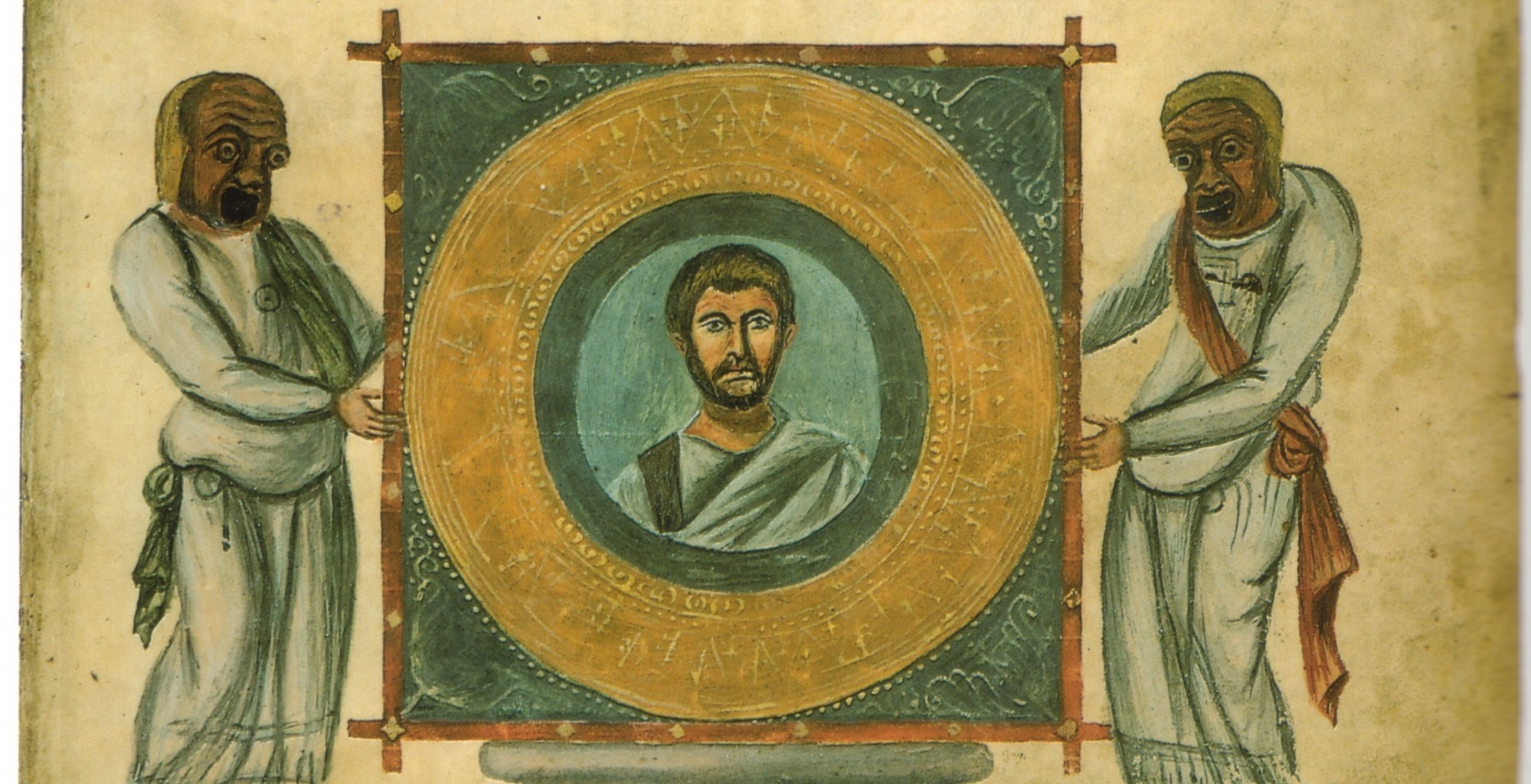
A picture of Roman drama does not
begin to emerge until the 3rd Century BCE. It was likely influenced, as all
Roman culture was, by the Etruscan civilization to the city's north. Little is
known about Etruscan drama, but it seems the Etruscans performed short plays as
part of their religious festivals, a tradition borrowed by the Romans.
To the south of Rome was the city
of Atella, which became known for its short comedic plays known as Atellan
farces. Though none
of these farces survive, they reportedly featured stock characters, such as the
quarrelsome peasant, the wily servant, and the doddering old man. They were
known for their licentiousness and low humor.
These and other theatrical
traditions in Italy were brought to Rome as that city came to dominate the
entire peninsula. By the end of the First Punic War in 241 BCE, Rome controlled
all of Italy and Sicily. The city included plays in many of its official
festivals, including the Ludi Romani in
honor of the god Jupiter, the Ludi Florales in honor of the goddess Flora, and the Ludi
Plebeii, which celebrated the political
liberty of the common people.
Roman actors had to compete against
a variety of other entertainments available at festivals, including acrobats,
dancers, and even gladiatorial combats. During the Republican period, they
performed on temporary wooden structures, and the audience likewise sat on
temporary wooden bleachers raised for the occasion. Usually, all of the plays for a
festival were performed in a single theatre, but at very elaborate celebrations
there could have been as many as three theatres erected for plays.
Dramatists could be political, but
at their own peril. One Roman playwright, Gnaeus Naevius, was supposedly imprisoned for plays that attacked
the powerful Metelli family. Credited as Rome's first native-born dramatist,
Naevius wrote both comedies and tragedies, but only fragments of his work have
come down to us today.
Plautus
By
the beginning of the 2nd Century BCE, a new dramatist was attracting attention.
He was Titus Maccius Plautus, and not
only would he become the most famous playwright of his age, but his works would
have a lasting impact on subsequent drama down to the present day.
Plautus
adapted the plays of Menander and other Greek dramatists into Latin, but he
seems to have given them his own distinctive stamp. He apparently took to
playwriting later in life, but he became wildly popular with more than 100
plays attributed to him.
Twenty
plays by Plautus survive more or less intact, with another, Vidularia, remaining only in fragments. They all follow the
model of Menander's New Comedy, or situational comedy. Typically, a young man
wants to marry a beautiful woman, who might be falsely enslaved, but he is
thwarted by an old fool or pompous hypocrite who blocks his way. A clever
servant helps the young man foil the bad guys and get the girl, often winning
his own freedom in the process.
A
proto-typical Plautus play is Miles Gloriosus, the story of a braggart soldier
who has kidnapped a beautiful young Athenian woman. The soldier fancies himself
the envy of every man and desire of every woman he meets. One slave fawns all
over him, but another helps the woman to escape with her sweetheart, and then
arranges for the soldier (who is actually a coward) to be swindled and beaten.
A long tradition of bragging soldiers, from commedia dell'arte's Il Capitano, to Shakespeare's Falstaff and
Parolles, to Major Frank Burns in M*A*S*H, all trace their ancestry back to the title character of this play.
Another
standard element in Plautine comedy is mistaken identity. This shows up
memorably in The Menaechmi, which concerns twin brothers, both named Menaechmus. The
twins are separated when they are young, and as adults they both end up in the
same city unbeknownst to each other. The play became the basis of numerous twin
comedies, including Shakespeare's The Comedy of Errors, which Rodgers and Hart turned into the musical The
Boys from Syracuse.
The
Comedy of Errors goes a step further than The
Menaechmi by pairing the twins with a pair
of twin servants who also share the same name. Shakespeare borrowed this idea,
as well as one of the scenes in The Comedy of Errors, from another Plautus play, Amphitryon. In Amphitryon, the god Jupiter takes on the form of the title
character and the god Mercury takes the form of Amphitryon's servant Sosia.
Generally, New Comedy did not mix gods and heroes with lowly characters and
slapstick antics, so in the prologue Mercury invents a new name for the genre:
tragicomedy. Later practitioners of tragicomedy frequently alluded to Amphitryon as a classical precedent, though the play seems more
like an out-and-out comedy today. The play has been adapted numerous times,
most notably in Jean Giraudoux's play Amphitryon 38.
An
even more unconventional Plautus play is The Rope. The play takes its name from a
scene where characters tug back and forth on a rope connected to a fishing net
that has hauled up a treasure chest. While most Plautine comedies take place on
a city street, The Rope is set on
a seashore following a storm. Toward the end of the play, the old man Daemones
comes to recognize, through the contents of the chest, that the beautiful young
woman Palaestra is actually his long-lost daughter who was kidnapped and sold
into slavery. Unlike many other plays by Plautus, The Rope is moralistic and openly sentimental. Its non-urban
setting evokes a simpler world than the schemer-filled streets typical of
Plautine comedy.
Other plays by Plautus include Pseudolus, about a crafty slave, The
Captives, about
prisoners of war, and The Pot of Gold, about a greedy old man. (Moliere
later adapted The Pot of Gold as The
Miser.) Like the comedies of Menander, the
plays of Plautus usually begin with a prologue summarizing the action.
Likewise, they dispense with the chorus and are divided into several acts,
between which there might have been short songs or dances unconnected with the
plot.
Plautus displays a greater variety
of language and meter than Menander, however. His comedies are filled with puns
and wordplay. Much of the dialogue was likely sung, and actors might have used
a fair amount of improvisation to attract audience members and keep their
attention.
The mixture of farce and song makes
Plautus similar in many ways to contemporary musical comedy. The most famous
musical based on the work of Plautus is A Funny Thing Happened on the Way to
the Forum, with songs by Stephen Sondheim
and a script by two masters of situation comedy, Burt Shevelove and Larry
Gelbart. It is the one play most people in the theatre think of when they hear
the name "Plautus," but in fact almost all modern comedy, from Broadway
farces to television sitcoms, has been influenced by the plays of Plautus.
Later Playwrights
Plautus died around 184 BCE. We
have no other Roman plays until another comic playwright, Publius Terentius
Afer, or Terence, began writing a few
years later. While the plays of Plautus are difficult to date, scholars are
fairly confident in dating Terence's six comedies, The Girl from
Andros, The
Mother-in-Law, The
Self-Tormentor, The
Eunuch, Phormio, and The Brothers at between 166 BCE and 160 BCE.
During the Medieval period and the
beginning of the Renaissance, these were the most widely known classical plays
in Europe, so they had a lasting impact on Western drama. They are similar to
the works of Plautus, but more refined and with more complex plots, often derived
from multiple Greek sources. Characters in Terence plays tend to be more
sympathetic than the broad clowns created by Plautus, but Terence's poetry
lacks the tremendous variety of his predecessor.
No Roman tragedies survive from the
Republican period, but we do have tragedies from after the establishment of the
Roman Empire in 27 BCE. The tragedies we have were not written for public performance,
however, but as closet dramas to be read and perhaps recited at social
gatherings. The Roman poet Publius Ovidius Naso, or Ovid, wrote a closet drama called Medea
that is unfortunately lost to us. However, we have a number of tragedies by the
philosopher Lucius Annaeus Seneca.
Seneca worked for the mad Emperor
Nero who came to the throne in the year 54 of the current era. In the year 65,
Nero forced Seneca to commit suicide, but prior to that, Seneca had written a
number of plays based on Greek models, including Medea, Oedipus, Phaedra, and Mad Hercules. These plays established the
tradition of five acts. While they had choral interludes between the acts, the
chorus spoke with a single voice rather than depicting a group of people.
The tragedies of Seneca are filled
with moralizing sentiments from his stoic philosophy, but they also contain
gruesome scenes of on-stage violence. The tragic heroes in Seneca's plays must
face that horrific violence with dignity and resolve, much as the author
himself had to face Nero.
Most of Seneca's tragedies suffer
from comparison to similar plays by Greek authors, but one, Thyestes, does not have any extant Greek
equivalent. Possibly based on a now lost play by Sophocles, Thyestes tells the story of how Atreus killed the children of
his brother Thyestes and fed their flesh to him in a bloody feast. It opens
with the ghost of Tantalus, grandfather of the two brothers, being brought back
from the netherworld to be tormented by a fury. The ghost scene has been much
copied in Western drama, including by Thomas Kyd, whose play The
Spanish Tragedy was a forerunner to Hamlet. Some plays by Marlowe and other contemporaries of
Shakespeare actually quote directly from Thyestes and other Senecan tragedies.
Another Roman tragedy, Octavia, deals with the death of Nero's wife, and Seneca
appears in the play as a character. Though it was once attributed to Seneca
himself, it seems likely to have been written by a later dramatist.
Horace
Though not a playwright, the Roman
poet Quintus Horatius Flaccus, or Horace,
exerted a large influence on Western drama through a verse commentary on
playwriting known as Ars Poetica, or The Art of Poetry. The treatise was published in 18 BCE as a series of
letters to Horace's friend Piso. It deals with many different types of poetry,
but gives special attention to drama. Like Aristotle, Horace offers advice to
playwrights, but he tends to me more adamant in his suggestions than his Greek
predecessor.
All
plays, Horace says, should be in five acts, and they should never have more
than three people speak in a scene. He cautions against using gods to resolve
difficulties unless it is absolutely necessary, and he speaks of the chorus as
being a single actor. The purpose of drama, according to Horace, is to favor
the good and to give friendly advice. He has harsh words for Plautus, whom he
considers foolish and unpolished.
Roman
poets, Horace tells us, surpassed the Greeks, leaving nothing unexplored. Their
main fault, he says, is in not revising their works and improving them with
numerous rewrites.
Permanent Theatres
Though the plays of Plautus and
Terence were originally performed in temporary wooden structures, the Romans
later began building permanent theatres. The first one, the Theatre of Pompey,
was built in 55 BCE as part of a larger complex that also included temples.
Many Roman theatres still remain, at least in ruins. Notable examples include
the Theatre of Marcellus in Rome, as well as theatres in Ostia and Verona where
plays are still sometimes performed.
Roman theatres were based on Greek
theatres, but they differ in many respects. First of all, the orchestra is
smaller in the Roman theatre, and instead of being exclusively a playing area,
it was used to seat important personages, such as senators. Most of the action
appears to have taken place on the raised area behind the orchestra known as
the pulpitum. The pulpitum was the equivalent of the logeion in Greek theatres, but it could be less than half
the height, rising only about five feet above the level of the orchestra. This
way, audience members seated in the orchestra could still view the actors.
We can glean a great deal about the
first Roman theatres from the writings of Marcus Vitruvius Pollio, who in the first century BCE wrote a guidebook for
building called De Architectura, or On Architecture. The fifth book of De Architectura goes into detail about how to build a theatre,
paying special attention to how to perfect its acoustics. Vitruvius goes to
great lengths to describe how sound travels and how it can be aided by the use
of brass vases placed around the periphery of the theatre. Today, we simply do
not know how these vases worked, or whether they even worked at all. However,
their existence seems to indicate the importance with which the Romans treated
acoustics.
For Vitruvius, the structure of the
theatre also had cosmic implications. In laying out the design of the theatre,
he called for architects to inscribe four equilateral triangles in the same way
astrologers mapped out the signs of the zodiac. The theatre was supposed to be
in harmony not only with sound, but with the entire universe.
De Architectura gives valuable insights into scenic design as well.
Vitruvius suggests that the middle door in the scaenae frons behind the pulpitum be decorated as a door to a royal palace, with doors
to the right and left decorated as the doors for guests. Near those would be
other spaces for decorations known as periaktoi. Vitruvius describes these as
turning triangular machines with a different decoration on each side. The periaktoi could be turned to indicate a change in scene or the
appearance of a god.
Vitruvius also indicated that there
were different decorations for tragedies, comedies and satyr plays. Tragic
scenes, he says, should be ornamented with columns, pediments, and statues.
Comic scenes represented private buildings and had windows similar to ordinary
dwellings. For satyr plays, the scene was ornamented with trees, caves, hills,
and other imitations of nature.
We know from paintings that
survived in tombs or were buried in the volcanic ash at Pompeii that the Romans
were quite capable of skilled artistic renderings. However, it is far from
certain that the periaktoi bore any
resemblance to modern realistic stage designs. Designs on the periaktoi might have been largely conventional, much as masks
worn by actors gave an impression of a character rather than trying to fool the
eye. Still, Renaissance scene designers often interpreted Vitruvius as calling
for illusionary stage effects, something the Romans likely never had.
Roman Actors
When
Shakespeare has Hamlet quip, "When Roscius was an actor in Rome," few
audience members may realize that a real actor, Quintus Roscius Gallus, once entertained thousands during the first
century BCE. Born a slave, Roscius became famous for his comedic performances
and was freed by the Roman dictator Sulla. The famous orator Cicero took
lessons from Roscius, and in turn later defended him in a lawsuit.
While
Roscius was known for comedy, his contemporary Clodius Aesopus was reputed to be the best tragic actor of the day.
Both men managed to amass fortunes and to gain respectability on the stage.
Later Roman actors would not be so lucky. In fact, the Emperor Tiberius later
forbade actors from associating with senators and upper class Romans.
Gradually,
the literary theatre declined in favor of mime, in which actors wore no masks, engaged in acrobatic feats, and
improvised much of their dialogue. Women performed in mime along with men, and
the scenes they depicted frequently involved adultery and other explicitly
sexual situations. The most famous mimes could win the friendship of emperors,
but overall they enjoyed a low reputation. The declining status of performers
mirrored a declining reputation for theatre in general.
The
sexual nature of mime, together with the pagan origins of Greek and Roman
drama, led the early Christian church to oppose the theatre. The fact that
mimes took to making fun of the church and its sacraments surely did not help
matters. In the year 313 of the current era, the Emperor Constantine, himself a
convert to Christianity, issued the Edict of Milan, which ended state
persecution of Christians. When Christianity became the official religion of
the empire in 380, the theatre's days were numbered. The church's Fourth
Council of Carthage in 398 officially excommunicated actors, supposedly cutting
them off from any chance of salvation unless they recanted and gave up their
profession.
Historians
often give the year 476 as the date for the official end of the Roman Empire,
but the empire did not simply disappear overnight, and neither did the theatre.
In the West, a succession of emperors, many of them Germanic invaders
themselves, tried to hold together pieces of the empire, though they never
again possessed the far-reaching authority of their predecessors. In the East,
emperors were more successful, ultimately creating the new Byzantine Empire
centered in Constantinople.
The
sixth century saw attempts to revive drama. In Rome, the Ostrogoth King
Theodoric ordered the restoration of the Theatre of Pompey. Drama, at least in
the form of mime, flourished in the Byzantine Empire, and Emperor Justinian I
famously married a former mime performer, Theodora. She came to be known as the power behind the
throne in spite of her humble origins.
Still,
the days of Plautus, Terence, and Seneca were long gone. As a new civilization
emerged out of the ashes of the Roman Empire, it would create its own dramatic
traditions, and the theatre of ancient Rome would have to be rediscovered
centuries later.