Showing posts with label Joan of Arc. Show all posts

Monday, June 22, 2026

"Chaos is come again"

Last weekend, I saw Atlas Shakespeare Company's production of Othello, starring William Oliver Watkins in the title role.

Watkins was one of the actors I worked with when developing my adaptation of Moby-Dick, and he does a wonderful job as Othello, an authority figure who inspires awe in all who meet him.

His undoing, of course, is Iago, played by Clayton Hamburg. He and Watkins had great chemistry in Atlas's previous production of William Shakespeare's Henry VI plays. As Warwick and the Duke of York respectively, they made a great team. In Othello, we get to see their team disastrously torn asunder by Iago's lies.

Desdemona is played by Charlotte Blacklock, who grew tremendously in the role of Margaret throughout Atlas's productions of the Henry VI plays and Richard III. One of Desdemona's foils is Emilia, who pushes back against her husband even as Desdemona endures shame and abuse from the man she loves. Leah Schwartz, who played Joan of Arc in the first part of Henry VI, sparkles as Emilia.

The rest of the cast is game as well, and Adriana Alter's direction is fresh and original, especially in the final act. The murder scene is shocking, and the final moments get the audience to question if the cycle of violence will ever end.

Othello is playing through June 28th, so make sure to see it while you still can.

Monday, June 15, 2026

Henry VI

The Atlas Shakespeare Company recently performed William Shakespeare's Henry VI trilogy in two parts, combining the first two plays, and then performing the third as a stand-alone production.

When the Public Theater announced they would be hosting NAATCO performing Henry VI: A Trilogy in Two Parts, I knew I'd have to check it out, if for no other reason than to compare how the companies divided up the material differently.

The current production reduces The First Part of Henry VI into a single act. Joan of Arc, who is clearly a witch and a sorceress in Shakespeare's text (since there's no way the French could possibly beat the English without cheating), is cleaned up considerably when played by Myka Cue. One could almost mistake the play for being historically accurate.

In the second act, the production further develops the characters of Henry VI (Jon Norman Schneider) and Queen Margaret (Teresa Avia Lim). It is Margaret who ultimately takes over the kingdom, as well as the play, and Lim is more than up to the task. She was recently featured in Gingold Theatrical Group's Pygmalion, but has appeared in a slew of other classical works as well.

The same can be said of Rajesh Bose, who previously shared the stage with Lim in Caesar and Cleopatra and now plays the ambitious Duke of York. Possessing a better claim to the throne than the current king but reluctant to openly defy him (yet), the Duke of York is forced to seek out allies, chief among them the Earl of Warwick, who came to be known as the Kingmaker. Anna Ishida plays Warwick wonderfully, as the Earl attempts to navigate the changing political landscape and also keep his head.

York's dark monologue in which he plots the uprising of Jack Cade both ends the first part of the current production and begins the second part. Did Cade's popular revolt in 1450 have anything to do with York? Probably not, but Shakespeare was never one to allow history to get in the way of a good story. Cade did use the name of John Mortimer, an earlier claimant to the throne, and this production cleverly has Orville Mendoza play both the real Mortimer in the first part and later the fake one.

The second act of part two of this production ties up the later scenes of The Third Part of Henry VI, which display a parade of slaughter. After the Duke of York it given a paper crown and had his head lopped off, the war is continued by his son Edward, played by David Shih. In NAATCO's co-production of Bus Stop at Classic Stage Company, Shih played the somewhat comic character of the bus driver, but while Edward is not above cracking jokes, he can also be terrifying, as when he and his brothers murder the young prince (Tommy Bo).

Shakespeare also gives ample space to the Clifford Family, whose power base was in the north of England, but who owed their allegiance to the Lancastrian King Henry VI. James Yaegashi, who plays the villainous Bishop of Winchester in the first part, returns terrifyingly as Old Clifford in the second part. He is succeeded by a son just as bloody, Young Clifford, played by David Lee Huynh (whom the audience previously saw as the Dauphin of France).

For the most part, Henry VI is like a well-written soap opera: good, escapist fun. However, this tale of incompetent leadership, broken promises, and disastrous foreign wars can't help but resonate with contemporary America. Though the adaptation by director Stephen Brown-Fried cuts a great deal to trim a trilogy down to two evenings, it doesn't needlessly alter Shakespeare's words. Perhaps that's why the audience appeared shocked when Warwick delivered this speech written centuries ago:

    Alas! how should you govern any kingdom,
    That know not how to use ambassadors,
    Nor how to be contented with one wife,
    Nor how to use your brothers brotherly,
    Nor how to study for the people's welfare,
    Nor how to shroud yourself from enemies?

Once again, Shakespeare proves to be our contemporary.

Monday, March 9, 2026

Back From Pittsburgh

In an earlier post, I blogged about the first day of the Mid-America Theatre Conference in Pittsburgh. Well, the conference has concluded, I’m back in New York, and my trip was quite eventful.

My own paper, delivered on Thursday, dealt with toy-theatre versions of Pizarro by Richard Brinsley Sheridan. People seemed interested by my handouts showing exotic, imagined visions of South America that were marketed to the youth of Britain.

Friday morning, I attended a session on the State of Pittsburgh Theatre, which featured Clare Drobot, Artistic Director of City Theatre Company and a fellow graduate of Carnegie Mellon University. She told us Pittsburgh audiences are getting fewer subscriptions these days, and are more likely to buy individual tickets. Fortunately, they can more easily find out what’s playing through the new website goseeashowpgh.com, which also includes discount codes.

Though I was accepted to the conference as part of the theatre history track, I was also interested in seeing some of the new plays being presented, so next I headed over to see the Dramatist Play Lab. Attendees presented staged readings of The Plagiarized Words of God Almighty by Nino Greene, Lysistrata Upstairs by Jen Plants, and Peanut Butter Androgyny by Johann Choi. My favorite was probably the first of these, which featured a neuro-atypical poet being left by the woman he loved.

In the afternoon, I attended a panel on Women in U.S. History. Richard Sautter delivered a paper on Ida Murdoch, the daughter of American actor James E. Murdoch, who was a contemporary of the famed Edwin Forrest. Rebecca Schmidt spoke about Maude Adams, who was a star of producer Charles Frohman and played Joan of Arc in a mammoth outdoor production of Friedrich Schiller’s The Maid of Orleans at Harvard Stadium. Last, Sidney Curran told us about the male impersonator Annie Hindle.

Later, at the American Nostalgia panel, Yuko Kurahashi gave her opinions of the musicals Hamilton, Parade, Suffs, and Floyd Collins. More informative was Ruby Dudasik’s paper on David Belasco’s Girl of the Golden West, which features a heroine who actually ends the play heading back east, away from the frontier. The most intriguing paper of the session was the one by Vicki Hoskins, which discussed a running feature in Playbill about “The Program Girl” which was printed in the first decades of the twentieth century.

I had intended to go to a talk in the evening on August Wilson, but other events intervened. Saturday, I caught the end of a panel on musical theatre, and then went to a session on Labor and Theatre-Making. Jennifer Sheier gave a fascinating talk on how union categorization has shaped how we think of stage management in the U.S. Alissa Bidwell then looked at children as a site of ideological struggle, focusing on the Depression-era children’s play The Revolt of the Beavers.

Sunday, I was able to catch up with some old friends, and now I’m back in New York. It was a whirlwind conference, to be sure.

Tuesday, September 10, 2024

Return to The Shavian

I previously wrote a review of Shaw productions in New York City for The Shavian, the journal of the Britain-based Shaw Society. Well, in the latest issue of the journal, I have a review of this year's conference of the International Shaw Society in Dublin.

Ivan Wise, editor of the Shavian, put together an excellent issue, which includes interviews with director David Grapes and producer Julia Holofceneer, a reflection on Socrates and Saint Joan by Philip Wilson, and a fascinating article by Daniel Ibrahim Abdalla on Shaw's connections to the Harlem Renaissance.

The Shaw Society also helped to put on the wonderful production of Mrs. Warren's Profession I saw this summer at Shaw's Corner, the former home of Bernard Shaw that is now owned by the National Trust. That production was not covered extensively in this issue, which did cover Chipstead Players' production of the Howard Brenton play Lawrence After Arabia (which features Shaw as a character) and Gingold Theatrical Group's production last year of Arms and the Man.

If you're interested in joining the Shaw Society, they're a great group, and you can find more information about them here.

Thursday, May 30, 2024

History on Stage

Today is the Feast Day of Joan of Arc, a historical figure who has inspired a number of plays, including Bernard Shaw's Saint Joan, Jane Anderson's Mother of the Maid, and my own Dark Night of the Soul.

History has always been an inspiration for dramatists, and this Saturday another history-inspired play of mine, Snip o' the Shears, will have a staged reading at the Hamilton Grange branch of the New York Public Library.

Snip o' the Shears is based loosely on accounts of Betsy Ross, the Philadelphia-based upholsterer who according to legend sewed the first modern flag of the Uniter States. She will be portrayed this Saturday by Rebecca Ana Peña. Rachael Langton is directing the reading.

Later this summer, I'll be presenting a paper on plays inspired by historical slave revolts. I'll be discussing J.H. Amherst's The Death of Christophe King of Hayti, as well as W.H. Murray's Obi; or, Three-Fingered Jack. This will be at a conference by the British Association for Romantic Studies in Glasgow.

That conference will be in July, and then in August I'll be giving a paper online for the North American Society for the Study of Romanticism on Felicia Hemans' historically inspired play The Vespers of Palermo. Hemans was literally writing about a massacre that occurred in medieval Sicily, but the 1823 play was also referencing the recent turmoil of the French Revolution.

George Gordon Byron wrote dramas inspired by history as well, and this fall I will be speaking on a panel at the annual Curran Symposium, co-sponsored this year by the Keats-Shelley Association of America and the Byron Society of America. The roundtable I'll be on will discuss Red Bull Theater's staged reading of Byron's Sardanapalus, about the ancient Assyrian king.


That's a long ways off yet, but I hope you can join me for the reading on Saturday. After that, I'll be off to a conference in Dublin... but more on that later!

Sunday, June 11, 2023

Drama in Williamsburg

Today was the final day of the International Shaw Society's "Shaw and Heroism" conference in Williamsburg, Virginia.

The only speaker today was Mary Christian, who addressed the topic "Dangerous Goodness: Shaw's True and False Prophets." She began by noting that in the preface to Getting Married Bernard Shaw contrasted Joan of Arc with another religious leader who tried to get involved in government: the Florentine Dominican friar Savonarola.

"However necessary it may have been to get rid of Savonarola, it was foolish to poison Socrates and burn St. Joan of Arc," Shaw wrote. What was the difference? What made Shaw think of Savonarola as a bad guy, and Socrates and Joan as the good guys? Mary related Shaw's play Saint Joan to a book he likely read, Ramola by George Elliot, which like Shaw's play ends with an epilogue after a martyrdom.

After the talk, we had the official closing of the conference, and people said their goodbyes. I then roamed around Williamsburg, a city that during the colonial era was an important center of theatre. The first recorded play performed in the colony of Virginia was The Bear and the Cub in 1665, but it was just in a tavern. Williamsburg had the first permanent theatre in the American colonies of the British. William Levington built it around 1716 for colonists to see all the shows that were popular back in Britain.

Today, no permanent structure stands on its site, but Colonial Williamsburg has set up an outdoor stage you can see here:


Outdoor theatre has a long history in Williamsburg, where for many years Paul Green's historical pagent The Common Glory was performed in this amphitheater:


Today, the amphitheater is mainly used for musical concerts, but it is impressive to behold!

Saturday, June 10, 2023

Presenting on Saint Joan

Today was the second day of the International Shaw Society's "Shaw and Heroism" conference at the College of William and Mary in Williamsburg, Virginia.

We opened with some video presentations delivered over Zoom. David Staller spoke about his experiences running Gingold Theatrical Group which will be performing Arms and the Man this fall.

After David spoke, Jean Reynolds gave a paper on Getting Married. She noted that Mrs. George's trance in the play prefigures the trance in Shaw's later drama Heartbreak House. She also likened the play to Great Expectations by Charles Dickens, since both stories feature a stopped clock and an uneaten wedding cake.

Next, Vishnu Patel spoke about heroism and desire in Pygmalion. He discussed an Indian adaptation of the play in which caste replaces class. The Eliza character in that version is named Manjula, and like in the musical adaptation My Fair Lady, it is hinted at the end that she might marry the professor who taught her how to speak and act in a new way.

My own presentation was also today. I discussed how the actor Sybil Thorndike came to embody heroism in the London premiere of Shaw's masterpiece Saint Joan. Shaw had originally gotten to know Thorndike when she understudied the leading role in a touring production of Candida. It was after he saw her in a different role, that of Beatrice in Percy Shelley's The Cenci, that he reportedly remarked, "I have found my Joan."

The first woman to play Joan in Shaw's play was not Thorndike, but the American actor Winifred Lenihan. John Corbin, critic for the New York Times, was unimpressed with Lenihan, though fortunately ticket sales for the play remained strong. Thorndike played the role when the play opened in London, and she seems to have put her own distinctive mark on the piece.

After my presentation, we had a discussion with the cast of the staged reading of Saint Joan we saw yesterday. The actor who played the lead commented that Joan is earnest and authentically herself, while everyone else is acting out roles assigned to them by society. (By the way, this is also a major theme in my own play about Joan of Arc, Dark Night of the Soul.)

The last speaker today was Miki Matsumoto, who discussed the film Mournful Indifference, which reimagines Shaw's play Heartbreak House. The Russian film directed by Aleksandr Sokurov in 1987 was interpreted at the time as relating to Perestroika in the Soviet Union, but Miki also related it to the present war in Ukraine.

Tomorrow, Mary Christian will be speaking on Shaw's true and false prophets. It promises to be quite interesting!

Friday, June 9, 2023

Shaw Conference at William and Mary

Today was the opening day of the International Shaw Society's conference on "Shaw and Heroism" at the College of William and Mary.

I made the mistake this morning of going to the Wren building for the opening, not realizing that this historic site was just being used for performances. The regular sessions are in Miller Hall. Fortunately, I got there in time to hear a keynote address by Peter Gahan.

Peter spoke on Shaw's heroes and their predicaments. Since we are meeting in the colonial city of Williamsburg, he noted that Shaw's Three Plays for Puritans all take place in colonies. Conforming to Shaw's ideas about Puritanism, these plays portray sex not as the main action of the play, but not non-existent, either.

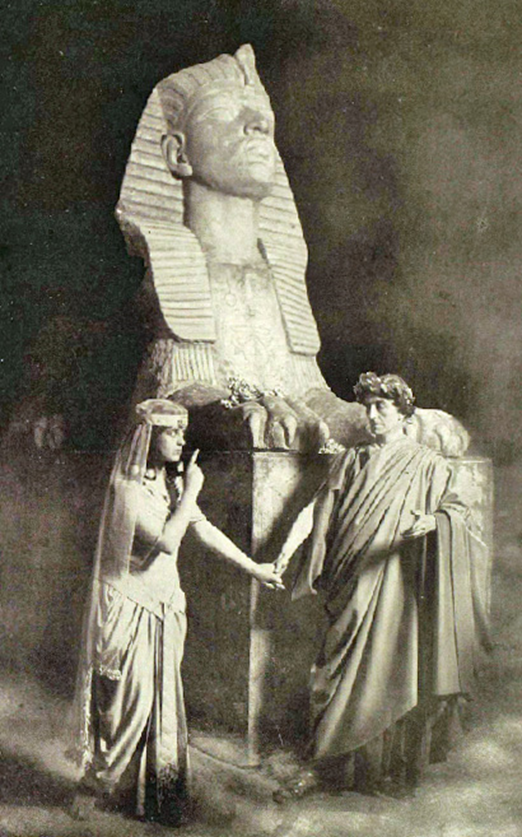
Caesar and Cleopatra
, which takes place in Roman-occupied Egypt, is a construction not just of different historical accounts, but also of different theatrical depictions of Julius Caesar and Cleopatra, Peter said. William Shakespeare's plays Julius Caesar and Antony and Cleopatra are models, but Peter also pointed out later versions of the story that Shaw likely knew, including John Fletcher's The False One, Pierre Corneille's The Death of Pompey, and Colley Cibber's Caesar in Egypt.

The other plays in Three Plays for Puritans are The Devil's Disciple, which takes place in New England during the American Revolution, and Captain Brassbound's Conversion, which takes place in Morocco. Captain Brassbound's name comes from a fragment of a poem by Percy Shelley that Mary Shelley attached to the preface of The Witch of Atlas, which runs in part: "And, when / I went among my kind, with triple brass / Of calm endurance my weak breast I armed, / To bear scorn, fear, and hate--a woful mass!" Peter had some nice insights into Brassbound's character.

We had a long break before our next speaker, Bernard Dukore, who used to run the theatre program at CUNY Graduate Center, though before my time. Bernie talked about how Shaw considers ideals to be masks for the truth, and he applied this to Arms and the Man as well as other plays. When it opened in 1894, Arms and the Man was so unconventional that the Prince of Wales walked out of it, he said! A 1932 film version showed the battle that takes place offstage in the play, but the film was later shortened, and that sequence cut. Shaw wrote his own screenplay for Arms and the Man in 1941, with the American star Ginger Rogers to play the leading role of Raina, but Rogers decided she wanted to play Luka, and the production never happened.

Bernie also discussed Shaw's never-shot screenplay for Saint Joan. That screenplay showed battle scenes as well, including a cannon shattering a tower and a bridge being destroyed by fire and gunpowder. In the afternoon, we got to see a staged reading of a cut version of Saint Joan, and this evening we saw a workshopped version of a new musical called MADam Lucy Deceased by William Schermerhorn and Elise Morris. (The show will be performed for the public on Sunday.) McKenna Grantier, who played the Earl of Warwick in Saint Joan, took on the role of Lucy Ludwell Paradise, a famous hostess of the eighteenth century who was ultimately committed to a madhouse. Her ghost is said to still haunt Williamsburg.

I didn't hear Madam Lucy's ghost last night, but I've got a few more days to spend in Williamsburg. Tomorrow I'm presenting on Sybil Thorndike's portrayal of Joan of Arc in Saint Joan, and on Sunday Mary Christian is scheduled to speak.

I'm looking forward to it!

Friday, June 24, 2022

My Fellow Americans

Today brought the huge but expected news that Roe v. Wade is now officially history. A lot of people in America--particularly women--are feeling frightened and powerless.

It so happens that a play I wrote, My Fellow Americans, which is slated to be performed as part of the Secret Theatre's One-Act Festival, is becoming unexpectedly quite relevant.

The play envisions a female President of the United States giving her dream speech on television, but just as she finishes the speech, pressing issues intervene. The play stars Rebecca Ana Peña as the President and is being directed by Rachael Langton.

We will be performing the play under an Actors' Equity Association showcase code. Performances are July 13, 20, 27, and August 3. If we are lucky enough to get into the semi-finals, there will be an additional performance on August 13, and if the play makes it to the finals, it will be performed again on August 14.

I last had a play in the Secret Theatre's One-Act Festival in 2019, when they did my comedy Burns Night. Since then, the theatre has closed and re-opened. Their new location is at 38-02 61st Street in Woodside, Queens. Come on out if you're in the mood for some politically relevant theatre!

Don't feel like you have to wait until next month, though, to see a play about a strong woman standing up to power. Tonight I saw Shakespeare Downtown perform Bernard Shaw's play Saint Joan at Castle Clinton in Battery Park.

The play is free, and Billie Anderson gives a strong performance as Joan of Arc. Saint Joan closes on Sunday, so see it while you still can.

Friday, May 27, 2022

Shaw Conference in Spain... at last!

Back in 2020, I was supposed to attend a conference on Bernard Shaw in the town of Cáceres in Spain. Well, the conference got delayed two years, but I finally made it!

I arrived in Madrid on Tuesday and took the train out to Cáceres, a beautiful city with lots of medieval architecture. The conference began on Wednesday, with a plenary lecture by Audrey McNamara. She spoke about how Shaw represented "Woman as Nation" but not in the idealized manner of W.B. Yeats in such plays as Cathleen Ni Houlihan.

Edurne Goñi-Alsúa kicked off the first session, discussing "geolect" in Spanish translations of Pygmalion.  Guadalupe Nieto Caballero talked about the reception of Shaw in Spain, and I was fascinated to learn that a production of Shaw's play The Devil's Disciple was performed in the midst of the Spanish Civil War. Gustavo A. Rodríguez Martín--who organized the conference--also spoke about his Online Shaw Concordance.

In the second session, I was glad to hear Peter Gahan discuss Shaw and the Germans. Shaw claimed that he mostly just knew Goethe and Schiller among German authors, though he was clearly familiar with a few others, as well. In Germany, Shaw's reputation during his lifetime was as a radical socialist, which informed the talk given by Virginia Costello on Shaw, Maxim Gorky and Emma Goldman. While Goldman became disillusioned with the Soviet Union after being transported there by the U.S. Army aboard the Buford, Shaw remained consistent in his support for the Russian Revolution.

Unfortunately, Jean Reynolds did not make it over for the conference, but she joined us over Zoom to officially launch her new book on Major Barbara and Pygmalion. She discussed how in Major Barbara Andrew Undershaft admires his predecessor in the arms trade, whom he refers to as his master. He quotes maxims of the business, but Reynolds said these maxims fall apart once you start to really think about them. She also brought up that when Andrew comes to his own home after being away for years, the butler Morrison doesn't know how to classify him. Should he announce him as a visitor or treat him as one of the family?

Wednesday night, we had a guided tour of Cáceres. We wondered at the old Moorish tower, the plaque on the ground marking the old Jewish quarter, and other amazing sights. The conference started up again on Thursday morning, with a plenary lecture by Brad Kent on Shaw and world literature. I learned that when Shaw accepted the Nobel Prize for Literature, he used the prize money to set up an organization to encourage translation of Swedish literature into English. The organization gives out a prize each year for the best translation. Kent also spoke on Shaw's relationship to Max Reinhardt, who directed some of Shaw's plays, including a production of Saint Joan that included Bertolt Brecht.

The third session of the conference contained some Zoom talks, as well as Vishnu Patil (live and in person) discussing Shaw in India. He noted that India's first Prime Minister, Jawaharlal Nehru, attended talks given by Shaw, and the two later met formally in 1949, the year before Shaw's death. After a brief coffee break, we had a fourth session, which featured Justine Zapin discussing The Tragedy of an Elderly Gentleman, which she referred to as Shaw's last Irish play. She noted that in the play Shaw creates an Irish landscape in the minds of the audience without engaging in a mimetic representation of place in the physical theatre space.

After a book launch for Bernard Shaw and the Spanish-Speaking World, we had a fifth session in which Miguel Cisneros Perales discussed Spanish adaptations of Pygmalion and Óscar Giner spoke on links between Saint Joan and Calderón de la Barca’s Golden Age play The Constant Prince. Both plays present exceptional incarnations of the life force, he said. Giner also mentioned that Shaw's hero, P.B. Shelley, had partially translated Calderón's The Prodigious Magician, which remains perhaps the best English translation of that play. We also had some entertainment, with Brian Freeland performing his one-man show Bernard Shaw: Playing the Clown.

Today, I gave my own talk on Shaw and Sarah Bernhardt. There were also presentations by Luis Tosina Fernández, R.A.F. Ajith, and Soudabeh Ananisarab. It's been an exhausting conference, but one I was very glad to be able to attend!

Monday, May 17, 2021

The Maid a Semifinalist

I can now announce that my play The Maid was a semifinalist for the Shakespeare’s New Contemporaries program at the American Shakespeare Center in Virginia.

Last year the play Shakespeare or the Devil, which I cowrote with Matt Bird, was named a finalist in the contest. Alas, I cannot announce that this year for The Maid, as it will not be advancing to the next round.

The Maid responds to the first play in Shakespeare's King Henry VI trilogy. Instead of focusing on the English hero, John Talbot, however, it focuses in on Joan of Arc, who appears as Joan La Pucelle in Shakespeare's play.

Talbot does appear as a character in The Maid, however, which makes other references to the Shakespeare trilogy as well. It's disappointing that the American Shakespeare Center won't be performing the work, but perhaps some other theatre will pick it up in the future. 

Sunday, January 20, 2019

Making the Longlist

I'm pleased to announce that my play Dark Night of the Soul made the longlist of shows being considered by Free Spirit Theatre in the United Kingdom.

Based in Solihull in the West Midlands, Free Spirit Theatre focuses on original works by emerging writers. Their past plays have included Drugged Love by Kitty Harper and Battle of the Exes by Kathryn Bakewell.

For their upcoming show, Free Spirit put out a request for dialogue samples of new works. After receiving more than 300 submissions from around the world, they requested 60 full scripts, including Dark Night of the Soul.

The play is a fresh new take on the story of Joan of Arc that explores how people deal with crises of faith. Nittany Theatre at the Barn chose the play as the winner of the 2017 Theatre of the First Amendment Play Festival, and it received readings in Pennsylvania and Florida, but it has yet to be fully produced.

I'm excited that Free Spirit is considering the piece. It would be great to see it performed in the UK!

Friday, January 18, 2019

Shaw in New York... in Print!

The most recent issue of The Shaw Society's publication The Shavian arrived in the mail yesterday. I was pleased to see them include my article "Bumper Year for Shaw in New York."

I knew I wanted to write something for The Shavian after I saw Bedlam's wonderful production of Pygmalion last spring. Director Eric Tucker did a wonderful job making the century-old play fiercely relevant to contemporary America.

Of course, Bedlam wasn't the only company doing Shaw in New York last year. Saint Joan returned to Broadway in a production by the Manhattan Theatre Club. Being a huge fan of Joan of Arc (and having written my own play about the Maid, Dark Night of the Soul), I knew I would be seeing that as well.

Plus, Gingold Theatrical Group always does a great job with their Project Shaw readings, and I knew they were planning a full-scale production of Heartbreak House. I pitched the idea of an article on all three to The Shavian's editor, Anne Wright. She liked the idea. The only problem was that Heartbreak House wouldn't be opening for several months. Still, she asked me to go ahead an write the article, getting in my copy as quickly as possible after Heartbreak House opened so the whole issue could be laid out, printed, and mailed by the end of the year.

Well, GTG outdid themselves, and I ended up having nothing but good things to say about their production, in spite of not knowing how good it would be when I agreed to review it. Director David Staller reset Heartbreak House as a play-within-a-play happening during the blitz in London, and the concept worked beautifully.

Incidentally, this issue of The Shavian also includes articles by Philippa Parker, Stanley Weintraub, Kenneth McConkey, and others, so I'm in good company!

Monday, December 31, 2018

Top Plays of 2018


Each December, I compile a list of the top plays I saw that opened that year in New York City. Last year, Sweeney Todd, HOME/SICK, and Julius Caesar topped the list.

This year both Roundabout Theatre Company and the Public Theater have multiple shows on my list. Playwrights William Shakespeare and George Bernard Shaw get multiple nods as well.

So without further ado, here’s my list:

10. Romeo and Juliet – Each year, New York Classical Theatre Company puts on free productions in the city’s parks. This summer’s production of Shakespeare’s classic tale about star-crossed lovers used innovative doubling to tell a familiar story in a memorable new way.

9. Heartbreak House – Gingold Theatrical Group makes the list this year with another innovative adaptation of a classic. This re-imagining of Shaw’s chestnut about Europe during World War I was reset as a play-within-a-play during the London Blitz, which worked quite well.

8. Love’s Labour’s Lost – This Shake & Bake production combines the Bard’s romantic comedy with a five-course tasting menu. The actors do a wonderful job creating magical moments in a pared-down production in the Meatpacking District. The food is tasty, but it’s the acting that is truly delicious.

7. Stories by Heart – So, what is this thing? That’s what John Lithgow quipped at the beginning of his one-man show about the stories his father read to him as a child. Ordinarily, I don’t go in for one person plays, but Lithgow’s mixture of personal memoir with classic storytelling won me over in the end.

6. Othello – Not everyone loved the Public Theatre’s production of Othello this summer at the Delacorte, but I found Ruben Santiago-Hudson’s direction to be superb. The relationship between Iago and Rodrigo was particularly fascinating to me, and Chukwudi Iwuji did a great job playing the title role.

5. Mother of the Maid – The Public Theatre scored another hit with Jane Anderson’s new play Mother of the Maid about the family of Joan of Arc. The piece was marketed as a vehicle for Glenn Close, who played Isabelle Arc, but Anderson’s play tells the story from an interesting perspective, and would be worth seeing even without Close’s star power.

4. Bernhardt/Hamlet – As a fan of both Sarah Bernhardt and William Shakespeare, I knew I had to see this show. This is probably Theresa Rebeck’s best play to date, and the cast was superb. Janet McTeer was deservedly praised as Bernhardt, but Dylan Baker was also wonderful as the legendary French actor Constant Coquelin, and Jason Butler gave a memorable portrayal of the playwright Edmond Rostand.

3. Pygmalion – Bedlam theatre company’s productions are sometimes hit-or-miss, but they are generally memorable even when they don’t entirely succeed. This year’s re-imagining of Shaw’s most popular play definitely qualifies as a hit, though. The immersive first act led into an exploration of not just class, but also race, ethnicity, and assimilation, all in the frantic Bedlam style in which performers play multiple characters to hilarious effect.

2. Twelfth Night – What happened to musicals this year? All of my top ten picks were straight plays this year, with the exception of Shaina Taub’s musical adaptation of Shakespeare’s Twelfth Night, which she co-created with director Kwame Kwei-Armah as part of the Public Works program, but came back in a new production this summer as a part of the regular Shakespeare in the Park season. Taub’s songs are inspired by Shakespeare’s text, but not usually direct settings of his poetry, in spite of the fact that Twelfth Night already contains multiple songs. Her lyrics fit in with the Bard’s play beautifully, and her performance as Feste was equally delightful.

1. Travesties – To me, the most delightful production this year, however, was Roundabout’s revival of Tom Stoppard’s play Travesties. As a playwright, I’ve always admired Stoppard’s skill in weaving together the stories of James Joyce, Vladimir Lenin, and Tristan Tzara into a rollicking farce that also makes us think and feel in new ways. Perhaps because this production was directed by a fellow playwright, Patrick Marber, it was able to encompass both the profundity and goofiness of Stoppard’s writing. A cast that included Tom Hollander, Scarlett Strallen, and Sara Topham also seemed exceptionally sympathetic to Stoppard’s ambitious vision.

So that’s my list. Here’s to an even better year of New York theatre in 2019!

Monday, November 5, 2018

Mother of the Maid

Last week, I had the privilege of seeing Jane Anderson's new play Mother of the Maid at The Public Theater.

Anderson, who also wrote Defying Gravity, uses her latest play to tell the story of Joan of Arc through the eyes of saint's mother. The result is a touching story of fame, glory, family, and heartbreak.

Stage and screen legend Glenn Close plays Isabelle Arc, the titular mother in the piece, and her daughter is played by Grace Van Patten, a relative newcomer who was also in The New Group's production of The Whirligig last year. Both performers hold their own, however, and they are complimented by a supporting cast that includes Dermot Crowley, Andrew Hovelson, and Daniel Pearce.

I saw the matinee performance on Halloween. During the first scene, some ghosts or goblins must have been playing tricks on us, because a power drill could clearly be heard somewhere offstage. Close and Van Patten continued through the noise, but then hammering started. Didn't the noisemaker know there were multiple matinees going on in the building? Close turned to the audience, apologized, and asked out loud if something could be done to stop the noise. A voice over the intercom said, "Absolutely!" The audience burst into applause.

The intercom voice said that Ms. Close could go offstage and wait, but Glenn (can I call her Glenn, now?) said she'd wait with the audience. "Anybody have any questions about the show?" she asked. Our new personal friend Glenn then answered questions about the play, her career, and her life. She graciously complimented both Anderson's play and her co-star Grace. (Sure, we can call her Grace!) She asked people in the audience where they were from. "Tasmania? When I went to Paris to shoot Dangerous Liaisons, we had a nanny to help with my daughter who had just been born, and our nanny was from Tasmania. The sweetest woman!"

Eventually, the noise stopped and the performance resumed. If you read this blog regularly, you know I'm a sucker for Joan of Arc plays, and that my own play Dark Night of the Soul tells the story of the saint's trial. (It also won the Nittany Theatre at the Barn's 2017 Theatre of the First Amendment Play Festival.) Anderson's handling of the story is different than most, however, as we glimpse Joan's life through the lives of others. Some of the most interesting scenes were between Isabelle and a Lady of the Court, played by Kelley Curran. I'd seen Curran before in the Red Bull Theater Company's 'Tis Pity She's a Whore, but she particularly impressed me in this role, as a clueless but well-meaning noblewoman who wants to help but is powerless amidst the political turmoil of war-torn France.

The delay in the performance meant that I was late for the "Frankenreads" event at the Morgan Library that afternoon, but after the performance, I did manage to catch the end of the marathon of readings from Mary Shelley's novel Frankenstein. There's also a wonderful exhibition about the book at the Morgan which you should check out, but definitely make sure you get down to the Public, too. Mother of the Maid is not to be missed!