Showing posts with label John Ford. Show all posts

Thursday, March 21, 2019

The White Devil

John Webster's play The White Devil is a bit of a mess. Webster usually collaborated as a playwright, and The White Devil, which premiered at the Red Bull Theatre in 1612, might have been his first solo work, which could explain its rather complicated nature.

The plot, based loosely on events surrounding the historical Italian noblewoman Vittoria Accoramboni, is ridiculously complicated, and filled with the fantastical instruments of death Webster helped to make popular in Jacobean revenge tragedies. According to the play's printed preface, it was a failure when first performed at the open-air Red Bull. When it was revived at the indoor Cockpit Theatre in 1630, however, it was a success.

Webster seems to have been ahead of his time. The play requires the intimacy of a small, indoor theatre to get its full effect, and it looks forward to other bloody revenge tragedies like Thomas Middleton's Women Beware Women, Middleton and William Rowley's The Changeling, and Webster's own The Duchess of Malfi, as well as John Ford's masterpiece 'Tis Pity She's a Whore. A portrait is perfumed with poison, and when a woman kisses it, she is murdered. A death is faked with bullet-less pistols. In the final bloody slaughter, a brother and sister bound to a pillar meet their ends with tragic defiance.

Years ago, when I saw the show performed by the Pittsburgh Irish and Classical Theatre, it was a revelation. In spite of the labyrinthine plot, I was able to follow every twist and turn. When a conjuror had a character put on a charmed nightcap and see visions of murders being committed far away, the audience just went with it. Seeing the dumb shows performed before our very eyes in a dark, intimate space, created an atmosphere charged with electricity. We were being treated to a glimpse of what might have happened in the Cockpit so many years ago. The costumes were a mixture of modern and period, but the feel of the play was pure magic.

I was very excited when I heard that the Red Bull Theater Company was going to be doing The White Devil this year. The company is named for the open-air playhouse where the show was first performed, and Red Bull specializes in the Jacobean aesthetic. Lately, the company has strayed a bit from its mission statement to focus on Jacobean drama and related work, stretching concepts of Jacobean aesthetic to produce such plays as Nikolai Gogol's The Government Inspector. They usually do good work, though, and while I was a bit surprised that Red Bull founder Jesse Berger wouldn't be directing, the director for The White Devil, Louisa Proske, has a long list of opera credits, so I remained hopeful.

While the play is still worth seeing, it didn't quite measure up to the Pittsburgh production of my memory. The piece is done entirely modern, with beautiful contemporary costumes designed by Beth Goldenberg. Virtual Reality goggles replace the charmed nightcap, and a tournament becomes a video game the characters play in celebration. The opening scene takes on the feeling of a video conference call, with a massive projection of a character's face on the set. The video, complete with intentional slips into poor quality for verisimilitude, isn't poorly done, but the production tends to lean on it like a crutch.

There are some good performances, though, chief among them Derek Smith as Lodovico, the banished count who enacts revenge upon Vittoria and her brother Flamineo. Lisa Birnbaum is stunning as Vittoria, the titular White Devil, though that part can be upstaged by the role of her cunning brother Flamineo, played here by Broadway veteran Tommy Schrider. The other part that tends to shine is Monticelso, the powerful cardinal who later becomes pope in the play. Robert Cuccioli plays the churchman with a perfect mixture of gravitas and hypocrisy.

The White Devil isn't the only literary work to tell the story of the ill-fated Vittoria. The French novelist Stendhal and the German Romantic Ludwig Tieck both had their own takes on the 16th-century beauty who came from a family of impoverished nobility, went to Rome to make her fortune, and married the nephew of a cardinal. The powerful Duke of Bracciano fell in love with her, and her husband ended up murdered, probably with the help of Vittoria's own brother.

That history is closely followed by Webster's play, though The White Devil does take some liberties later on for dramatic effect. If you'd like to see it on stage, check out the Red Bull Theater website. You can also put in for $20 rush tickets through TodayTix, though you might have to pay some pretty steep fees.

Wednesday, December 30, 2015

Best Plays of 2015

It's the end of the year, and like many others, I'm putting together a round-up of the best new productions I saw that opened in New York City in 2015. Some of my choices might seem unconventional, while others will surprise no one. Here they are, in reverse order:

10. Allegiance - With all the great new Broadway musicals opening this year, Allegiance is in danger of getting lost in the shuffle. It shouldn't be.

9. 'Tis Pity She's a Whore - Red Bull Theater Company usually does good work, and their production of John Ford's masterpiece was no exception. 'Tis Pity proved once again that you don't have to have the budget of The Royal Shakespeare Company to put on good classical drama.

8. Wolf Hall - Of course, if you do have the budget of the Royal Shakespeare Company, it doesn't hurt. The RSC's adaptation of Hilary Mantel's first two novels about the life of Thomas Cromwell didn't gain as much attention (or fill as many seats) as it did in London, but it was still worth seeing. Wolf Hall was a magnificent display of skilled theatre professionals doing precisely what they do well.

7. Amazing Grace - Speaking of shows not embraced by Broadway, Christopher Smith and Arthur Giron's fantasia on the life of John Newton drew the ire of critics, but thrilled those who had enough good since to ignore them and come anyway. I cried more at this show than at anything I've seen in years. As with Allegiance, the songs did not always rise to level one might hope, but the storytelling was both moving and timely.

6. Cymbeline - Though The Public Theatre seems to misfire with their Shakespeare productions as often as they produce a hit, this summer's Cymbeline was a delight. Hamish Linklater and Lily Rabe were hysterical as the play's romantic leads, but the best thing about this production was how the small cast came together to create a true ensemble. Tasteful audience interaction and superb music by Tom Kitt also served to make this a memorable production.

5. Something Rotten - Even more memorable than some of the many Shakespeare productions I saw this year was Something Rotten, the Broadway musical making fun of the Bard. Yes, I saw Fun Home, which beat it out for the Tony this year, but I found myself seated where that play's ill-conceived direction showed nothing but the actors' backs. Something Rotten by contrast has not only a great score, ingenious lyrics, and a creative book, it's also well directed and a pleasure to watch.

4. Freight: The Five Incarnations of Abel Green - Howard L. Craft's one-man play featuring J. Alphonse Nicholson, probably hasn't made it onto a lot of people's top-ten lists, but that's because they didn't see it. Beginning at the dawn of the 20th century and proceeding to the present day, Freight manages to examine the American experience (and more specifically the African-American experience) in ways that are constantly surprising. Each of the play's five scenes move forward through history, yet we seem to revisit the same set of characters over and over again, reminding the audience that even as some things change drastically, others remain tragically the same.

3. Nevermore: The Imaginary Life and Mysterious Death of Edgar Allan Poe - Though Nevermore came to New York once before, this creation by Catalyst Theatre had evolved since then, and it's production at New World Stages counted as a Broadway premiere. It didn't hurt that I saw the play on Mr. Poe's 206th birthday, but my own fan-boy-ing aside, this is one of the most creative and innovative plays I've ever seen. Bretta Gerecke's production design is a goth's dream come true, and Jonathan Christenson's text sounds so natural we hardly notice the play is almost entirely in verse. Like one of Poe's characters, Nevermore doesn't want to stay buried, and we should all be thankful for that!

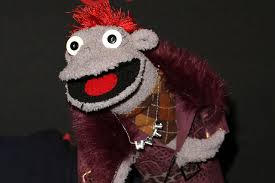
2. Hand to God - I admit that I came late to this party. Hand to God was a hit off-Broadway way before it opened this year on the Great White Way, but this production was astonishing. In spite of the fact that he is clearly one of America's great playwrights, a Broadway hit still has not allowed Robert Askins to give up his bar-tending job, but that's just the state of the economics of this country's theatre. Never mind. This tale of a high-school misfit engaging in "puppet ministry" in a church basement continually goes to darker and more unexpected places, and Askins' voice deserves to be heard. I'm a sucker for puppets, and this show uses puppetry in ways that are dirtier than Avenue Q and yet with more skill than is hardly ever seen.

1. Hamilton - Okay, no surprise here. Since it opened off-Broadway at the Public, Hamilton has been the hottest ticket in town, but not without reason. Lin-Manuel Miranda has crafted a magnificent show out of American history and American popular culture. The music is exciting, the lyrics are smart, and the story of Alexander Hamilton's life and death, even to those who already know it, is enough to break your heart. Count me along with politicians as diverse as Barack Obama and Dick Cheney as one of the many fans of this show. If you can't see it right away, get the cast album. Listening to it reminds you of so much that the American musical is and can be. Ten dollar tickets (a Hamilton for a Hamilton) are still available through a lottery before each show, but good luck getting them. Spring for a regular ticket. It's worth it.

So that's my list! Honorable mentions this year to Doctor Faustus, I Will Look Forward To This Later, and Spring Awakening!

Saturday, May 2, 2015

Two Visits to the Theatre

This weekend, I saw two plays I had been looking forward to seeing for a while: Red Bull Theater Company's production of 'Tis Pity She's a Whore and the Broadway musical adaptation of Friedrich Durrenmatt's The Visit.

With both plays, I was quite familiar with and quite fond of the source material, and both productions took considerable liberties. 'Tis Pity dates back to the 17th century, while The Visit was written in the 1950s, so one might think that the later play would be easier to update without losing a bit of its spirit. However, I found Red Bull's latest offering to be on the whole far more satisfying than what I saw on Broadway.

It's hard not to like a play with a title like 'Tis Pity She's a Whore. John Ford's dark tragedy, which dates to the reign of Charles I, luxuriates in its own excess. Taking the forbidden love of Romeo and Juliet even further, its star-crossed lovers are brother and sister. (Eww!) The brother, Giovanni, confesses his love to a Friar, who unlike Friar Lawrence does not approve of this love.

Giovanni's sister Annabella has a nurse figure with whom she can confide, her tutoress Putana. She whole-heartedly endorses the incestuous relationship. When Annabella remarks upon what a paradise she has passed over, her tutoress shockingly remarks:

Nay, what a paradise you have passed under! Why now I commend thee, charge; fear nothing, sweetheart; what though he be your brother? Your brother's a man, I hope, and I say still, if a young wench feel the fit upon her, let her take anybody, father or brother, all is one.

In directing such a deliberately outrageous play, Jesse Berger kept the feel of the 17th century while adding a number of modern touches. This came out most clearly in Sara Jean Tosetti's costume design, which used modern fabrics in periodesque ways. Giovanni's leather jacket, for instance, had been re-tailored in the shoulders to invoke the idea of a doublet. Unfortunately the music, composed by Adam Wernick, was less successful, sounding neither Renaissance nor modern.

The play famously ends with Giovanni running onstage with his sister's heart on a dagger. The only other time I have seen this play, the heart prop was done non-realistically, resembling instead some strange, cubist sculpture. Not so here. A shockingly realistic heart dripped blood from Giovanni's dagger. Terrible as the brother's actions were, he did not shrink from them, and the life-like (or rather death-like) heart would not allow the audience to forget that.

Unfortunately, I did not find the same level of bravery in The Visit, the new musical by John Kander and Fred Ebb with a book by Terrence McNally. Part of the reason for that might be the economic realities of Broadway. Durrenmatt's script lists 32 distinct characters (and that doesn't even include the actor who plays a succession of three different husbands). The cast of the Broadway musical version was half that size.

More disappointing, however, was how the adaptation seemed to turn away from the boldness of the original. In Durrenmatt's play, when a rich old woman returns to her home town, offering to lavish money on the inhabitants if they kill the man who wronged her years ago, they proudly reject the proposal, then immediately after an intermission they begin buying goods on credit, guiltily expecting the death to occur nonetheless.

Instead, McNally has the mayor momentarily tongue-tied after hearing the offer, and it is only after the schoolmaster makes a brief speech that the mayor and the rest of the town reject the proposal. It's as if all of the guts of the original had been workshopped out of the piece, and intentionally sharp edges were smoothed over so that nothing would seem too unexpected, too insufficiently justified.

There certainly are some good moments in The Visit, including a brilliant musical number where everyone in the town buys a new pair of yellow shoes on credit. Unfortunately few moments of musicalization match the haunting power of Durrenmatt's writing.

Consider this passage from the play, where the old woman describes her warped relationship with the man she now wants dead:

Your love died many years ago. But my love could not die. Neither could it live. It grew into an evil thing, like me, like the pallid mushrooms in this wood, and the blind, twisted features of the roots, all overgrown by my golden millions. Their tentacles sought you out, to take your life, because your life belonged to me, for ever. You are in their toils now, and you are lost. You will soon be no more than a dead love in my memory, a gentle ghost haunting the wreckage of a house.

I wish the musical had captured a bit more of the savage bravery of the play, the way Red Bull had managed to do with 'Tis Pity She's a Whore.