Showing posts with label Antigone. Show all posts

Sunday, December 19, 2021

Atalanta in Calydon

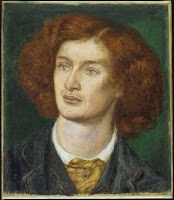
The Victorian poet Algernon Charles Swinburne is probably best known for his 1866 book Poems and Ballads, but the year before that he published a rather curious verse drama called Atalanta in Calydon.

Just as Swinburne's hero Percy Shelley had written Prometheus Unbound inspired by a lost play by Aeschylus, Atalanta in Calydon takes as its jumping-off point a lost play by Euripides, Meleager. At the beginning of his own drama, Swinburne quotes a Greek fragment from Meleager, roughly translated as: "Do good to them while they live, for every man when he is dead is earth and shade, and nothingness comes to nothing."

Atalanta in Calydon tries to mimic Greek tragedy in form as well as content. Greek dramas typically began with a prologue prior to the entrance of the chorus. In some cases, like Antigone by Sophocles, this prologue was a dialogue between two characters, but Euripides frequently had a single actor relating the prologue, often portraying a character who might never again appear in the play. This is what Swinburne does, having a "Chief Huntsman" recite a hymn to Artemis at the beginning of the play.

The huntress goddess is also honored by the chorus, which sings a classical parados while entering. Their opening lines are frequently anthologized:

     When the hounds of spring are on winter's traces,
         The mother of months in meadow or plain
     Fills the shadows and windy places
         With lisp of leaves and ripple of rain;
     And the brown bright nightingale amorous
     Is half assuaged for Itylus,
     For the Thracian ships and the foreign faces,
         The tongueless vigil and all the pain.

The fact that the chorus is singing about Philomela and Procne hardly bodes well. To avenge the rape of her sister Philomela, Procne murdered her own son Itylus and fed his flesh to her husband, the King of Thrace, who was also Philomela's rapist. In the world of this play, children are precious, but siblings more so.

Atalanta, the title character, is not so much the protagonist of the play as is Althea. The legendary mother of Meleager, Althea had heard the Fates say that her son's life would only last as long as a brand burning in the fire. She plucked the brand from the fire, doused its flames, and preserved it so that her son might live. Althea relates this story to the chorus, who then sing a new hymn:

     Before the beginning of years
         There came to the making of man
     Time, with a gift of tears;
         Grief, with a glass that ran;
     Pleasure, with pain for heaven;
         Summer, with flowers that fell;
     Remembrance fallen from heaven,
         And madness risen from hell;
     Strength without hands to smite;
         Love that endures for a breath:
     Night, the shadow of light,
         And life, the shadow of death.

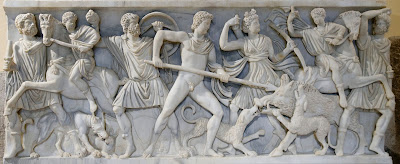
This grim view of existence precedes the entrance of Meleager, who catalogs all of the heroes assembled to hunt the famous Calydonian boar that is wreaking havoc on the land. It is only after the chorus sings another hymn that Atalanta finally enters. Meleager praises her virtue and beauty, but the other members of the hunting party just want him to shut up so they can go after the boar.

Atalanta is a great huntress, which is why Meleager invited her along on the boar hunt to begin with, but the men want nothing to do with her. Meleager's sexist uncle Plexippus goads him, saying, "Why, if she ride among us for a man, / Sit thou for her and spin; a man grown girl / Is worth a woman weaponed...." Later, he suggests the way she can help with the hunt is by being a human sacrifice. Atalanta speaks up for herself, though, and proclaims her own worthiness.

Ultimately, Atalanta not only joins in with the hunt, but even helps to kill the boar. After Althea gets this news, however, she receives darker tidings. Her two brothers have been killed, and by the hands of her own son. A messenger relates how Meleager tried to give the boar's head and hide to Atalanta, but this enraged Plexippus and his brother Toxeus, who assaulted her. Defending Atalanta, Meleager killed both his uncles, an act that sends Althea into a rage.

Of course, Althea had the means to exact revenge on her son. She burns the brand she once plucked from the fire, and Meleager wastes away and dies. Greek tragedies frequently ended with a kommos, or mixed song shared by both the chorus and main characters. During the final kommos in Atalanta in Calydon, Meleager and Atalanta say their final farewells, and then the young man enters eternal night.

Swinburne went on to write other plays in imitation of older styles, and Poems and Ballads contains a verse drama called The Masque of Queen Bersabe, written in a medieval style and subtitled A Miracle-Play. The poetry of Atalanta in Calydon has had a longer-lasting impact, though.

Wednesday, June 5, 2019

The Importance of Being in the Park

This year, The Public Theater is producing three big-budget plays at the Delacorte in Central Park: Much Ado About Nothing, Coriolanus, and a stage adaptation of the Disney movie Hercules, the last of the three done as part of the theater's Public Works program. However, there are plenty of other great shows to see in the parks this summer, including New York Classical Theatre's delightful new production of The Importance of Being Earnest.

Last night, I saw the classic Oscar Wilde comedy at the north end of in Central Park. Ushers greet you at the entrance at 103rd Street and Central Park West. Bring a blanket or a low folding chair, but make sure it's easy to carry, as you'll be moving from place to place. Each act is performed at a different location around the pond.

And be prepared for a potential surprise. I saw the show with the manly Ademide Akintilo playing Algernon while the charmingly feminine Connie Castanzo played Cecily. However, every other performance, they switch roles, so he plays Cecily, and she plays Algernon. All the other cast members switch roles as well, so every other performance is gender-swapped, which must be rather interesting, to say the least.

The Importance to Being Earnest is only playing until June 16th in Central Park. From June 18th to 23rd, the production will move to Brooklyn Bridge Park at Pier 1. Then, from June 25th through 30th, they'll be at Carl Schurz Park at East 86th Street in Manhattan. You can get more information and sign up for rain cancellation notices here.

Wherever you see it, and whether with a traditional cast or with the roles reversed, do make sure you get to the show. The cast, which includes Jed Peterson and Kristen Calgaro as Jack and Gwendolen, and Tina Stafford and Clay Storseth as Miss Prism and Dr. Chasuble, is excellent. I saw Kate Goehring as a wonderful Lady Bracknell and John Michalski as a deadpan Merriman, but they might be just as good when they switch roles!

William Shakespeare is a perennial favorite for outdoor productions, and tomorrow night Hudson Warehouse is opening a new production of Antony and Cleopatra at the Soldiers' and Sailors' Monument in Riverside Park at 89th Street. As is the case with New York Classical Theatre, they pass a basket, and it's pay-what-you-can. Starting July 4th in the same location, Hudson Warehouse will be putting on a stage adaptation of the Alexandre Dumas novel The Man in the Iron Mask, and in August they'll be back to Shakespeare with The Merry Wives of Windsor.

If Coriolanus and The Merry Wives of Windsor aren't your cup of tea, and you're looking for more familiar Shakespeare territory, Black Henna Productions is doing Hamlet, Viking Prince of Denmark in parks throughout Manhattan, Queens, and Brooklyn this month. Also, Smith Street Stage will be doing Romeo and Juliet in Carroll Park, and starting in July Hip to Hip Theatre Company will be doing traveling productions of A Midsummer Night's Dream and Richard III.

For those who are tired of work by that upstart crow Shakespeare, The Classical Theatre of Harlem is doing a real classic, The Bacchae by Euripides this July in Marcus Garvey Park. Last summer, they did a great job with Sophocles's Antigone, so it should be worth seeing, and once again, donations are appreciated, but there is no admission charged. For those who complain that theatre is too expensive in New York, this summer offers an appropriate response.

Thursday, August 23, 2018

Theatre in the Parks

Outdoor theatres are always fun (in good weather). This summer, the Delacorte in Central Park hosted fine productions of Othello and Twelfth Night, and the Richard Rogers Amphitheater in Marcus Garvey Park was used for a compelling Antigone.

However, it can sometimes be even more enjoyable to see an outdoor play in a space that isn't designed for theatre at all. The best such play I saw this summer was Romeo and Juliet, performed in the north end of Central Park by New York Classical Theatre. The production used only six actors and LOTS of doubling. I remember seeing the young woman playing Sampson at the beginning and thinking, "She's brilliant! She's totally wasted on a small role like Sampson!" Well, she ended up also being Juliet.

Sadly, that production is no longer running, but if you hurry, you can still see Torn Out Theater's production of The Rover, playing through August 26th at the Music Pagoda in Prospect Park, Brooklyn. The production uses selective nudity to bring out the raunchiness in the Aphra Behn classic. As the characters indulge in the festive Carnival, the masks come on and the clothing comes off. This is particularly revealing for the character of the beautiful courtesan Angelica, played in this production by Colin James Ferguson. Seeing him play Angelica as a woman, even after all of the trappings of femininity have been torn away, makes a not-so-subtle point about the arbitrary nature of gender.

Tonight, I saw Hudson Warehouse's production of Hamlet at the Soldiers and Sailors Monument in Riverside Park. The monument's steps provide seating for the audience, but unfortunately some of those steps are unavailable due to a chainlink fence keeping people away from the monument until the city can scrape up the money to make needed repairs. As a result, some members of the audience are invited to sit on benches to the side of the playing area. I did this, which made me reflect on how in past centuries, wealthy lords were sometimes invited to sit on the stage, being seen as well as seeing. I was warned not to sit too near to the edge of the bench, however, lest I get splashed by stage blood.

New York's parks are filled with spaces that while not built to be theatres can still easily play host to a stage production. It would be nice to see even more of them utilized!

Sunday, July 8, 2018

Antigone in Harlem

Last night I saw Classical Theatre of Harlem's production of Antigone, which sets the classic Sophocles play in an urban wasteland of the near future.

Alexandra King plays the title character, who refuses to compromise on the burial of her brother, Polynices. She isn't afraid to tell others exactly what she thinks, whether by insulting her sister Ismene (played by Ava McCoy) or spitting into the face of her uncle, King Creon.

In many ways, Creon is the protagonist of the play, not Antigone. Ty Jones (the company's founder who also played the title role in CTH's production of Macbeth in 2016) plays Creon with a fitting stateliness. We believe his growing rage both when he speaks to Antigone, and when he addresses his own son Haemon (played by Avon Haughton), who timidly tries to get his father to change his mind.

Though CTH does not credit an adaptor or translator, their website claims the piece was inspired by the adaptation by Paul Roche. Occasionally, the production introduces anachronisms, including some rather hysterical references to contemporary Harlem, but for the most part it sticks close to the original. One exception is that Creon's wife Eurydice (played by Adaku Okpi) has a slightly expanded role. This was a welcome change, given the gravitas Okpi brought to each of her scenes, and I would have liked to have seen even more of her.

It's great to see Greek drama performed outdoors the way it was intended, so come out to the Richard Rogers Amphitheater where the show is playing for free until July 30th.

Wednesday, November 4, 2015

The Greek Chorus and the Laugh Track

The psychoanalytic theorist Jacques Lacan posited that the ancient Greek chorus performed emotional labor not simply with the audience, but instead of the audience.

No audience member, after all, can fully feel the sorrow and compassion necessary for a tragedy like Oedipus or Antigone. However, when attending a play, the audience got to feel those intense emotions through the chorus.

As Lacan observed in his seminar on The Ethic of Psychoanalysis, "You are then relieved of all worries, even if you do not feel anything, the Chorus will do so in your place." Even those audience members who were bored by the show could feel they were doing their duty of having compassion for the hero, simply by having a Chorus there to have compassion for them.

In his book The Sublime Object of Ideology, philosopher Slavoj Zizek posits something similar regarding the sitcom laugh track. "After some supposedly funny or witty remark," he writes, "you can hear laughter and applause included in the soundtrack of the show itself." Zizek calls this the exact counterpart of the Chorus in Greek tragedy.

The laughter, Zizek argues, is not there to remind the audience when to laugh. Rather, the television set is relieving viewers or their duty to laugh, since it laughs for them.

"So even if, tired from a hard day's stupid work, all evening we did nothing but gaze drowsily into the television screen, we can say afterwards that objectively, through the medium of the other, we had a really good time," Zizek writes.

Whether he's right or wrong, I think I'm going to look at the Greek chorus differently now. And laugh tracks.

Tuesday, June 2, 2015

Helen Faucit

The famed Shakespearian actress Helen Faucit was born in 1814, during the Regency, and died in 1898, at the end of the Victorian era. In many ways, her life reflects the tremendous social changes at work during that period.

I recently finished Carol Jones Carlisle's biography, Helen Faucit: Fire and Ice on the Victorian Stage. She corrects some of the errors made by Faucit's original biographer, her husband, Sir Theodore Martin. Sir Theodore made his wife younger than she really was, claiming she was born in 1817, a year after him. He also glossed over some rather unpleasant business with her family.

Faucit (who was baptized Helena, but always went by Helen) came from a family of actors, a profession not generally known for their chaste sensibilities (especially during a time when the Prince Regent was running around with assorted mistresses, including the actress and poet Mary Robinson). Her mother, Harriet Diddear, eloped with John Faucit when she was only 16, a fact she would use later on when she tried to sue her husband for an annulment.

John Faucit took to theater management while his wife took to the stage, famously playing Gertrude in Hamlet. She could not compete, however, with the brightest star of the Regency stage, Eliza O'Neill. After a couple of years, the talented but impetuous woman took up with a new man, William Farren, who already had a wife of his own. This was the Regency, though, so that mattered very little. The two set up house, undeterred by Mrs. Faucit's unsuccessful attempt in 1821 to terminate her first marriage.

Young Helen stayed with her mother, and Farren became a stepfather to her, in spite of the fact he was still married to another woman. While he might not have been a paragon of family values, he did have a keen business sense, and he helped Helen successfully navigate her early career on the stage. According to legend, the family was at the King's Theatre in Richmond when Helen and her elder sister Harriet decided to act out the balcony scene from Romeo and Juliet upon an empty stage. The new manager, Willis Jones, overheard them, and decided to put the young Juliet in front of a live audience.

On September 30, 1833, Helen Faucit made her debut as Juliet, listed in the program simply as "A Young Lady". She was so nervous that she crushed the glass vial holding Juliet's potion, slicing open her hand and fainting in earnest. Still, she went on with the show, and the audience applauded her heartily. She repeated the performance the next night, this time using a wooden vial. The following month, she went on as Julia in James Sheridan Knowles' play The Hunchback, a part made famous by Fanny Kemble. In November, she appeared as Mrs. Haller in The Stranger, Benjamin Thompson's adaptation of a play by August von Kotzebue.

At the end of 1835, Faucit was given an opportunity to make her London debut on the stage at Covent Garden. Originally, she was supposed to play Juliet, but George Bennett, her prospective Romeo, was deemed too old for her, and Knowles himself was available to play the title role in The Hunchback. At the last minute, the play was switched, and Faucit found herself making her debut as Julia, not Juliet. On January 5, Twelfth Night, Faucit made her London debut. After a rocky start, she was a smash in the role, writing afterward in her diary, "Again and again, thank God it is over!"

Faucit later appeared as Belvidera in Thomas Otway's Venice Preserved, but predictably she suffered in comparisons to Eliza O'Neill, the standard in that role ever since the Regency. A few nights later she appeared on stage as Mrs. Haller in The Stranger, another role played by O'Neill. This time, however, she did something remarkable that set her apart. Instead of allowing the adulterous Mrs. Haller to be reconciled to her estranged husband at the end, she had the unfortunate woman embrace her children, then fall to the feet of her husband, spurned and rejected to the end.

Such a change, just a year before Queen Victoria's ascension to the throne, marks a shift in attitudes toward women, marriage, and sexual morality. During the Regency, Mrs. Haller could do her penance and reunite with her husband. In Victorian England, that would no longer be possible. Faucit, painfully aware of her own family's history, might have had personal reasons for making the change as well. After her mother's scandalous behavior, she herself wanted to be beyond reproach, and that meant no apologies for fallen women.

Faucit appeared as Lady Margaret in Joanna Baillie's The Separation. Then in March, she was at last allowed to go on as Juliet in London. The performance attracted some attention, and Faucit later found herself being invited to act with her hero, William Charles Macready in Thomas Noon Talfourd's tragedy Ion. Faucit worshipped Macready, but he remained cold toward her throughout their professional relationship. Still, she acted opposite him in a number of Shakespeare productions, including Othello, and Macready's landmark King John.

Amazing to me, Faucit originally did not want to play Cordelia in Macready's 1838 production of King Lear. She felt the part had too few lines and not enough opportunities for making a grand effect. Macready's production revolutionized the play, however, getting rid of the silly love story and happy ending introduced during the Restoration, and bringing back the part of the Fool. Critics rewarded Faucit for taking the role, praising her sweetness in the part. They complained, however, that she spoke too softly, perhaps another effect of her Victorian worldview.

Faucit had to play her fair share of unsuitable roles, including Mrs. Oakley in George Coleman the Elder's The Jealous Wife. However, the same year as Macready's Lear, she was given the part that would grant her the most fame, Pauline in Edward Bulwer-Lytton's The Lady of Lyons. The same author who had once begun a novel with the infamous line "It was a dark and stormy night" this time hit pay dirt for Faucit, and she would perform the part of Pauline over and over again for the rest of her career.

Later, Faucit appeared opposite Macready in Bulwer's play Richelieu, but that play was more of a vehicle for her costar. She found more success in Shakespearean roles, playing Rosalind in As You Like It, Miranda in The Tempest, Portia in The Merchant of Venice, as well as a formidable Lady Macbeth opposite Macready. Faucit's Lady Macbeth was not power mad, though, but rather ambitious only for her husband's sake. Victorianism strikes again.

When Macready left to tour America, the 28-year-old Faucit was left to develop her craft on her own. She toured the provinces, becoming a success in Dublin, Birmingham, Bristol, Edinburgh, and Glasgow. In 1844, she reunited with Macready in Paris, playing Desdemona to his Othello. Returning to Dublin, she appeared as Antigone, and was later painted as "The Greek Muse" by Sir Frederick William Burton.

In 1851 Faucit married Theodore Martin, whom Queen Victoria later knighted for completing a grand biography of Prince Albert. They set up house in London, neighbors to the Thackerays, and had a second home in Wales to boot. Still, Faucit didn't give up acting, and she kept her maiden name for billing purposes.

She did not perform as frequently after marriage, but Faucit kept acting until 1879, and even after her retirement from the stage, she took part in numerous fundraisers and public readings, often reading aloud multiple parts in scenes from Shakespeare.

At the instigation of her friend Geraldine Jewsbury, she began a series of published "letters" on characters she had played. These were later collected under the title: On Some of Shakespeare's Female Characters. A typical passage on Desdemona goes like this:

Making so small a part of her father's life, and missing the love, or the display of it, which would have been so precious to her, she finds her happiness in dreams of worth more exalted than any she has known, but which she has heard and read of in the poets and romancers...

So, too, did Helen Faucit, a child of a broken home from an earlier, more permissive era, dream of happiness. Only her happiness was one bound up in the stability and tranquility of wedded life. And fortunately for her, she found it.


Wednesday, September 18, 2013

Walter Hasenclever

When the German playwright Walter Hasenclever wrote his own version of Antigone, he took some of the Kaiser's statements and put them word-for-word into the mouth of the villain, Creon. Now that's guts.

Legend has it, Hasenclever wrote his Antigone while actually at the Western Front during the First World War. After writing his break-through expressionist play The Son, in 1914, Hasenclever had volunteered for the army. Once he saw what war was really like, however, he turned against it.

Unlike the Antigone of Sophocles, Hasenclever's Antigone makes Creon unambiguously a tyrant from the very beginning. In his very first speech he declares:

     God, who defeated our enemies, has
     Raised me up as king. Heralds have 
     Proclaimed my will.
     (translated by J.M. Ritchie)

Later on, when he changes his mind, it is only because of the most dreadful of visions. In the stage directions, Hasenclever describes: "Heaps of dead. People with gaping wounds. Women, men with knives in their chests. Demented bleating like animals. Smashed limbs. Children stumble among the bodies." These images of war were clearly personal for Hasenclever.

Faking mental illness, he got out of the war, but then had to spend years in a sanitarium. That didn't stop him from winning the Kleist prize for drama with Antigone, though. The following year, he wrote the play Humanity, which also takes on the traditional German power structure, but which utilizes brief staccatto lines of dialogue rather than long speeches.

Hasenclever later turned to film and supplied dialogue for the Greta Garbo movie Anna Christie. Once the Nazis came to power, however, his career was over. He moved to France, and died there during the war, a sad end to a great anti-war playwright.

Saturday, June 29, 2013

Notes on Greek Drama

The Birth of Athenian Drama

Though theatre historians regularly talk about "Greek drama," all of the extent plays from ancient Greece come from a single city-state, Athens. Indeed, Athens dominated Greek drama, just as it dominated so many other aspects of Greek culture in the fifth century BCE. Even after the defeat of Athens in the Peloponnesian Wars, Athenian culture remained the gold standard. This was also true after the conquest of Greece, first by the Macedonians, and then by the Romans. Even today, our entire global culture frequently looks back to Athens as the model of drama, philosophy, art, and democracy.
All Greek theatre seems to have grown out of the dithyramb, a choral ode sung and danced in honor of Dionysus, the god of wine and fertility who subsequently became the god of drama as well. 

According to ancient sources, the extraordinary man who transformed the dithyramb into a piece of drama was Thespis, who came from the island of Icaria but later seems to have settled in Athens. It was Thespis who turned the dithyramb into a story and stepped out from the chorus to take on the role of one of the characters. While people continued to perform dithyrambs, this modified version became its own art form. The Greek's called it tragedy, which means "goat-ode," so it is possible a goat might have been given to the person who composed the best tragedy.

Dithyrambs, tragedies, and later comedies were all performed at festivals in honor of Dionysus. These included the Rural Dionysia at the beginning of winter, the Lenaia in mid-winter, and most importantly the City Dionysia at the beginning of spring. The Athenian tyrant Pisistratus, who seized power in the sixth century BCE, encouraged the City Dionysia as a means to win popular support. The festival continued to grow after his death and the subsequent return of democracy. Eventually, three full days of the festival were dedicated to the performance of tragedies.

Athenian playwrights not only wrote the words for their plays, they frequently composed music, choreographed dances, and even acted the leading roles. For the City Dionysia, officials would select three playwrights to present performances on each of the three days dedicated to tragedy. Each performance consisted of three tragic plays and a comic satyr play, which poked fun at myths and legends. Originally, all of these plays seem to have been related. As time went on they evolved into four relatively independent works. The playwrights competed against one another for first, second, and third prize, which would be awarded for an entire cycle of four plays. A jury of ten citizens chosen by lot would award the prizes. With victory came prestige, but no great material benefit.

Aeschylus

The first Athenian playwright whose work survives is Aeschylus. It was Aeschylus who introduced a second actor to the stage. Prior to that, the main actor could only make speeches or converse with the chorus. With Aeschylus, for the first time, there were actual scenes, with actors speaking to one another. Aeschylus was also famous as an actor, usually performing the leading role in his own plays. He also introduced lavish spectacles, including choruses wearing exotic costumes.

The oldest surviving drama is The Persians, a tragedy by Aeschylus celebrating the defeat of the Persian Empire by an alliance of Greek city-states. Aeschylus himself fought in that war, as did many in his audience. As a result, most historians view the play's account of the naval battle at Salamis as reasonably accurate. The play features a chorus of exotically dressed Persians hearing about their nation's defeat. It also includes a dramatic moment where the ghost of the emperor's father returns from the grave to condemn his son's decision to invade Greece.

The rest of the Greek tragedies we have are based on myths. Aeschylus wrote The Seven Against Thebes about a fratricidal war between the two sons of Oedipus, Polynices and Eteocles. Another play, The Suppliants, seems to be a throwback to an earlier era of drama, because the chorus functions as the main character. It concerns the daughters of Danaus, known as the Danaids, who flee Egypt after being forced to marry their cousins. The modern playwright Charles Mee later used the same story as the basis for his play Big Love. Aeschylus probably also wrote the play Prometheus Bound, which shows the unjust punishment of the titan Prometheus for bringing fire to mankind.

Most importantly, however, Aeschylus wrote the only surviving trilogy of related tragedies performed at the same festival. The trilogy, known as the Oresteia, consists of the three plays Agamemnon, The Libation Bearers, and The Eumenides. Originally, it was performed with the satyr play Proteus, but that play has been lost, with the exception of a few fragments. Together, the plays tell the story of the fall of the House of Atreus, which allegedly ruled the city of Argos during the Trojan War. Queen Clytemnestra murders her husband Agamemnon after he returns victoriously from the war. Her son Orestes comes home to revenge his father's murder and kills Clytemnestra, but then is tormented by the mythical Furies for murdering his mother.

Ultimately, Orestes is forgiven and the Furies are transformed into Eumenides, which represent a new spirit of justice. Much of the success of the last play, however, came from the elaborate outfits in which Aeschylus costumed the Furies, as well as the chaotic dances he choreographed for them. According to an anonymous biographer of Aeschylus writing long after the events occurred, at the premiere of The Euminides the Furies were so frightening that a woman in the audience went into labor. Though the anecdote might be an exaggeration, it does show how moved audiences could be by Athenian drama. It also establishes that women were in the audience for tragedies, even though men performed all of the roles (though some scholars still dispute this assertion). 

Sophocles

Aeschylus eventually lost his place as the top tragic poet in Athens to his younger rival Sophocles. While Aeschylus was known to take leading roles in his plays, the soft-spoken Sophocles did not act, instead sometimes playing the lyre onstage. He introduced a number of innovations to tragedy, including painted scenery, and he added a third actor, allowing for more complicated scenes. Sophocles also seems to have fixed the size of the chorus at fifteen, including the choral leader, or koryphaios. Though the chorus grew out of the dithyramb, which had 50 members, Aeschylus had dramatically reduced it in size, possibly using as few as 12 performers.

Though many tragedies relegate scenes of violence to offstage, Sophocles showed explicit violence onstage in his play Ajax, in which the tragic hero falls on his sword in full view of the audience. Though it is unknown how his painted scenery functioned, it could have aided the action, such as providing partial cover for the suicide of Ajax. Other plays of Sophocles also seem to have involved dramatic onstage action. According to one ancient account, Sophocles himself played with a ball onstage in his now lost play Nausicaa. Later dramatic theorists who wanted to hold up Sophocles as a model of restraint and decorum conveniently forgot these facts.

His play Antigone (first performed around 441 BCE) so impressed Athenians it is thought to have helped him win election as one of the city's ten generals. In the nineteenth century, the German philosopher Georg Hegel singled out Antigone as the greatest tragedy of the ancient world, because it so successfully lines up opposing forces that clash onstage. The character of Antigone represents traditionally female values, including home and hearth, the gods of the family, the netherworld, and the importance of the individual. Her uncle Creon, on the other hand, represents traditionally male values, including the security of the state, the public good, practical expedience, and the importance of the group. Sophocles gives both sides their due, even though the audience's sympathy ultimately rests with Antigone.

The other plays by Sophocles that have survived are Oedipus Tyrannus (Oedipus the Tyrant), Electra, The Women of Trachis, Philoctetes, and Oedipus at Colonus. These have all inspired countless retellings over the years. Oedipus Tyrannus became the basis for Jean Cocteau's play The Infernal Machine. Luis Alfaro reset Electra in a barrio in East L.A. with his play Electricidad. The poet Ezra Pound did a modern verse adaptation of The Women of Trachis. Irish poet Seamus Heaney wrote an adaptation of Philoctetes called The Cure at Troy. The most famous modern version of Oedipus at Colonus, the last play Sophocles wrote, was a Broadway production directed by Lee Breuer called Gospel at Colonus, which famously used a gospel choir for the chorus.

We also have about 400 lines of The Trackers, a satyr play by Sophocles about the search for the newborn god Hermes after he had stolen cattle sacred to Apollo. While tragedies and comedies had all sorts of choruses, satyr plays always had a chorus of satyrs. Greek art depicts these mythical creatures as naked men with erect phalluses and long horsetails. They traveled in the company of the fat god Silenus, who always led the chorus. Satyr plays lampooned myths and reveled in low comedy.

Euripides

The playwright Euripides was somewhat younger than Sophocles, though the two died roughly around the same time, in about 406 BCE. Euripides first competed in the City Dionysia in 455 BCE, a year after the death of Aeschylus. Though he was a frequent competitor, his plays won first prize only five times during his career. After his death, however, the plays of Euripides became wildly popular. For this reason, more plays have survived by Euripides than by any other tragic writer of antiquity.

Alcestis appears to be the oldest surviving play by Euripides, but it is not a typical tragedy. When it was first performed in 438 BCE, it took the place of a satyr play, which might help to explain the play's tragicomic tone. Euripides also wrote the one complete satyr play that has survived, Cyclops. The play closely follows the account of the cyclops in Homer's Odyssey, but with lewd comments being made by Silenus and the chorus of satyrs. Another early play, Medea, has proven remarkably popular over time, though when it was first performed Euripides came in only at third place.

In 428 BCE, Euripides captured first prize for a cycle of plays containing Hippolytus, a tale about a vengeful queen who lusts after her stepson. This later became the basis of the neoclassical play Phedre by the French playwright Jean Racine. The play helped to incite critics of Euripides to accuse him of misogyny. This charge was strengthened by rumors his two unhappy marriages suffered from infidelity on both sides. However, Euripides presented highly sympathetic portraits of women taken as captives in war in such plays as Andromache, Hecuba, and The Trojan Women.

In some cases, Euripides seems to be competing directly with his predecessors. His play Electra, for instance, tells the same story as The Libation Bearers, but with far more cynicism. Sophocles might have intended his own Electra as an answer to the way Euripides had handled the story. His plays often contain a break midway through in which the direction of the plot markedly shifts, as is the case with Herakles. They can also indulge in excess to the point that they become melodramatic, a criticism often leveled at his play Orestes.

In his later tragedies, Euripides often employs a happy ending, as is the case with Iphigenia in Taurus, Ion, and Helen. These plays are sometimes called romances, a genre also identified with the late plays of Shakespeare. To achieve his joyous resolutions, Euripides sometimes had a god appear at the end of the play, possibly being lowered down from a crane in the theatre known as the mechane. His last cycle of plays, which included Iphigenia at Aulis and The Bacchae are noticeably darker. These won him first prize in 405 BCE, but only posthumously, as Euripides died the previous year.

Tragic Structure

Most of the tragedies we have from classical Athens fit the same general structure. They begin with a prologue, in which one person or a handful of characters might set the scene. A parodos follows, in which the chorus enters singing and dancing. This is typically followed by a series of episodes in which the characters confront one another. After each episode comes a stasimon, in which the chorus sings and dances again. After the episodes and stasimons comes the final scene, often known as the catastrophe, followed by an exit of the chorus known as the exodus.

The chorus was typically a homogenous group of people, such as a group of elders, suppliants, or local women. There was generally one choral leader (the koryphaios), and the chorus was sometimes divided into two halves. One half might sing the first part of an ode, known as the strophe (meaning "turn"). The other half would sing a response, called the antistrophe (meaning "counterturn"). There sometimes followed an after-song known as the epode.

In addition to the chorus, tragedies had no more than three actors, though these actors usually played several roles. In some cases, multiple actors might even portray the same character at different parts of the play. In addition to the playwright, the lead actor, known as the protagonist, also competed for a prize, as did each chorus. The secondary actor was known as the deuteragonist, while the third actor was called the tritagonist. There could also be any number of mute characters brought out, but at no point could a playwright have more than three speaking characters onstage, though the chorus and choral leader effectively functioned as characters as well.

In his book on tragedy, The Poetics, the Athenian philosopher Aristotle looked back from the fourth century BCE at the golden age of theatre and identified some of the dramatic techniques that were most effective. He wrote that a tragic hero should be a great personage who commits a misstep or harmartia, which is frequently translated as a tragic flaw. A typical example of harmartia is pride, or hubris. The hero should at some point achieve the insight of recognition, or anagnorisis, in which he or she uncovers a hidden truth. There should also be a reversal, or peripeteia, where a great person is brought low or an unfortunate person is lifted up. Aristotle suggested it is best when anagnorisis and peripeteia happen at the same time.

The purpose of tragedy, according to Aristotle, is catharsis. He described this as an experience of pity and fear that purges the audience of these emotions. Much has been written about the experience of catharsis and how it functions in tragedy, but it is probably easier to experience than to define. Anyone who has experienced awe and wonder at the end of a tragedy has felt catharsis. Whether or not it has any social function, as some theorists suggest, it is an undeniable fact of tragedy, at least when well performed.

Aristotle said that tragedy should have a unity of action, so that the plot was all of one piece. Later commentators added a unity of time and a unity of place. Aristotle does state that poets, so far as is possible, do tend to confine the action of plays to a single revolution of the sun or slightly longer. He never states this as a hard and fast rule, though, and some of the tragedies he discusses exceed this limit. Nowhere does Aristotle state that a tragedy must occur in a single place, as classical tragedies can move across vast distances in a single play.

The Poetics singles out Oedipus Tyrannus as the most perfect tragedy. Aristotle also frequently cites Iphigenia in Tauris as an example of an exception to many of the norms of tragedy. Other plays he discusses include Medea, Antigone, Orestes, Iphigenia in Aulis, The Libation Bearers, Ajax, Prometheus Bound, Philoctetes, Trojan Women, and Electra.

Greek Performance Techniques

In classical Greek theatres, the main action occurred in a circular space where the chorus danced known as the orchestra or "dancing place." In the middle of the orchestra was a stone called the thymele, which could have served as a prop alter, or it might have been a place for the koryphaios to stand. Behind the orchestra was the skene, a temporary building that provided a backstage area. Actors could enter and exit through the skene, and gods could be lowered down from the top of the skene using the mechane. Performers behind the skene could also roll out a cart known as the ekkyklema, which often revealed corpses in tragedies. The skene had small openings called thyromata in which there might be small painted panels known as pinakes.

Spectators sat on a semi-circular slope radiating out from the orchestra. The Greeks built this seating area into a hill, unlike the Romans who built freestanding structures for the audience. At first the Greeks used temporary wooden benches known as ikria, but later they built a permanent semi-circular stone structure called the theatron. A walkway called the diazoma separated upper and lower section of the theatron. The seat of honor directly in front of the orchestra was called the prohedria, and was reserved for priests and other dignitaries. 

Actors typically wore long, sleeved tunics and were masked. Masks were made of lightweight materials such as linen, cork, and wood. They covered the entire head, making the character's head slightly larger than normal. Masks and costumes were especially important in comedy, when they might transform actors into insects, birds, or other animals. Portrait masks could also depict prominent individuals being lampooned.

Attic Comedy

While tragedy was associated with the city, Athenian comedy was originally associated more with the farming region around Athens known as Attica. The oldest surviving Greek comedy, The Acharnians, features a chorus of men from a rural district outside the city and attacks the pro-war policies of Athens that frequently devastated the countryside. Comedy was not added to the City Dionysia until 487 BCE. Comedy seems to have been most associated with the Lenaia festival held in mid-winter. While visitors came from across Greece to the City Dionysia, the Lenaia festival was primarily for locals, so comic playwrights could be relatively free to criticize Athenian politicians.

The only comic plays to survive from the golden age of Athens are by Aristophanes. In addition to The Acharnians, he wrote a number of other plays criticizing Athenian politics and politicians, especially the demagogue Cleon, the chief object of satire in the play The Knights. Aristophanes also made fun of philosophers, putting Socrates on stage in The Clouds. His play The Wasps pokes fun of older men who liked to sit on juries. The heroes of The Birds are so fed up with Athenians doing nothing but argue over laws, they convince the birds to build a new kingdom in the sky.

Like tragedies, these comedies begin with a prologue followed by a parados in which the chorus comes onstage singing and dancing. The protagonist in an Aristophanes play typically has an outrageous plan, sometimes called the "happy idea." In Lysistrata, for instance, the title character wants the women of Athens and Sparta to stop sleeping with men until their husbands agree to end the war between their two cities. Though there was generally only one chorus, Aristophanes sometimes makes use of two. Lysistrata contains both a female and a male chorus who are ultimately reconciled at the end.

Aristophanes frequently made fun of Euripides and often quoted the tragic writer's more overwrought lines for comedic effect. In his play The Frogs, performed at the Lenaia the year after Euripides died, the god Dionysus himself goes down to the underworld to bring the playwright back to life. While there, he finds there is a dispute going on between Euripides and Aeschylus as to who is the better writer. Dionysus judges between the two, and decides to take Aeschylus back to life instead. The play manages to combine slapstick with a rather serious attempt at literary criticism.

One of the hallmarks of comedy during the period, sometimes referred to as "Old Comedy," was the ability to blend together incredibly bawdy jokes about sex, excrement, and drunkenness with lofty ideas concerning politics, art, and philosophy. The play The Parliament of Women portrays a group of women who seize political power in Athens and create a collectivist state in which everything is owned jointly. Extending this to sexual relations, they declare that young and beautiful people can have as much sex as they want, so long as they sleep with the old and ugly first. Halfway through a comedy, the chorus would typically come forward and address the audience directly in the parabasis, asking them to support the playwright. However, Aristophanes dropped this device in some of his later plays, including The Parliament of Women.

These later plays move toward a transitional form called "Middle Comedy" which was less political and focused on fictional characters rather than lampooning public figures. The chorus became less important in Middle Comedy and had virtually no effect on the plot. The only surviving example of Middle Comedy is Plutus by Aristophanes. In the play, the god of wealth walks the earth, but because he is blind he cannot tell good people from bad ones. Eventually, Middle Comedy would give way to the so-called "New Comedy" of Menander, the chief comic writer of Hellenistic Greece.

The Hellenistic Stage

Alexander the Great transformed the ancient world when he led the armies of Greece, which had been united under his Macedonian father Philip, to conquer the sprawling Persian Empire and even invade India in 327 BCE. Though Alexander's empire fell apart shortly after his death a few years later, Greek culture, known as Hellenic, was spread across the Mediterranean, and at the same time it was profoundly influenced by other cultures, particularly those from the east. Historians refer to the period after Alexander as Hellenistic, since it kept many of the traditions of classical Greece while also melding them together with other traditions.

During the Hellenistic period, theatre changed dramatically. The orchestra, which seems to have been circular before, became semi-circular, or sometimes in the shape of a polygon. While the chorus continued to dance in the orchestra, the main actors moved to an elevated area called the logeion behind the orchestra but in front of the skene. Both the skene and logeion came to be built out of stone, not just wood. Theatres also employed trap doors during this period, from which characters could ascend from the netherworld.

The stature of the actor increased, both metaphorically and physically. As festivals frequently revived older plays rather than presenting new ones, commentators focused on the craft of the actor rather than just that of the poet. Hellenistic actors wore thick-soled platform shoes called kothornoi, at least for tragedies. They augmented their already large masks with a headpiece, or onkos, making themselves appear even taller. To fill out the body, they would employ chest and stomach pads.

In comedy, the chorus declined in importance and the interest shifted from supernatural events to improbable but still realistic situations. This was the New Comedy of Menander, who flourished at the end of the fourth century BCE. Only one more or less complete play by Menander survives. This is Dyskolos, sometimes translated as The Grouch. The play relies on quick changes among the actors, who numbered four in comedy, as opposed to the traditional three in tragedy.


Fragments of other plays by Menander also survive. One, The Girl From Samos, is substantially complete, though it is missing more than a hundred lines. It is notable, however, in that a surviving mosaic from Roman times illustrates a scene from the play. Roman writers frequently adapted Menander's plays into Latin, so the situational comedy he developed had a long-lasting influence. Even modern-day sitcoms can trace their origin back to the New Comedy of Menander.