Showing posts with label Poe. Show all posts

Sunday, October 19, 2025

No Emperors

Yesterday there were "No Kings" protests throughout the United States, and at the Joyce Theater in New York City the anti-monarchal ballet The Emperor Jones by the Limón Dance Company.

I went due to the connection of the dance piece with its source material, the play The Emperor Jones by Eugene O'Neill. The play, with its extensive stage directions and overwhelming focus on a central character whose internal fears are made manifest around him, seemed already halfway to being ballet when José Limón first adapted it to dance in 1956.

O'Neill wrote the play in 1920, and the Provincetown Players premiered it at the Provincetown Playhouse in New York City, starring Charles Sidney Gilpin. The show was a hit and had to be moved to a larger theatre to accommodate the large crowds who wanted to see it. It then toured the United States, providing many people in the U.S. with their first contact with Expressionism on stage.

When the play was revived on Broadway in 1925, it starred the previously unknown actor Paul Robeson, who went on to star in it in London and then on film in the 1933 movie version. The piece was thus already famous when Limón turned it into a showpiece for his own virtuosic dancing, taking on the role of Brutus Jones, who after rising to become emperor over a Caribbean island, disintegrates psychologically and is ultimately killed by a silver billet.

O'Neill's stage directions indicate that "Little Formless Fears creep out from the deeper blackness of the forest." The Little Formless Fears danced excellently in this production, though the forest was transformed into an urban jungle of skyscrapers. The company's revival kept Limón's original choreography, but adapted the costumes and sets to turn it into a parable about capitalism. They also allowed women to dance some of the roles, though Limón originally envisioned an all-male cast.

The piece was suitably creepy, though, which set the mood for the show I saw in the evening, Stephen Smith's One Man Poe, which he performed at Poe Cottage in the Bronx. Seeing Smith perform virtually every word of "The Black Cat" and "The Raven" in the house where Poe once lived was a real treat.

If you missed him, don't worry! He plans to be back with more Poe stories next October!

Wednesday, July 23, 2025

Back from Boston

I enjoyed the Dickens Symposium at Boston University last week, where I delivered a paper on theatrical audiences in the works of Charles Dickens.

Boston was a great location to have the symposium, as it was the American city Dickens was fond of most. It's also the birthplace of Edgar Allan Poe, author of the play Politan, as well as some more famous works. The city now has a statue of Poe across the street from Boston Common.

Most of the papers at the conference had nothing to do with drama, though a couple of them did relate Dickens to Poe. Elizabeth Bridgham related the Master Humphrey character who frames The Old Curiosity Shop to Poe's story "A Man of the Crowd" while Katie Bell related another tale published in Master Humphrey's Clock to the famous story "The Tell-Tale Heart."

It was also nice to meet Meoghan Cronin, who was able to tell me about theatre KAPOW in New Hampshire, and to meet up with some old acquaintances, including Jennifer Heine, Claire Woods, Jude Nixon, and Lillian Nayder. I also got to see some of my old stomping grounds in Boston, from when I lived there a quarter century ago. The city has changed, but not as much as New York has over that time.

After getting back from Boston, I was able to squeeze in some theatre, Melissa Maney's Hungry Women at SoHo Playhouse, and Death Becomes Her on Broadway. Tomorrow, I'm off to another symposium, this one sponsored by the International Shaw Society.

Saturday, May 7, 2022

Everything's Happenin' in Jersey

It's been a week. This Wednesday was the reading of my play The Love Songs of Brooklynites at Vivid Stage in Summit, New Jersey, and I'm happy to report that it went extremely well.

Laura Ekstrand directed the reading, which featured Christopher Young as Chuck and Emaline Williams as Abbie. Both of the actors were very funny in their roles. We had a talkback afterward, and I have lots of ideas for rewrites.

Unfortunately, while I was getting ready to take the train out to Summit, I found out that my good friend Herb Moskovitz had been put on a ventilator and wasn't expected to make it. I had heard that he was in the hospital, but didn't realize things were quite so bad.

Herb lived in Philadelphia, but used to come to New York all the time, where we would frequently see theatre together. I remember going to Irish Rep with him to see a production of Around the World in 80 Days, and going with him to the Off-Broadway production Irena's Vow, as well as to see numerous plays based on the life and work of Edgar Allan Poe, one of Herb's favorite writers.

Initially, I met Herb through the Dickens Fellowship, so I will always associate him with Charles Dickens, but he loved quite a number of writers. In 2019, I drove down with a friend of mine from New Jersey to attend a marathon reading of Moby-Dick in Philadelphia, but Herb couldn't attend, as he was scheduled to give a talk to the P.G. Wodehouse Society. He always managed to keep busy.

Yesterday, I had plans to see another friend, Cindy Ryan, appear in a production of Mr. Burns by the Studio Players in Montclair, New Jersey. Cindy also knew Herb through the Dickens Fellowship. A number of years ago, the Friends of Dickens New York held a mock trial of John Jasper to see if he really was the murderer in The Mystery of Edwin Drood. Cindy's husband Jeff played the defendant, and I presided as judge. We called Herb as witness, and he appeared as the character of Durdles.


Here's a photo of the cast. The tall man in the back is Herb. (He generally towered over everybody.) I'm writing in the past tense, because I received word Friday morning that Herb had passed. I still went to the show that night. (Herb probably would have wanted it that way.) I didn't get a chance to say hello to Cindy afterward, but I did run into Jeff and their daughter Sylvia (the little girl in this photo, who is now a teenager).

Well, Herb will be dearly missed. He was a great actor, a great scenic designer, and a great man.

Friday, January 6, 2017

A Legend of Florence

The poet Leigh Hunt was not known for his business acumen. In fact, Charles Dickens famously satirized Hunt's impecuniousness with the character of Harold Skimpole in Bleak House.

However, in 1840, Hunt finally met with some success. After several abortive attempts at drama, Hunt had his play A Legend of Florence premiered at the Theatre Royal at Covent Garden. Ten years later, Samuel Phelps revived the piece at Sadler's Wells, and Queen Victoria later ordered a command performance of the piece at Windsor Castle.

Hunt's one big theatrical hit starred Ellen Tree at Covent Garden. Tree would later marry Charles Kean, but in 1840 she was famous in her own right, and A Legend of Florence gave her a star vehicle in which to shine. The play, as its name indicates, comes from a Florentine legend of a woman who wandered the streets in her grave clothes after awaking in a tomb, having been mistaken for dead. (Edgar Allan Poe would have loved it.)

The play begins with a light-hearted conversation of a poet and a papal official, in which they recount the sorrows of Ginevra, a noblewoman in a miserable marriage. Though the noble Florentine Antonio Rondinelli loved her, Ginevra was instead married off to Francesco Agolanti, a bitter and jealous man who treats her horribly. Pope Leo X is returning to his hometown of Florence with much festivity, but Ginevra must stay inside. Still, she accepts her fate with equanimity, saying:

Well, dear Diana, should my husband's judgement
Encourage me to think my health would bear it,
I would fain venture, but—I hear him coming.
At all events, the windows will be gladly
Filled with your pleasures; the report of which
Will afterwards make them mine.

Agolanti is incensed when he learns that Rondinelli has sent letters to Ginevra, even though she has refused to open them. Ginevra has been weakened by a "late sharp illness." Still, her husband continues to torment her. Hunt prepares the audience for Ginevra's physical collapse, having her complain to her husband:

You make the blood at last mount to my brain,
And tax me past endurance. What have I done,
Good God! what have I done, that I am thus
At the mercy of a mystery of tyranny,
Which from its victim demands every virtue,
And brings it none?

Rondinelli, concerned that the woman he adores is being hounded to death by her husband, arranges a meeting with Agolanti to try to talk some sense into him, but as the two men argue, the passing bell marks Ginevra's death. All who hear it remove their caps, except for her hard-hearted husband, who only takes off his hat when he is chastised. The Act III curtain falls on a scene of gloom and despair.

In Act IV, Ginevra, having awakened in her tomb and walked through the city streets, piteously entreats entrance into her own home, but Agolanti, filled with guilt, orders the doors shut against what he takes to be a ghost. She then goes to Rondinelli's, having nowhere else to turn. When he suggests returning her to her husband, her answer is firm:

Never. The grave itself has been between us;
The hand of Heaven has parted us, acknowledged
By his own driving me from his shrieking doors:
And none but thy door, and a convent's now,
To which thy honourable haste will guide me,
Shall open to me in this world again.

Agolanti eventually hears of what has occurred and goes to Rondinelli, demanding the return of his wife. At one point, Ginevra starts to go with him, but when he triumphs in his mastery over her, it is too much for her to bear. Bravely standing up to him, she cries:

Madness will crush my senses in, or speak:
The fire of the heavenward sense of my wrongs crowns me;
The voice of the patience of a life cries out of me;
Every thing warns me. I will not return.
I claim the judgement of most holy church.
I'll not go back to that unsacred house,
Where heavenly ties restrain not hellish discord,
Loveless, remorseless, never to be taught.

Agolanti draws his sword, and when he threatens others, they decide he must be killed before he can harm anyone else. The death of the villain is not exactly tragedy, but it is satisfying.

Saturday, May 7, 2016

Spelling Bee in A-S-T-O-R-I-A

The 25th Annual Putnam County Spelling Bee is one of those delightful shows that you just can't see too many times, which is why when I found out that the Astoria Performing Arts Center would be doing the show in Queens, directed by the incomparable Dev Bondarin, I knew I wanted to go.

What I wasn't prepared for, though, was that the play would be even more affecting than it was on Broadway. It isn't that the multiple-Tony-Award-winning production wasn't brilliantly directed by James Lapine when it played at Circle in the Square. It was. Somehow, however, what APAC has managed to do with the piece in a small venue in Queens is truly magical.

Part of the magic is the space. The play takes place in a gymnasium, and APAC's theater really is in a converted gymnasium, which had to be marginally less converted for this production. That didn't mean the company skimped on the set, though, as Tim McMath's set design definitely works some theatrical magic in the second act. Still, the small, intimate setting does a lot to bring home the message of the play.

As do the performers! While all of them are professionals (and most of them Equity members), none of the actors have struck gold on Broadway (yet). Lindsie VanWinkle, who memorably played Eliza Poe in Nevermore Off-Broadway, gives a stand-out performance as spelling bee host Rona Lisa Peretti. She is accompanied by Matt Welsh (seen last year in APAC's Merrily We Roll Along) as Vice Principal Douglas Panch, an assistant administrator in need of anger-management training. Billy Lowrimore also has some hysterical moments at Mitch Mahoney, the "Comfort Counselor" doing community service.

It is the spellers, though, that really break your heart. There's Chip (Stephen Mark), who painfully learns how unfair life can be, the home-schooled Leaf (Lee Slobotkin), who is thrilled just to participate, the overachiever Marcy (Emily Borromeo), who discovers the joy of not living up to expectations, the precocious Logainne (Heslens Estevez), who is president of the LGBT-Straight Alliance at her elementary school, the shy Olive (Becca Andrews), who waits patiently for her absent father to finally arrive, and the magic-footed William (Patrick Halley), who gradually learns to care for a world that never cared much for him.

All of the actors are people to watch in the future. But why wait until then? Head out to see them now in an intimate space in Astoria. APAC's production is running until May 28th. For more information, go to:

Astoria Performing Arts Center


Wednesday, December 30, 2015

Best Plays of 2015

It's the end of the year, and like many others, I'm putting together a round-up of the best new productions I saw that opened in New York City in 2015. Some of my choices might seem unconventional, while others will surprise no one. Here they are, in reverse order:

10. Allegiance - With all the great new Broadway musicals opening this year, Allegiance is in danger of getting lost in the shuffle. It shouldn't be.

9. 'Tis Pity She's a Whore - Red Bull Theater Company usually does good work, and their production of John Ford's masterpiece was no exception. 'Tis Pity proved once again that you don't have to have the budget of The Royal Shakespeare Company to put on good classical drama.

8. Wolf Hall - Of course, if you do have the budget of the Royal Shakespeare Company, it doesn't hurt. The RSC's adaptation of Hilary Mantel's first two novels about the life of Thomas Cromwell didn't gain as much attention (or fill as many seats) as it did in London, but it was still worth seeing. Wolf Hall was a magnificent display of skilled theatre professionals doing precisely what they do well.

7. Amazing Grace - Speaking of shows not embraced by Broadway, Christopher Smith and Arthur Giron's fantasia on the life of John Newton drew the ire of critics, but thrilled those who had enough good since to ignore them and come anyway. I cried more at this show than at anything I've seen in years. As with Allegiance, the songs did not always rise to level one might hope, but the storytelling was both moving and timely.

6. Cymbeline - Though The Public Theatre seems to misfire with their Shakespeare productions as often as they produce a hit, this summer's Cymbeline was a delight. Hamish Linklater and Lily Rabe were hysterical as the play's romantic leads, but the best thing about this production was how the small cast came together to create a true ensemble. Tasteful audience interaction and superb music by Tom Kitt also served to make this a memorable production.

5. Something Rotten - Even more memorable than some of the many Shakespeare productions I saw this year was Something Rotten, the Broadway musical making fun of the Bard. Yes, I saw Fun Home, which beat it out for the Tony this year, but I found myself seated where that play's ill-conceived direction showed nothing but the actors' backs. Something Rotten by contrast has not only a great score, ingenious lyrics, and a creative book, it's also well directed and a pleasure to watch.

4. Freight: The Five Incarnations of Abel Green - Howard L. Craft's one-man play featuring J. Alphonse Nicholson, probably hasn't made it onto a lot of people's top-ten lists, but that's because they didn't see it. Beginning at the dawn of the 20th century and proceeding to the present day, Freight manages to examine the American experience (and more specifically the African-American experience) in ways that are constantly surprising. Each of the play's five scenes move forward through history, yet we seem to revisit the same set of characters over and over again, reminding the audience that even as some things change drastically, others remain tragically the same.

3. Nevermore: The Imaginary Life and Mysterious Death of Edgar Allan Poe - Though Nevermore came to New York once before, this creation by Catalyst Theatre had evolved since then, and it's production at New World Stages counted as a Broadway premiere. It didn't hurt that I saw the play on Mr. Poe's 206th birthday, but my own fan-boy-ing aside, this is one of the most creative and innovative plays I've ever seen. Bretta Gerecke's production design is a goth's dream come true, and Jonathan Christenson's text sounds so natural we hardly notice the play is almost entirely in verse. Like one of Poe's characters, Nevermore doesn't want to stay buried, and we should all be thankful for that!

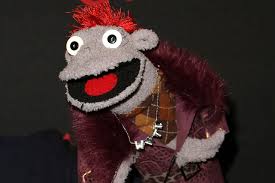
2. Hand to God - I admit that I came late to this party. Hand to God was a hit off-Broadway way before it opened this year on the Great White Way, but this production was astonishing. In spite of the fact that he is clearly one of America's great playwrights, a Broadway hit still has not allowed Robert Askins to give up his bar-tending job, but that's just the state of the economics of this country's theatre. Never mind. This tale of a high-school misfit engaging in "puppet ministry" in a church basement continually goes to darker and more unexpected places, and Askins' voice deserves to be heard. I'm a sucker for puppets, and this show uses puppetry in ways that are dirtier than Avenue Q and yet with more skill than is hardly ever seen.

1. Hamilton - Okay, no surprise here. Since it opened off-Broadway at the Public, Hamilton has been the hottest ticket in town, but not without reason. Lin-Manuel Miranda has crafted a magnificent show out of American history and American popular culture. The music is exciting, the lyrics are smart, and the story of Alexander Hamilton's life and death, even to those who already know it, is enough to break your heart. Count me along with politicians as diverse as Barack Obama and Dick Cheney as one of the many fans of this show. If you can't see it right away, get the cast album. Listening to it reminds you of so much that the American musical is and can be. Ten dollar tickets (a Hamilton for a Hamilton) are still available through a lottery before each show, but good luck getting them. Spring for a regular ticket. It's worth it.

So that's my list! Honorable mentions this year to Doctor Faustus, I Will Look Forward To This Later, and Spring Awakening!

Friday, February 6, 2015

Lives of the Saints

I just got back from seeing Lives of the Saints, the latest David Ives play to be produced by Primary Stages. The collection of seven short playlets is a bit of a mixed bag, as one might expect, but at its best, the piece is highly affecting.

The first playlet, Babel's in Arms, takes place at the building of the legendary Tower of Babel, with two slaves throwing the f-word around and an uppity business woman ordering them both about. The combination of ancient history, casual swearing, and jokes that are smart but don't necessarily lead anywhere reminded me a bit of David Mamet's Keep Your Pantheon. Though not the greatest piece of the evening, the Biblical theme and setting did tie in with some of the other playlets.

Following this came Soap Opera, a hymn to the Maytag Repairman of the commercials of yesteryear. Re-dubbed the "Maypole Repairman" the protagonist falls in love with a perfect washing machine, only to discover that what he really needs is a human being with all her imperfections. The absurdity of the piece actually helped it to resonate emotionally, which was less true of The Goodness of Your Heart, which followed it. In that playlet, two men watch their friendship unravel over the most ridiculous of issues. Though written and performed with greater realism, that story seemed less real to me than the absurd Soap Opera.

The best piece of the first act, however, was Enigma Variations. A classic piece of Ives, the play introduces two Bill's and two Bebe's, a double set of doppelgangers who look and dress alike and might even be the same person. Several times the play resets and begins again with slight variations. Though such repetitions might sound boring, in the hands of Ives they are variety itself. The audience waits on the edges of their seats to hear how the same lines will be played again and to experience the same words in completely new ways. The addition of a fifth character, who might be either a nurse or a swim coach, adds icing to the cake.

This production saves the best playlets for last, though. The second act opens with Life Signs, about a man whose mother has just died. Unexpectedly, the dead woman starts to speak, much like the title character in Edgar Allan Poe's "The Facts in the Case of M. Valdemar." Hilariously, the corpse reveals way too much information, embarrassing both her son and his wife. The ridiculous absurdity of her life, however, leads her to the conclusion that she has never truly lived. Her son, traumatized by the situation, tries to remind her of the good parts of her life, attempting to ease the conscience of a woman who is not just at death's door, but has already passed through it.

Ives grew up a Polish kid in Chicago, and the last two playlets reflect his background. It's All Good imagines the return of a successful New York writer to the neighborhood where he grew up. On the L train, he meets an alternate version of himself as he might have been had he stayed. This doppelganger (quite different from the ones in Enigma Variations) invites him home for dinner, where he meets his first love, the woman he might have married had he stayed behind.

The final play, which provides the title for the whole evening, also involves Polish Americans in Chicago. This time, instead of exploring lost possibilities and regret, the piece reflects on how the simple faith of ordinary people might indeed be the secret to becoming a true saint.

If you're interested in catching the play, which runs until March 27, check out the company's website:

Primary Stages

Tuesday, January 20, 2015

Poe Comes to Life (and Death) in Nevermore

As much as I enjoyed Red-Eye to Havre de Grace at New York Theatre Workshop last year, the best play I've ever seen about the undisputed master of the macabre was Nevermore: The Imaginary Life and Mysterious Death of Edgar Allan Poe. Canada's Catalyst Theatre brought the show to the New Victory a few years back, and I co-wrote a review of it that appeared in a rather distinguished journal (The Edgar Allan Poe Review).

Imagine my delight when I discovered the production would be back in New York for an off-broadway run at New World Stages. Of course, I had to see it, and what better time than last night, which happened to be Mr. Poe's 206th birthday?

Apparently, the show has had a few tweaks, but it was still every bit as good as I remembered it. Scott Shpeley plays Poe with aplomb, reacting emotionally in a manner that keeps him the center of our attention, even when his character goes through long stretches without any lines. When he does speak, his voice is perfect, and when he sings, it's celestial.

Lindsie VanWinkle plays Poe's mother Eliza. (She's the one wearing the enormous hat you might have seen on posters for the show.) Eliza really was an actress, as Nevermore portrays her, and as stated in the show, excelled in the role of "Little Pickle" in the play The Spoiled Child. VanWinkle plays Eliza with sympathy, but also as a woman more caught up in the theatre than in raising her family.

The play's portrayal of nineteenth-century theatre is delightful, capturing the spirit of the times, especially in showing Fanny and Jock Allan (played by Beth Graham and Garett Ross) as die-hard theatre fans. (Though perhaps I shouldn't mention "die" in discussing a play about Poe!) The theatre had a tremendous effect on Poe, and he even tried his own hand at drama, penning the beginning of a tragedy, Politan.

Poe's family life is frequently discussed, but people often pass over his talented older brother Henry, played in this production by Gaelan Beatty. Scholars sometimes speculate that some of the earlier poems attributed to Poe might actually have been collaborations with his brother, or even written by Henry entirely. The play acknowledges this, portraying both men as fascinated by storytelling and having literary ambitions.

Of course, Nevermore is hardly going for historical realism. Much of the dialogue is sung, and even when it is not, it tends to be in verse. Writer, lyricist, and composer (and director) Jonathan Christenson makes the rhymes flow effortlessly. As a composer, he also deserves kudos, supplying especially wonderful music for settings of Poe's poems, including "Eldorado," "Israfel," and (of course) "The Raven."

The design elements of the play are particularly striking. Production designer Bretta Gerecke provides costumes, sets, and lighting that all work together to produce a goth's fondest nightmare. The elaborate costumes are completely in black and white, yet become lit up in magnificent color. They are also feats of engineering. The coat worn by Ryan Parker as the villainous Rufus Griswold looks almost like a piece of architecture.

My favorite part of the play, both times I saw it, was the love story between the teenage Poe and his neighbor Elmira Royster. Shannon Blanchet is delightfully morbid as Elmira, meeting Edgar in a graveyard where the two fall in love by telling each other macabre tales. When her character returns later on in the play, we feel the excitement that Poe might finally get his happy ending, even as we realize his doom is nigh.

Last time it was in New York, Nevermore had a run that was all too brief. Make sure you get to it now! More information can be found here:

Nevermore: The Imaginary Life and Mysterious Death of Edgar Allan Poe

Friday, January 16, 2015

The Best of the Grand Guignol

The Theatre du Grand-Guignol opened in Paris in 1897, serving up concoctions of naughty sex farces and horrifying blood baths to audiences looking for a thrill. This venerable (or not) institution shut down in 1962, but The Flea Theater has revived a number of its plays for its Cutthroat Series.

Last year, audiences were treated (or subjected) to evenings of short Guignol plays, all revolving around a particular theme, such as lust or gore. Audiences voted for their favorites, and now the best of those plays have returned for a victory lap at the Flea.

I went last night, and had a fiendishly good time. The first play was Tics, or Doing the Deed by Rene Berton. When I saw this splendid production (directed by Stebos) last year, one of the main actors had recently injured himself, so his bizarre physical tic was a comically shaking leg. Now, back at full strength, he is able to do what he originally planned. The result is downright acrobatic.

The second play was Agnosiophobia by the contemporary playwright Jason Gray Platt, though it was billed as an adaptation of a play by Giuseppe Giacosa. The piece takes its name from the fear of not knowing something, and it portrays a husband who torments himself over the exact nature of the relationship between his wife and a friend who recently committed suicide. The play is mainly psychological horror, until the very last moment.

Next up was Private Room #6 by Andre de Lorde, the principle author for the Grand-Guignol for more than 25 years at the beginning of the 20th century. Though de Lorde often collaborated with other authors, the Flea gave him sole billing for this one. (Pierre Chaine is sometimes listed as co-author.) This production was of the adaptation Jose Levy did for the London version of the Grand-Guignol, which flourished briefly in the 1920s. Rest assured, both revenge and Russians are on the menu.

The final play was The System, an adaptation de Lorde did of Edgar Allan Poe's short story "The System of Dr. Tarr and Professor Fether." Poe has always been a great favorite with the French, and de Lorde also adapted for the stage "The Tell-Tale Heart," "The Masque of the Red Death," and "The Fall of the House of Usher." This darkly comic play is surprisingly close to Poe's original, though the gore at the end is a bit different from what Poe describes.

These plays are still showing until January 25, so get your tickets here:

The Flea Theater

Friday, May 2, 2014

Red-Eye to Havre de Grace

Last night I had the good fortune to see Red-Eye to Havre de Grace, the fantasia on the death of Edgar Allan Poe currently playing at New York Theatre Workshop.

The piece, originally created by Thaddeus Phillips and brothers David and Jeremy Wilhelm, includes texts not just from Poe's famous poems like "The Conqueror Worm" and "The Raven," but also his late metaphysical work, Eureka, his letters, and essays such as "The Philosophy of Furniture."

Ean Sheehy plays Poe with remarkable physical dexterity, walking on top of suitcases, sitting sideways at an unturned desk, and crawling on top of pianos. The dancer Alessandra Larson plays Poe's dead wife Virginia, and though she never speaks, her presence adds a dangerous ethereal beauty to the piece, whether she is using stilts, sliding down from a suspended bed frame, or crawling out of a grave.

Obviously, this play is not going for strict realism, so it seems only natural when "Annabelle Lee" is sung in French and "Eldorado" is performed in Spanish. This inventive production only runs until June 1, so make sure you catch it before the train leaves the station!

For more information, go here:


https://www.nytw.org/

Saturday, November 23, 2013

Politan!

This morning I went the the Morgan Library to see their exhibit on Edgar Allan Poe. To my excitement, they had the manuscript of Poe's only play, a fragment of a verse tragedy called Politan. The label text had some snarky comment about how lucky we all are that Poe never attempted drama again, but here I must dissent. The fragment of Politan is actually quite good.

First published in 1835 in The Southern Literary Messenger, the play is set in Renaissance Italy but loosely inspired by the infamous murder of Solomon Sharp during Poe's own time. From the very first scene, Poe makes it clear that he is mixing genres, providing some magnificent comedy amidst a dark, gothic setting. The character of Castiglione muses:

Did I sigh?
I was not conscious of it. It is a fashion,
A silly -- a most silly fashion I have
When I am very happy. Did I sigh? (sighing.)

Castiglione is sighing for his rejected love, Lalage, though he is now engaged to be married to the Lady Alessandra. Meanwhile, Politan, the Earl of Leicester, is coming to town. Politan is a bit of a Faust figure, skilled in every branch of learning and dedicated to "Drinking the cup of pleasure to the dregs." Yet also like Faust, he is still melancholy.

In the second scene we meet Lalange, recounting the stories of tragic women to her maid Jacinta. Lalange has given all the jewels she received from Castiglione to the maid. Her only solace is a mirror that shows her how far she has fallen, as "It speaks of sunken eyes, and wasted cheeks." A monk tries to comfort her, but instead she takes a vow upon a dagger that she will be revenged.

The third scene introduces Politan, who recounts his sufferings to his friend Baldazzar:

Oh! I am sick, sick, sick, even unto death,
Of the hollow and high-sounding vanities
Of the populous Earth! Bear with me yet awhile!
We have been boys together -- schoolfellows --
And now are friends -- yet shall not be so long --
For in the eternal city thou shalt do me
A kind and gentle office, and a Power --
A Power august, benignant and supreme --
Shall then absolve thee of all further duties
Unto thy friend.

Politan hears Lalange singing and breaks an appointment with the Duke to follow her voice. In the following scene, Politan swears his love to Lalange. Seeing she is distraught over her abandonment by Castiglione, Politan promises the guilty man shall not live. After he exits, though, Lalange has second thoughts.

In the suburbs of the city, Baldazzar brings Politan news that Castiglione has declined a challenge, finding no quarrel with this stranger that could cause a duel. When Castiglione himself shows up, trying to smooth over the matter, Politan draws on him in the name of Lalange. Hearing the name of the woman he has wronged, Castiglione recoils.

This much is all that Poe had published in The Southern Literary Messenger. A longer fragment remained in manuscript form. Unlike the curators at the Morgan, I wish we had the full play.

In spite of the snarky comments about Politan, however, the exhibition is definitely worth seeing. You can find out more about it here:

The Morgan Library

http://www.themorgan.org/